Iran Says Israel Must Withdraw From Lebanon for US War Deal to Hold
Iran’s top diplomat stated that a tentative US-Iran deal to end the Iran war requires Israeli withdrawal from Lebanon, a condition Israel has rejected, casting doubt on the agreement ahead of a planned signing in Geneva.
Core Disagreement Over Lebanon
Iranian Foreign Minister Abbas Araghchi said Israel’s continued occupation of southern Lebanon would violate the deal. [1] “Without the withdrawal of Israeli forces from the territories they occupied during this war, the war has not fully come to an end,” Araghchi said. [1] Pakistan, a key mediator, has said the deal called for an end to military operations, including in Lebanon, as Iran long insisted. [1] Araghchi’s call for a withdrawal adds a new wrinkle to the unpublished agreement. [1] A U.S. official, who spoke on condition of anonymity, has said the deal did not call for an Israeli withdrawal. [1] Israeli Prime Minister Benjamin Netanyahu said Monday that Israel would remain in Lebanon “as long as necessary.” [1] Regional officials with direct knowledge of the interim deal said it would require Israel to leave nearly all the territory it occupies in Lebanon, minus a few hilltop points along the border seized earlier. [1] The officials say Iran insisted the accord include Lebanon in the last days of the negotiations. [1]
Terms of the Unpublished Agreement
The unpublished agreement, brokered mainly by Pakistan, calls for the immediate opening of the Strait of Hormuz and lifting of the US blockade on Iranian ports. [1] It starts with the simultaneous lifting of Iran’s closure of the strait and the U.S. blockade of Iran’s ports. [1] The United States and Iran will then begin 60 days of negotiations over Iran’s nuclear program and the potential lifting of sanctions. [1] It also includes the possibility of releasing Iran’s frozen funds and a $300 billion fund to help rebuild Iran if Tehran meets certain benchmarks. [1] The release of frozen Iranian assets are tied to Tehran implementing the deal. [1] Gulf Arab states also have pledged to inject billions of dollars in Iran’s economy. [1] Iran has agreed to discuss ways to possibly “dilute or remove” its stockpile of highly enriched uranium. [1]
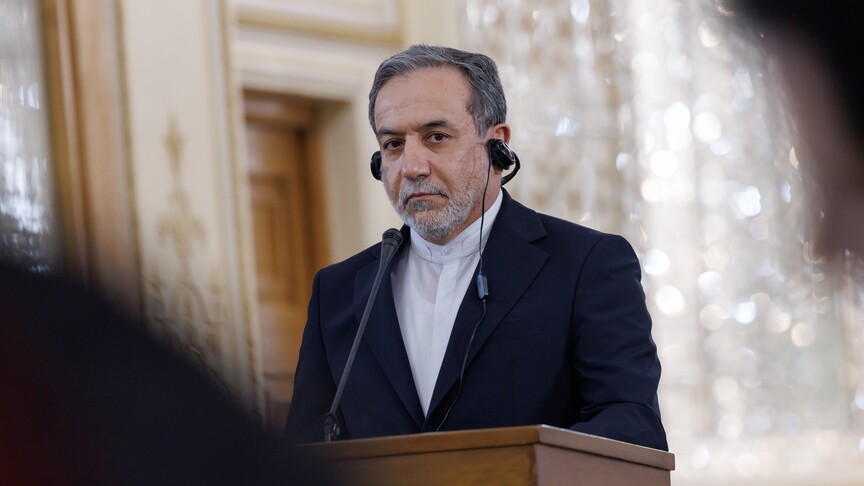
Iranian Foreign Minister Abbas Araghchi speaks during a news conference in Tehran. — Source: anadolu
Unresolved Issues and Risks
The discrepancy over Lebanon underscored how much of the agreement remains apparently unresolved ahead of a planned ceremonial signing Friday in Geneva. [1] The negotiations to end the war have been plagued by such disagreements before, leading to a prolonged but uneasy ceasefire that has failed to develop into a permanent end to hostilities. [1] U.S. officials have not yet explained how they see the agreement addressing Iran’s nuclear program, including who will be in charge of verifying that Iran is in compliance and who will destroy or remove highly enriched uranium believed to be buried under nuclear sites that were badly damaged by U.S. strikes last summer. [1] It remains unclear whether Tehran would agree to dilute or remove its stockpile, particularly with hard-liners opposing to giving it up. [1] The timeline for releasing frozen assets is tied to implementation, adding further points of possible contention. [1]
G7 Summit Discussions
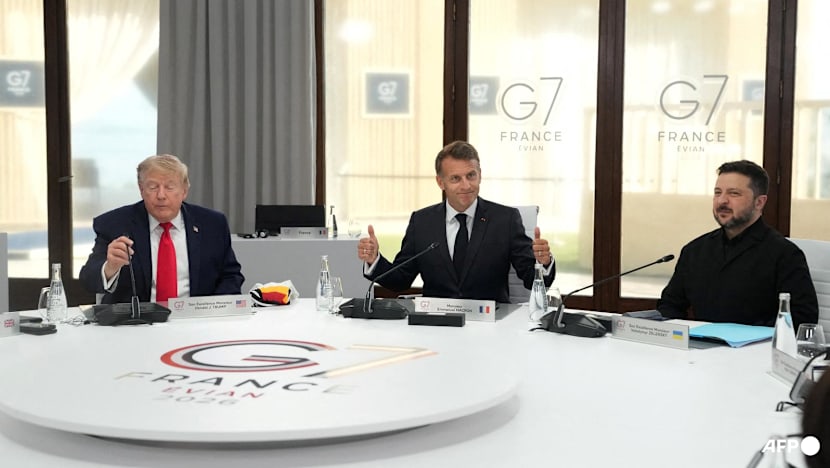
World leaders gathered in France for the first full day of the Group of Seven summit, where Iran was high on the agenda. [1] Leaders of Egypt, Qatar and the United Arab Emirates are to join the talks. [1] The leaders of France, Germany, Italy and the United Kingdom issued a joint statement congratulating the United States, the Iranian government and the mediators on what they called a “diplomatic breakthrough.” [1] Canada also signed the statement. [1] The leaders said it was vital for detailed negotiations to take place and for the deal to be quickly implemented so the Strait of Hormuz can be reopened to tanker traffic. [1] President Donald Trump told reporters on Tuesday that he’s “not happy with the way Israel has handled themselves with Lebanon and with Hezbollah.” [1] “It just goes on forever,” he said of Israel’s strategy. [1] “And when that happens, it throws a negative light on the big deal. And that’s the deal with Iran.” [1] European leaders were also set to warn Trump that a superficial interim deal with Iran risks entrenching Tehran's nuclear and ballistic missile programmes. [2] Macron said the priority was to ensure there is a “solid, serious agreement that is finalised.” [2]
Background of the Iran War
The monthslong Iran war, which began with US and Israeli strikes on Iran on February 28, has killed thousands, damaged Iran’s nuclear sites, shut the Strait of Hormuz, and raised global fuel and food prices. [1] Israel joined the U.S. in launching strikes on Iran on Feb. 28 and has since fought the Iran-backed Hezbollah militant group in Lebanon and seized large swaths of that country. [1] The war began on February 28 when both the United States and Israel began bombing Iran, who retaliated by launching missing strikes against American allies in the region. [4] At the G7 summit in France, leaders congratulated the US, Iran, and mediators on a diplomatic breakthrough but expressed concerns over unresolved issues including Iran’s nuclear stockpile and called for quick implementation to reopen the strait. [1]
Regional and Global Impacts
The global ramifications of the conflict will be felt in the Middle East and around the world for a long time to come. [4] America and Iran have agreed a deal to end the conflict, although details of the agreement have yet to be released. [4] Michael Clarke, an analyst for Sky News, said America had “done what we always knew they would do, which is to declare victory and go home.” [4] Clarke said: “It’ll never be the same again. Everyone would like it to return to the way it was before, but the legacy of mistrust between the UAE, Qatar, Saudi, Kuwait, Oman and Iran will be deep indeed.” [4] “There’s a reassessment of the American relationships. The Americans couldn’t guarantee the safety of the Gulf states against ballistic missile attack. They intercepted quite a lot, but not all. So clearly the American systems are not good enough against modern technology, so they’ve got to think about that.” [4] The closure of the Strait of Hormuz had near-term consequences for Asia’s most commodity-dependent economies. [5] Japan, South Korea, Taiwan, Singapore and Hong Kong all import more than 80% of their domestic energy needs. [5] Nearly 90% of liquefied natural gas (LNG) exported through the Strait flows to Asian buyers. [5] A third of global seaborne fertilizer trade passes through the Strait of Hormuz, meaning that as gas prices rise, fertilizer costs follow and food prices with them. [5] Singapore’s Energy Market Authority had warned that fuel prices will likely remain elevated in the foreseeable future. [5] South Korea has imposed its first fuel price cap in nearly three decades. [5] Japan has begun releasing oil from national reserves. [5] Taiwan has spent over $600 million securing spot LNG cargoes. [5]
Iranian Foreign Minister Abbas Araghchi speaks during negotiations on the US-Iran deal. — Source: gdelt
What to watch next: Leaders expect the strait to be completely open on Friday while 60-day talks begin on Iran’s nuclear program and possible sanctions relief, with European allies pushing for a solid final nuclear deal that addresses verification and ballistic missiles.