
Iran Conflict Escalates with US Strikes and Retaliatory Attacks on Gulf States
The Iran conflict has seen renewed heavy US and Iranian attacks, the most intense since an April ceasefire, centered on control of the Strait of Hormuz and threatening a June framework agreement to end the war. [1]
Latest US Strikes on Iran
The US Central Command conducted strikes on dozens to 140 Iranian targets including air defenses, missile sites, and boats in areas such as Bushehr province and Bandar Abbas, in response to Iranian attacks on commercial shipping. [1] [2] [3] The US military's Central Command described its forces as hitting dozens of sites in the strikes, including air defense systems, radar sites, missile and drone equipment and small boats. [3] The command said the latest wave of strikes was in response to an Iranian attack on a vessel in the Strait of Hormuz the previous week. [2] US aircraft, naval vessels and drones hit dozens of targets at multiple locations with precision munitions to degrade Iran's ability to continue attacking international shipping flowing through the Strait of Hormuz. [1] The American military said it had responded with strikes on about 140 targets, including missile and drone launch sites, ammunition dumps, communication equipment and other sites. [4] US President Donald Trump told NBC's Meet the Press that "We bombed the hell out of them last night." [3] Trump told CNN that "we hit them very hard last night," maintaining the two sides had been close to a deal on Saturday. [4]
Iranian Retaliatory Attacks

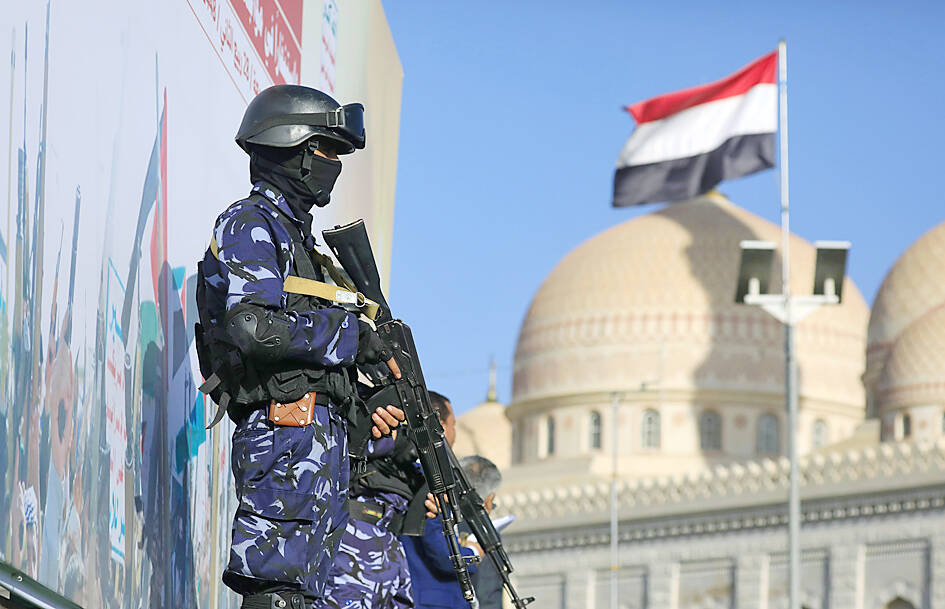
Iranian forces launch retaliatory strikes against Bahrain, Kuwait and Jordan following US attacks. — Source: premiumtimes
Iran's Revolutionary Guards launched retaliatory strikes on US-linked targets in Bahrain, Jordan, Kuwait, Oman and Qatar, with air raid alerts and interceptions reported in those countries. [1] [2] [3] Iran's Revolutionary Guards said they had struck US military targets and bases in Jordan, Bahrain and Kuwait. [1] Iran's Guards said they also hit Oman. [4] Missile alert sirens sounded twice Monday in Bahrain, home to the US Navy's 5th Fleet, and Kuwait said it was intercepting hostile fire. [3] Kuwait's army said the country's forces were intercepting hostile aerial targets. [1] Jordan's army said it had intercepted four Iranian missiles. [1] Bahrain's military accused Iran of committing heinous attacks with missiles and drones that target civilians, adding it had shot down a number of Iranian projectiles. [1] Jordan's military said it shot down four Iranian missiles in an incident that resulted in zero casualties or material damage. [3] Kuwait said three of its land border posts in the north were damaged in an attack, and that an offshore drilling platform was targeted by a hostile drone, with one person injured. [4] Oman summoned an Iranian diplomat to criticize the attack. [3]
Dispute Over the Strait of Hormuz
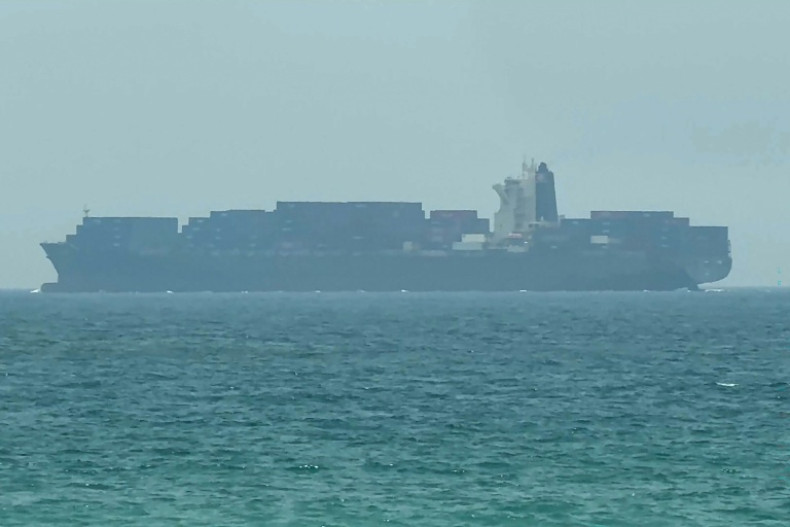
The core conflict regarding control and access to the strait includes the Iranian attack on a commercial vessel, subsequent closure declaration, US counter-statements and impacts on shipping. [1] [3] [4] [5] The renewed fighting followed an Iranian attack early Sunday on a commercial ship in the Strait of Hormuz whose crew was forced to abandon it after it went up in flames. [1] Iran's Revolutionary Guards said after the incident that the Strait of Hormuz will be closed until further notice and until the end of American interventions in this region. [1] [4] US Centcom countered on X that the strait was open to all vessels seeking to lawfully transit. [1] [4] The US military's Central Command said the Strait of Hormuz is a vital maritime corridor for global trade and Iran does not control it. [3] Iran's paramilitary Revolutionary Guard sharply rejected America's statement, saying the Strait of Hormuz is our territory, and we will not allow a rogue and child-killing army from the other side of the world to continue its illegal interference in it. [3] Iran's Persian Gulf Strait Authority insists no travel is allowed until stability and calm are restored. [2] Iran's chokehold on the strait led to a global energy crisis, though oil prices have sharply dropped since wartime highs of $120 a barrel. [3] Iran's grip on the strait has loosened as the US military provided support to vessels moving along a southern route hugging the coastline of Oman. [3]
Status of the June Framework Agreement
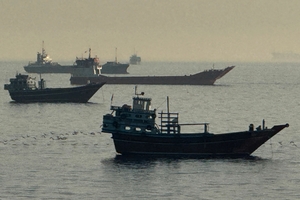
US and Iranian forces clash over control of the Strait of Hormuz. — Source: korea-herald
Tehran declared it would no longer comply with the June memorandum of understanding if the US fails to meet obligations, while continuing talks with mediators from Qatar, Pakistan and Oman. [1] [2] [3] As the US attacks on Iran continued, Tehran said it would stop complying with a framework agreement to halt the fighting if Washington failed to meet its commitments. [1] Foreign ministry spokesman Esmaeil Baqaei said of the June memorandum of understanding that there is no doubt that this document is in crisis. [1] He added that each time that the other party has failed to meet its obligations, we did not uphold ours. [1] Iran accused the US of failing to meet its obligations under the interim peace deal. [2] Iran is nearly at the midway point of the 60-day period of an interim deal that was supposed to set up talks for a permanent end to the war. [3] Mediators have been trying to salvage a diplomatic resolution to the war after President Donald Trump this week declared the April ceasefire over. [1] Mediators, including Pakistan, Qatar and Egypt, have continued efforts to reach a final agreement to end the war. [3] A regional official involved in mediation said efforts to shore up the ceasefire continued. [3]
Casualties, Economic Impact and International Reactions
Iranian state media reported at least two deaths from US strikes, and UN Secretary-General António Guterres warned of catastrophic consequences from full-scale resumption of hostilities. [1] [3] [4] Iranian state media reported two deaths in the latest US strikes that it said targeted large areas across the south and west. [1] One person was killed and four wounded at a water pumping station in the southwestern city of Mahshahr. [1] Iranian state media reported at least 10 enemy projectiles hitting Qeshm Island. [4] It also reported strikes on the island of Farur that killed a telecommunications worker and wounded two others. [4] Oil prices rose up to 4.5 percent on supply fears. [1] Oil prices jumped by up to 4.5 percent, with the US benchmark WTI climbing to nearly $74 a barrel on fears of hampered supply on global markets. [1] UN Secretary-General António Guterres said a return to full-scale hostilities would have catastrophic consequences. [3] UN Secretary-General Antonio Guterres also called for peace, with his spokesman saying these attacks must stop. [4] Pakistan expressed deep concern at escalation in regional tensions. [1] Pakistan's foreign minister spoke by phone with Iran's top diplomat and urged de-escalation on both sides. [3] Analyst Bader Al-Saif said the escalating attacks would merely delay a permanent agreement. [1]
Statements from Iranian and US Leadership
Iran's supreme leader vowing revenge for his father's killing, parliamentary speaker's warnings, and President Trump's assertions about the strikes and ceasefire status. [3] [4] [5] Iran's new supreme leader, Ayatollah Mojtaba Khamenei, on Saturday vowed in his first statement since the funeral of his father, Ayatollah Ali Khamenei, that Iranians would avenge his killing. [3] [5] Iran's supreme leader Mojtaba Khamenei has vowed revenge for the killing of his father and predecessor on the first day of the war. [4] Mohammad Bagher Qalibaf, the speaker of Iran's Parliament, wrote the era of one-sided deals is OVER. [3] We told you: keep your word or pay the price. Reality is knocking. [3] President Donald Trump upped threats of further missile attacks against Iran. [5] Trump on Saturday said any attempt to assassinate him would lead the United States to completely decimate Iran. [4] Trump has declared an April ceasefire over while leaving the door open for further talks. [4]
What to watch next: Mediators from Qatar, Pakistan and Oman continue talks to prevent further escalation while both sides maintain positions on the Strait of Hormuz and the June memorandum of understanding. [1] [3]