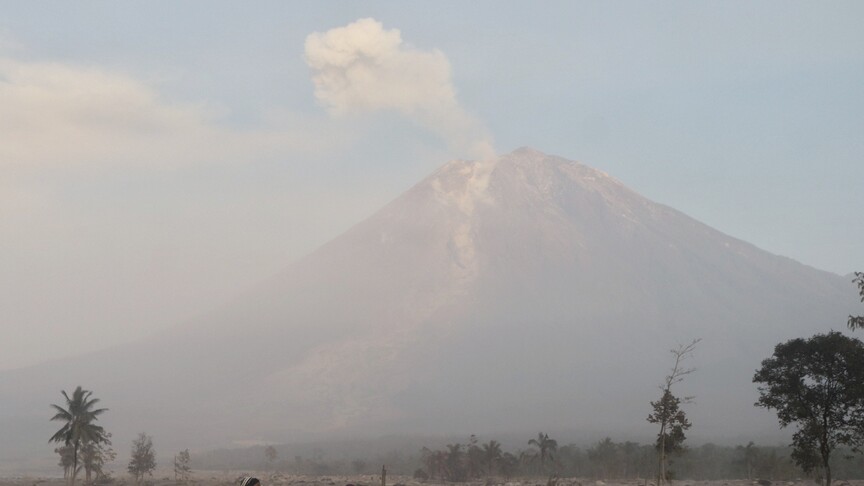
Indonesia's Mount Semeru Volcano Erupts, Reaching 900 Meters in Ash Height
Mount Semeru in Indonesia erupted on May 3, 2026, producing an ash column that reached 900 meters high.[2] This volcanic event occurred amid a broader wave of disasters across the ASEAN region, where a total of 55 events were reported during the week of April 27 to May 3, 2026, including floods, landslides, storms, volcanic activity, and wind-related incidents affecting countries such as Indonesia, Malaysia, the Philippines, Thailand, and Viet Nam.[1] The volcano Indonesia eruption at Mount Semeru highlights the ongoing volcanic activity noted in Indonesia as part of this regional summary, with reports from Badan Nasional Penanggulangan Bencana (BNPB).[1][2]
Regional Disaster Overview
The ASEAN Weekly Disaster Update for Week 18, covering April 27 to May 3, 2026, provides a comprehensive snapshot of disaster occurrences across the region.[1] During this period, a total of 55 disaster events were documented, underscoring the intensity of natural hazards in Southeast Asia during that specific week.[1] These events spanned multiple countries, including Indonesia, Malaysia, the Philippines, Thailand, and Viet Nam, demonstrating the widespread impact on the ASEAN area.[1] The update, sourced from the ASEAN Coordinating Centre for Humanitarian Assistance, emphasizes the diversity and frequency of these incidents, which collectively highlight the region's vulnerability to environmental challenges.[1]
This regional summary serves as an essential tool for tracking and coordinating responses to disasters, with the infographic attachment referenced in the report offering visual representation of the data.[1] The inclusion of Indonesia in this overview is particularly relevant, as it ties into specific events like volcanic activity, which form part of the 55 total.[1] Countries such as Malaysia, the Philippines, Thailand, and Viet Nam also faced similar pressures from various hazards during the same timeframe, illustrating a shared regional burden.[1] Badan Nasional Penanggulangan Bencana (BNPB) in Indonesia contributed to this reporting, providing national-level insights that feed into the broader ASEAN picture.[1]
The week of April 27 to May 3, 2026—designated as Week 18—marks a period of heightened activity, with the 55 events encompassing a range of natural phenomena that demand coordinated humanitarian efforts.[1] This overview not only quantifies the scale but also contextualizes individual incidents, such as those in Indonesia, within a larger pattern of disasters affecting the ASEAN bloc.[1] The ASEAN Coordinating Centre for Humanitarian Assistance plays a pivotal role in aggregating such data, ensuring that stakeholders have access to timely information for preparedness and response.[1] By detailing the involvement of multiple nations, the report fosters a sense of regional solidarity in disaster management.[1]
Furthermore, the emphasis on Week 18's totals reflects the ongoing commitment to weekly monitoring, which helps in identifying trends like the concentration of events in Southeast Asia.[1] Indonesia's contributions via BNPB add granularity to the regional data, making the overview a reliable foundation for understanding the week's disaster landscape.[1] This structured reporting approach ensures that every event, from floods to volcanic activity, is accounted for in the 55-event tally.[1]
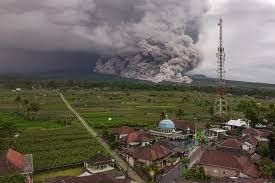
Mount Semeru in Indonesia erupts, with an ash column reaching 900 meters. — Source: gdelt
Details of Volcanic Activity in Indonesia
The eruption of Mount Semeru, a prominent volcano in Indonesia, took place on May 3, 2026, with the ash column ascending to a height of 900 meters.[2] This specific volcanic event exemplifies the volcanic activity reported within Indonesia during the ASEAN region's disaster week.[1][2] Published details from monitoring sources confirm the ash column's reach, marking a significant release of material from the volcano Indonesia site.[2]
Mount Semeru's activity aligns with the broader context of disasters noted in the regional update, where volcanic incidents were among the 55 events recorded.[1][2] The precise measurement of 900 meters for the ash column provides a clear indicator of the eruption's intensity on that date.[2] Such events are tracked closely due to their potential implications, as highlighted in real-time reporting published at 20260503T080000Z.[2] In Indonesia, where BNPB monitors national disasters, this eruption fits into the pattern of volcanic activity contributing to the week's totals.[1][2]
The characteristics of this eruption—centered on the ash column's height—offer insights into the dynamics of Mount Semeru, a known active volcano in Indonesia.[2] Regional summaries incorporate such details to contextualize volcanic threats alongside other hazards.[1] The timing on May 3, 2026, places it at the tail end of the monitoring week, emphasizing the continuous nature of volcanic risks in the area.[1][2] GDELT's coverage underscores the event's notability, capturing the eruption's key feature of the 900-meter ash plume.[2]
This volcano Indonesia occurrence at Mount Semeru serves as a focal point for understanding localized impacts within the national framework reported by BNPB.[1][2] The ash column's elevation is a standard metric in volcanic assessments, directly sourced from event monitoring.[2] As part of ASEAN's disaster tracking, it contributes to the recognition of volcanic activity as one category among the week's events.[1]
Types of Disasters Reported
The ASEAN Weekly Disaster Update for Week 18 explicitly lists the categories of disasters that comprised the 55 events from April 27 to May 3, 2026.[1] These include floods, landslides, storms, volcanic activity, and wind-related disasters, each representing distinct threats across the affected countries.[1] Floods, for instance, are noted as a primary type, alongside landslides that often accompany heavy rainfall in the region.[1]
Storms form another key category, contributing to the overall count and impacting nations like the Philippines and Thailand.[1] Volcanic activity, specifically highlighted in Indonesia, adds a geological dimension to the mix.[1] Wind-related incidents round out the spectrum, affecting areas in Malaysia and Viet Nam, among others.[1] This categorization provides a structured view of the hazards, with each type tied to the regional total of 55.[1]
The diversity of these disaster types—floods, landslides, storms, volcanic activity, and wind-related—illustrates the multifaceted nature of risks in ASEAN during that week.[1] BNPB's reporting in Indonesia likely encompasses volcanic elements, integrating them into the broader summary.[1] By enumerating these categories, the update facilitates targeted response strategies for each.[1]
Such a breakdown is crucial for humanitarian coordination, as different types demand varied mitigation approaches.[1] The inclusion of volcanic activity contextualizes events like Mount Semeru's eruption within this framework.[1][2] Overall, the reported types paint a picture of a week dominated by hydro-meteorological and geological events across Indonesia, Malaysia, the Philippines, Thailand, and Viet Nam.[1]
{IMAGE_3}
Reporting and Sources
The primary sources for these disaster reports stem from established agencies focused on monitoring and coordination.[1][2] The ASEAN Coordinating Centre for Humanitarian Assistance issued the Weekly Disaster Update for Week 18, compiling data on the 55 events across the region.[1] Badan Nasional Penanggulangan Bencana (BNPB) in Indonesia provided national reporting that fed into this summary, particularly on events within the country.[1]
ReliefWeb hosts the ASEAN update titled "Indonesia: ASEAN Weekly Disaster Update Week 18 | 27 April – 3 May 2026," which references countries including Indonesia, the Philippines, Thailand, and Viet Nam.[1] This source urges reference to an attached infographic for detailed visuals.[1] GDELT reported specifically on the Mount Semeru eruption, noting the ash column reaching 900 meters, published on 20260503T080000Z.[2]
BNPB's role is emphasized in the context of Indonesia's disasters, ensuring accurate national inputs to the ASEAN overview.[1] The dual sourcing from regional and event-specific monitors like GDELT provides robust verification.[1][2] These agencies collectively ensure the reliability of the 55-event count and volcanic details.[1][2]
Summary of the Week's Events
In recap, the week of April 27 to May 3, 2026, saw 55 disaster events across the ASEAN region, encompassing floods, landslides, storms, volcanic activity, and wind-related incidents in Indonesia, Malaysia, the Philippines, Thailand, and Viet Nam.[1] Mount Semeru's eruption on May 3, with its 900-meter ash column, stands as a key highlight of the volcanic activity in Indonesia.[1][2] BNPB's contributions anchored the national reporting within this regional framework.[1]
This summary ties the individual eruption to the collective 55 events, reinforcing the week's challenging disaster profile.[1][2] The ASEAN Coordinating Centre's update encapsulates the scope, promoting awareness and preparedness.[1]
What to watch next
Ongoing reports from the ASEAN Coordinating Centre for Humanitarian Assistance and BNPB will continue tracking volcanic activity and other disasters in the region, with weekly updates providing the latest on events like those in Week 18.[1]