
Indonesia's Kawah Ijen Volcano Lights Up the Night with Rare Electric Blue Flames
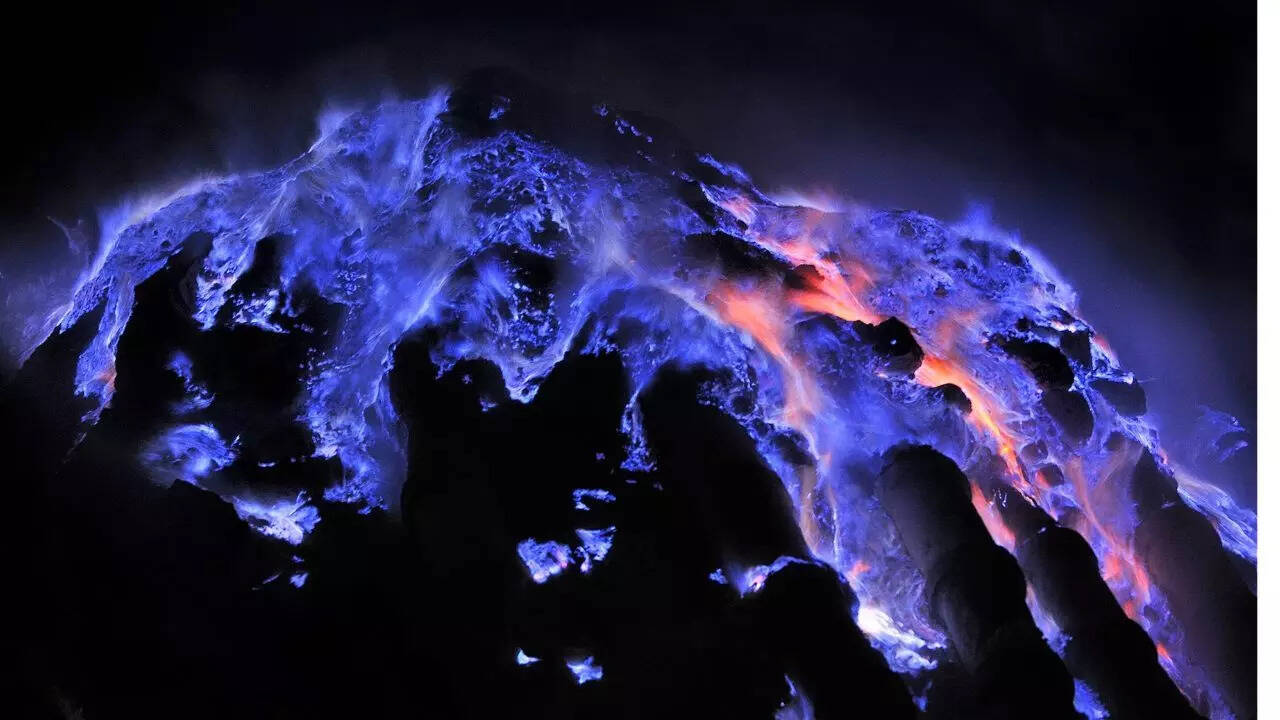
Banyuwangi, Indonesia – Indonesia's Kawah Ijen volcano has once again mesmerized observers with its otherworldly electric blue glow, a phenomenon caused by the combustion of sulfuric gases rather than traditional molten lava. The spectacle, visible primarily at night, draws adventurers, local sulfur miners, and scientists to the site on the island of Java, highlighting both natural wonders and human endurance amid hazardous conditions.
The blue flames, which emerged prominently around January 10, 2026, are rated as a low-severity event by monitoring agencies, posing no immediate threat of eruption but underscoring the volcano's active fuming activity. Unlike the fiery red rivers of lava seen at many volcanoes worldwide, Kawah Ijen's glow stems from the ignition of sulfur-rich gases escaping from cracks in the volcanic rock. When these gases meet oxygen at temperatures exceeding 360 degrees Celsius (680 degrees Fahrenheit), they burn with a vivid turquoise hue, creating flames that can reach up to five meters (16 feet) high.
Local miners, who venture into the crater daily, continue to extract sulfur deposits formed from these gases—a perilous job that involves carrying loads of up to 90 kilograms (200 pounds) on their shoulders over steep, fumes-filled terrain. The Times of India reports that these workers brave toxic sulfur dioxide clouds, which can cause severe respiratory issues, yet they persist due to the economic value of the mineral used in industries like food processing, fertilizers, and explosives manufacturing. Indonesia produces a significant portion of the world's sulfur through such manual extraction at Kawah Ijen.
Scientists are equally captivated, using the site to study unique volcanic processes. The blue fire offers insights into gas dynamics, magma composition, and potential environmental impacts. Researchers note that the volcano's hyper-acidic crater lake—one of the most acidic bodies of water on Earth with a pH near zero—further amplifies the sulfuric output, feeding the flames and sulfur deposits.
Background on Kawah Ijen and Indonesia's Volcanic Landscape
Kawah Ijen is part of the Ijen Plateau in East Java, a geologically active region within Indonesia's "Ring of Fire," a 40,000-kilometer (25,000-mile) horseshoe-shaped belt encircling the Pacific Ocean where 75% of the world's active and dormant volcanoes are located. Indonesia, home to over 120 active volcanoes, experiences frequent seismic and eruptive activity; notable recent events include the 2022 eruption of Mount Semeru, which killed dozens and displaced thousands, and ongoing unrest at Mount Merapi.
The volcano's blue flames have been documented since the 1990s, gaining global fame through social media and documentaries. Tourism has boomed, with guided night treks allowing visitors to witness the glow, though access is regulated to protect both people and the environment. Permits are required, and climbers are advised to wear gas masks due to high concentrations of poisonous gases. In 2023, visitor numbers exceeded 100,000 annually, boosting local economies but straining infrastructure.
The site's dual role as a scientific laboratory and economic hub exemplifies the complex interplay between nature's spectacle and human activity. Studies from institutions like the Indonesian Center for Volcanology and Geological Hazard Mitigation (PVMBG) monitor gas emissions continuously, ensuring public safety. Historical records show Kawah Ijen's last major eruption in 1993, which involved phreatic explosions but no fatalities.
Challenges and Ongoing Monitoring
While the current blue flame display is low-risk, the working conditions for miners remain dire. Reports highlight health risks including eye damage, lung diseases, and shortened lifespans, with many workers earning less than $15 per day. Efforts by NGOs and the government aim to improve safety gear and mechanize extraction, though progress is slow.
PVMBG maintains a Level I alert status for Kawah Ijen, advising against entering the crater without authorization. Real-time seismic data and gas sampling continue to track activity, with no signs of escalation as of January 10, 2026.
The phenomenon at Kawah Ijen not only showcases geological rarity but also underscores Indonesia's vulnerability and resilience in the face of its fiery landscape. As scientists delve deeper into the blue flames' chemistry, the site remains a beacon for understanding volcanic behavior globally. Tourists and researchers alike are reminded of the delicate balance between awe-inspiring beauty and inherent dangers, with authorities urging responsible visitation to preserve this natural treasure.
(Word count: 612)