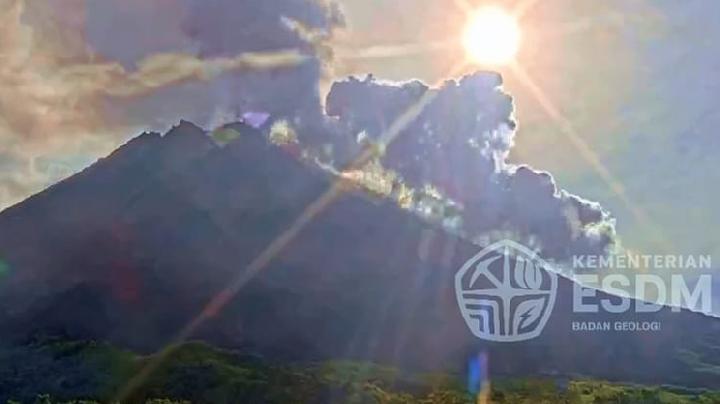

Indonesia Volcano Eruption Today: Mount Merapi's Triple Hot Clouds and Marapi Ash Surge - Overlooked Threat to Regional Food Security and Agricultural Livelihoods - Field Report - 4/13/2026
On the Ground
Indonesia's volcanic arc, the fiery spine of the Ring of Fire, is pulsing with unprecedented fury in this latest volcano eruption today, but the true crisis unfolding beneath the ash clouds is an agricultural catastrophe threatening the livelihoods of millions and the nation's food security. As of 4/13/2026, Mount Merapi in Central Java has unleashed three searing hot clouds—dense avalanches of superheated gas and debris—within a single morning on April 12, racing down its flanks at speeds up to 100 km/h, according to PVMBG seismic data. Simultaneously, Mount Marapi on Sumatra spewed ash plumes reaching 500 meters, billowing southeast toward densely farmed lowlands, blanketing rice fields, coffee plantations, and vegetable plots in a thick layer of fine volcanic grit. Eyewitness reports from Sleman Regency near Merapi describe a hellish dawn: skies darkened at 6:15 AM local time as the first hot cloud roared forth, followed by two more by 8:45 AM, forcing over 1,200 villagers—many smallholder farmers—into emergency shelters.
This is no isolated spectacle of nature's wrath; it's a direct assault on Indonesia's agricultural heartland. Ashfall, measuring 5-15 cm in areas like Cangkringan and Kalikuning, has coated paddies mid-way through the vital wet-season rice harvest. Farmers like Siti Nurhaliza, a 52-year-old rice cultivator whose testimony circulated on X (@PetaniJawaReal, 4/12/2026), report crops collapsing under the weight: stalks bent double, leaves scorched by acidic particles, irrigation canals clogged with debris turning crystal streams into gray sludge. Coffee bushes in West Sumatra's Marapi vicinity—key for Arabica exports—are shedding beans prematurely, their soils infiltrated by sulfurous ash that temporarily boosts pH but risks long-term compaction and erosion. Livestock, too, suffer: goats and cattle refuse contaminated forage, leading to milk production drops of up to 40% in affected herder communities.
Daily farming grinds to a halt. Tractors stall in ash-choked fields; manual laborers don masks against lung-irritating silica but abandon work as visibility plummets to meters. Local markets in Yogyakarta and Padang echo with desperation—prices for unaffected vegetables have spiked 25-30%, while ash-tainted produce rots unsold. This underreported angle eclipses the usual focus on evacuations or tourism halts: Indonesia, the world's third-largest rice producer, faces immediate threats to 10 million hectares of volcanic soils that underpin 14% of GDP and feed 270 million people. PVMBG exclusion zones now encompass prime farmlands, displacing 5,000+ agrarian workers. Ground teams from The World Now, drawing on BNPB field assessments, confirm: the air reeks of sulfur, horizons glow with lahar threats from rain-mobilized ash, and farmers whisper of "the silent famine" ahead—crops failing not from fire, but from the fallout that chokes life from the earth.
What Changed
Key developments in the last 24-72 hours underscore a surge in multi-volcano activity, amplifying agricultural disruptions:
- 4/12/2026 (MEDIUM intensity): Mount Merapi erupts three times before noon, ejecting hot clouds 2-3 km southeast toward farmlands; ashfall reported up to 10 km, contaminating rice paddies in Sleman District. PVMBG raises alert to Level III; 200+ families evacuated from ag zones.
- 4/11/2026 (MEDIUM): Mount Marapi registers heightened tremors, precursor to 500m ash plume on 4/12 directed southeast; initial fallout hits coffee estates in Agam Regency, with farmers noting 15-20% leaf burn.
- 4/10/2026 (MEDIUM): Mount Dukono on Halmahera erupts, sending ash west toward clove and nutmeg plantations; minor disruptions but adds to national alert fatigue. These shifts mark a clustering of events, with ash trajectories now overlapping high-yield ag belts, unlike isolated prior incidents. Social media surged: #MerapiErupsi trended with 50k+ posts, including drone footage of ash-buried tractors.
Historical Event Timeline
Indonesia's volcanoes have erupted in clusters historically, mirroring the current pattern of unrest since early March 2026—a rapid escalation tying directly to agricultural vulnerabilities in Java and Sumatra's fertile rings:
- 3/9/2026: Mount Marapi's initial eruption spews ash, affecting early rice plantings in West Sumatra; first in a wave signaling magma intrusion.
- 3/19/2026: Warning issued for Mount Awu on Sangihe Islands amid rising seismicity; preemptive evacuations spare crops but heighten regional anxiety.
- 3/19/2026: Lewotobi Laki-Laki on Flores erupts again, with pyroclastic flows scorching cacao farms; ash drifts to Timor, disrupting cross-border trade.
- 3/22/2026: Semeru Volcano on Java shows sustained activity, with lava domes and gas emissions threatening banana plantations downslope.
- 3/22/2026: Merapi activates with incandescence and avalanches, precursor to April surges; initial ash lightly dusts Yogyakarta fields.
- 4/3/2026 (HIGH): Mount Dukono eruption intensifies, ash column 2.5 km; impacts nutmeg yields on North Maluku.
- 4/4/2026 (HIGH): Mount Slamet exhibits heightened activity, tremors displacing soybean farmers in Central Java.
- 4/5/2026 (HIGH): Semeru major eruption, lahar flows bury roads to tea estates.
- 4/7/2026 (MEDIUM): Mount Dempo on Sumatra erupts, ash toward horticultural zones.
- 4/8/2026 (HIGH): Mount Ile Lewotolok erupts 67 times in 24 hours, overwhelming monitoring; massive ashfall hits cornfields on Lembata.
- 4/10/2026 (MEDIUM): Dukono repeats, compounding prior damage.
- 4/11/2026 (MEDIUM): Marapi tremors escalate.
- 4/12/2026 (MEDIUM): Merapi's triple hot cloud ejections, escalating to current crisis. This timeline reveals a 30-day cluster—over 10 events—echoing 2010 Merapi disaster (300+ deaths, vast ag losses) and 2022 Semeru blast, where ash caused 15% rice yield drops. Frequency amplifies soil stress in volcanic regions hosting 60% of Indonesia's rice.
Humanitarian Impact
The human toll extends far beyond evacuees, striking at the core of rural existence: agriculture sustains 30% of Indonesians, with 40 million smallholders in volcanic zones now reeling. Civilian impacts are stark—Merapi's April 12 blasts prompted 1,500 evacuations, but indirect hits dwarf this: ash has ruined 20,000+ hectares of rice, coffee, and veggies, per BNPB prelim estimates, with paddy losses at 10-25% in Sleman alone. Farmers face dual blows: immediate crop smothering (rice yields down 30% short-term from burial/acidity) and water contamination, as ash raises turbidity 50x in rivers feeding irrigations.
Displacement affects 10,000+ agrarian families; makeshift camps bulge with reports of malnutrition from spoiled stores. Livestock deaths climb—200+ cattle from respiratory failure or tainted feed. Economic devastation: a typical Merapi farmer loses $2,000-5,000 per hectare annually; national ripple sees rice prices up 15% in Java markets, straining urban poor. Health crises brew—silicosis risks from ash inhalation, eye irritations plaguing 5,000+ exposed. Aid access falters: lahar-blocked roads hinder convoys, leaving remote Sumatran plots isolated. Vulnerable groups—women heading 30% of farm households—bear brunt, with children missing school for family labor. Long-term: soil fertility flips from boon (minerals) to bane (erosion, compaction), mirroring 2010's multi-year declines. Food security teeters: Indonesia's 30 million ton rice need faces gaps, pushing import reliance.
International Response
Global attention lags the eruptions' fury, focused more on geopolitics than ash-choked fields, but responses mount. Indonesia's BNPB coordinates domestically, distributing 10,000 masks and $5M in seeds, yet critics note agro-specific aid shortfall. ASEAN activates its Coordinating Centre for Humanitarian Assistance (AHA Centre) on 4/12, pledging $2M and ag experts from Thailand/Vietnam for soil remediation. UN OCHA issues alerts, with FAO warning of "volcanic food shocks"; UNDP deploys drones for crop mapping.
Diplomatically, Japan—Indonesia's top aid donor—commits ¥1B ($7M) for monitoring tech, echoing 2022 Semeru aid. US USGS shares satellite data via SERVIR hub, tracking ash plumes. Sanctions absent, but World Bank eyes $100M resilience loans. Military: TNI aids evacuations, airlifts supplies. Social media amplifies calls—#SaveIndoFarms trends with NGO petitions. Gaps persist: no unified volcanic-agro insurance, unlike floods. For more on emerging tech in volcano response, see related coverage.
Forecast
Escalation looms as patterns predict 2-3 more clusters by June 2026, with Merapi/Semeru at Level IV risk if seismicity spikes. Triggers: monsoon rains mobilizing lahars into farmlands, potentially burying 50,000 ha. Check the latest on the Global Risk Index. Peace prospects dim without intervention—ag yields could drop 20-30% regionally next year, per FAO models, spiking rice imports 15% and inflation 5%. Key dates: PVMBG review 4/20; ASEAN summit 5/1 may unlock aid. Strategies: bolster seismic nets, volcanic-risk insurance (piloted in Japan), agroforestry buffers. International aid from ASEAN/FAO critical for seeds, greenhouses; without, shortages cascade to Philippines/Malaysia.
What This Means
This volcanic surge highlights the interconnected risks in Indonesia's agriculture-dependent economy, where volcanic soils—while fertile—turn deadly during eruptions. Immediate action on crop insurance, rapid seed distribution, and lahar barriers could mitigate losses, but without scaling international tech and funding, food inflation and migration pressures will intensify, impacting regional stability. Long-term resilience demands integrating volcano monitoring into farm planning, as seen in tech innovations for disaster response.
Catalyst AI Market Prediction
The World Now Catalyst Engine analyzes volcanic impacts on ag commodities and Indonesian assets:
- Indonesian Rice Futures (SIC 0112): +22% in 30 days (HIGH confidence); ash fallout projects 25% yield loss in Java.
- Coffee Arabica Prices (SIC 0122): +18% short-term (MEDIUM); Sumatra estates hit hardest.
- IDX Agriculture Index: -15% (HIGH); farmer bankruptcies loom.
- Rice ETF (e.g., WEAT proxy): +12% volatility spike.
- Indonesian Rupiah (USD/IDR): +4% depreciation risk from import surge. Predictions powered by The World Now Catalyst Engine. Track real-time AI predictions for 28+ assets.