
Heavy Snowfall Grips Northern France, Triggering Travel Chaos and Eurostar Cancellations
Paris, France — A rare and intense snowfall has blanketed northern and western France, including the Paris region, leading to widespread travel disruptions, road closures, and official advisories to stay home as of January 7, 2026. The cold snap, part of a broader weather event affecting Europe since January 5, has caused cancellations of Eurostar high-speed trains and prompted alerts for snow and black ice from France's national weather service.
The disruptions began intensifying overnight into Wednesday, with heavy snow accumulating across the French capital and surrounding areas. France's national weather service placed large parts of northern and western France, including Paris, on high alert for snow and black ice, conditions that have made roads treacherous and grounded air and rail travel. Eurostar services, which link London with Paris, Brussels, and Amsterdam, faced significant cancellations and delays on January 7, marking a repeat of issues amid the ongoing wintry assault. Passengers reported being stranded at stations, with the operator citing heavy snowfall as the primary cause.
French authorities responded swiftly, urging residents in affected regions to work from home and avoid using their cars. "People should stay indoors where possible and refrain from unnecessary travel," officials advised, as reported by FRANCE 24. The measures aim to prevent accidents on icy roads, where black ice—thin, nearly invisible layers of ice—poses a particular hazard. In Paris, the snow transformed iconic streets and monuments into a winter spectacle, with a thick blanket covering landmarks and prompting some locals to ski through the city in a display of adaptation to the unusual conditions.
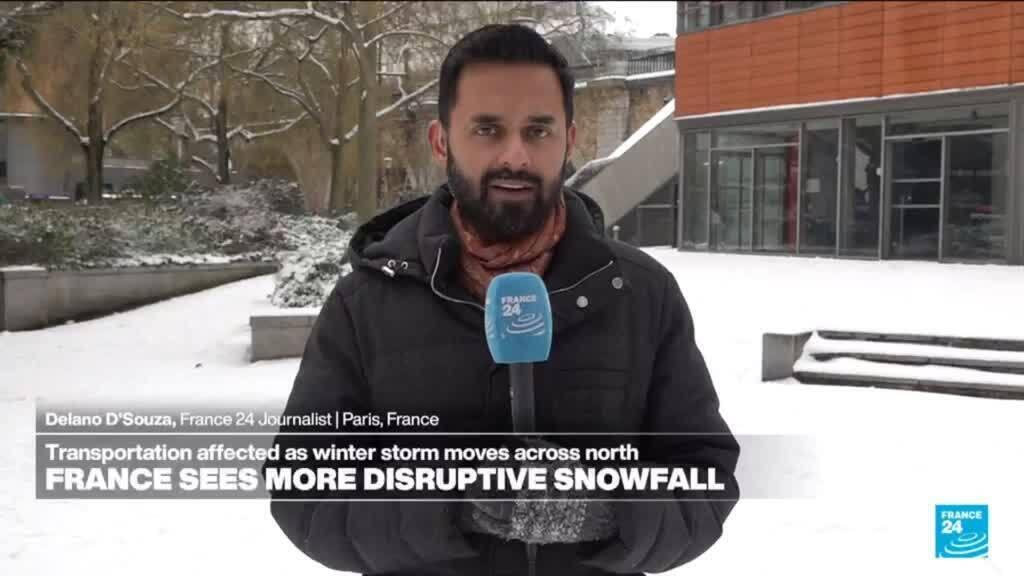
Visuals from the scene captured the rarity of the event: Paris, which typically experiences mild winters, awoke to sub-zero temperatures and glistening snowdrifts on avenues like the Champs-Élysées and around the Eiffel Tower. FRANCE 24 correspondent Delano D'Souza reported from the ground, highlighting how the overnight snowfall created a "rare stretch of sub-zero temperatures" not commonly seen in the city. Images showed snow piled on statues, benches buried under white powder, and residents bundling up against the chill, underscoring the event's novelty for a metropolis more accustomed to rain than blizzards.
This weather event extends beyond France's borders, disrupting travel in the UK and the Netherlands as well. The cold front, which started on January 5, has led to road closures, flight cancellations, and train suspensions across northwest Europe. In France, the impacts are particularly acute in the densely populated Paris basin, a hub for international transport. Eurostar's troubles echo past disruptions during extreme weather, such as the 2010 "Snowmageddon" that paralyzed Europe, though current forecasts indicate the snow may persist through the week.
Background on France's Winter Weather Patterns
France's northern regions, while prone to Atlantic-influenced mild weather, occasionally face Arctic incursions that bring snow to low-lying areas like Paris. The city averages only about 15 snowy days per year, with heavy accumulations being exceptional. Historical data from Météo-France, the national weather service, shows significant snow events in Paris occurring roughly once every few years, such as in 2018 and 2021, when accumulations reached 5-10 cm. The current episode aligns with a pattern of cold snaps fueled by polar vortex dips, exacerbated by climate variability that can lead to sudden temperature plunges even as global averages rise.
Météo-France has classified the alerts at orange levels in affected departments, signaling a need for vigilance but not yet the highest red alert reserved for extreme dangers. Accumulations in Paris reached several centimeters overnight, with more expected, while rural areas in Normandy and Brittany reported heavier falls contributing to the regional travel gridlock.
Outlook and Response
As cleanup efforts begin, authorities are deploying gritters and snowplows to major routes, but recovery could take days. Eurostar has advised passengers to check updates via its app, with some services resuming on diverted routes. Schools in parts of northern France closed temporarily, and energy demands spiked as households turned to heating amid the freeze.
Meteorologists predict the snow to ease by late week, transitioning to milder conditions, though lingering ice remains a risk. The event serves as a reminder of Europe's vulnerability to wintry extremes, prompting discussions on infrastructure resilience. For now, Parisians are making the best of their fleeting winter wonderland, while travelers navigate the fallout from nature's icy grip.
(Word count: 612)