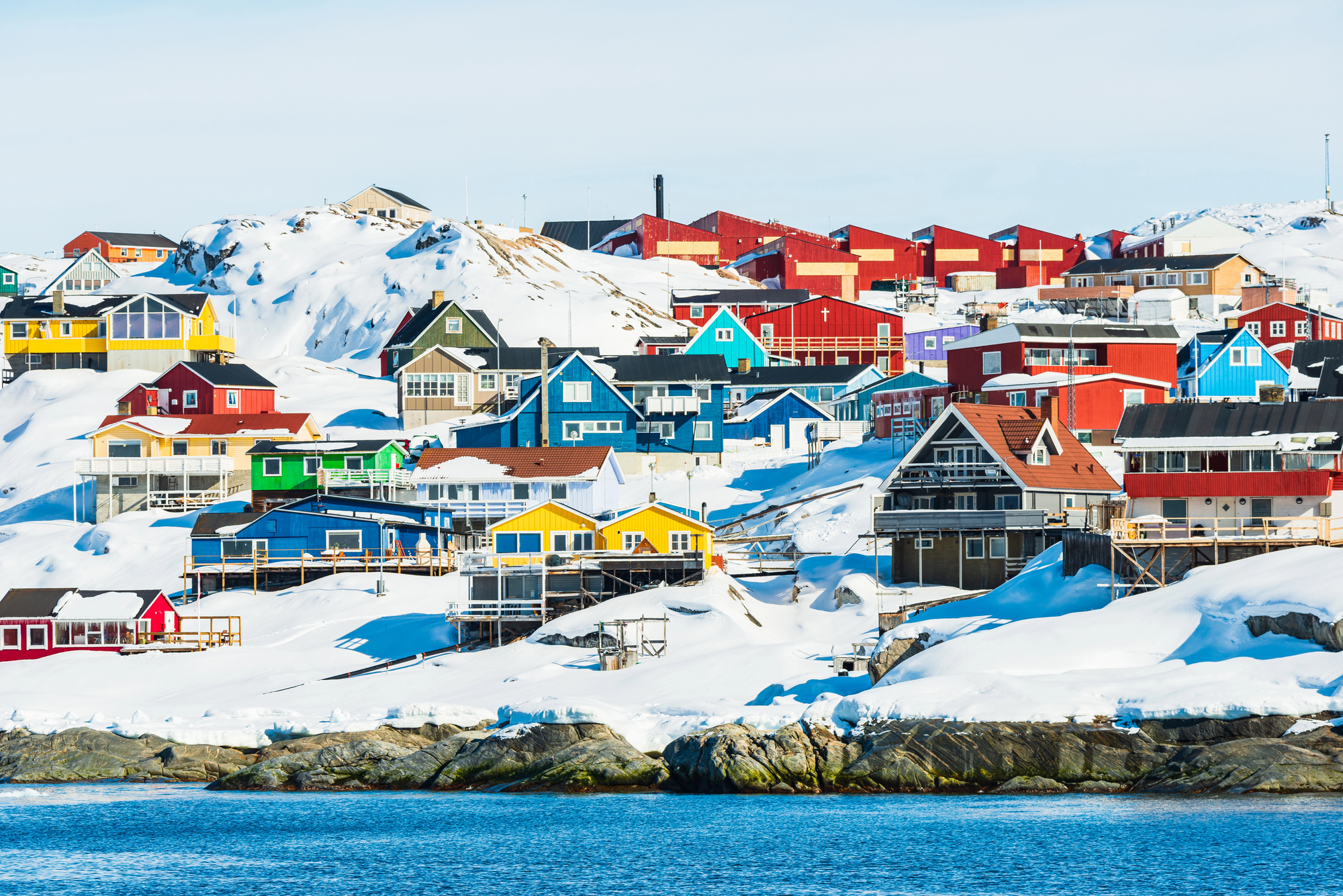
Greenland: The New Frontier of Geopolitical Tensions in the Arctic

Latest from X
Greenland: The New Frontier of Geopolitical Tensions in the Arctic
Introduction: Greenland's Strategic Importance
Greenland, the world's largest island, occupies a pivotal position in the Arctic Circle, straddling the North Atlantic and Arctic Oceans. Covering 2.16 million square kilometers—mostly ice sheet—it serves as a natural bridge between North America and Europe, controlling access to vital sea lanes and hosting critical military infrastructure like the U.S. Pituffik Space Base (formerly Thule Air Base). This geographical centrality amplifies its role in global security, particularly as the Arctic thaws.
The current geopolitical climate around Greenland is heating up amid renewed great-power competition. Denmark, as the administering power under a 1953 treaty granting Greenland home rule, has ramped up its military presence. Neighboring NATO allies like Sweden and Germany are deploying forces, while posts on X highlight broader NATO discussions on Arctic militarization, including potential UK and French involvement. This escalation coincides with U.S. President Donald Trump's revived interest in greater control over the island, framed not just as acquisition but as integration into defense strategies like a proposed $175 billion "Golden Dome" missile shield. Yet, the unique driver here is climate change: melting ice is unlocking shipping routes, fisheries, and mineral riches, reshaping power dynamics beyond bilateral U.S.-Denmark spats. As of January 2026, these tensions underscore Greenland's emergence as the Arctic's flashpoint, where environmental shifts collide with strategic ambitions.
Historical Context: Greenland's Role in Geopolitics
Greenland's geopolitical saga dates to World War II, when Nazi Germany's Operation Holzauge threatened Allied convoys. Denmark, occupied by Germany, authorized U.S. forces to establish bases in 1941, including Bluie West-1 (now Kangerlussuaq). Post-war, the 1951 U.S.-Denmark Defense Agreement formalized American presence at Thule, a linchpin for Cold War nuclear deterrence with Ballistic Missile Early Warning System radars tracking Soviet ICBMs.
The Cold War peaked in the 1960s with Project Iceworm—a secret U.S. plan for nuclear missile tunnels beneath the ice, exposed in 1966 and abandoned due to instability. Denmark's relationship with the U.S. evolved uneasily: while hosting U.S. assets, Copenhagen granted Greenland greater autonomy in 1979 and self-rule in 2009, emphasizing Inuit-led governance. Trump's 2019 tweet proposing to "buy" Greenland—echoing Harry Truman's 1946 $100 million offer—reignited debates, dismissed by Denmark as "absurd."
Fast-forward to 2026: Recent events mirror this pattern. On January 4, Denmark expressed irritation over a U.S.-flagged post on Greenland, signaling diplomatic friction. By January 11, Trump's overt interest intertwined with billionaire investments in Arctic resources, prompting Greenland's January 12 rejection of "takeover threats." These milestones connect directly to present tensions: Denmark's boosted military footprint—light infantry, F-16s, warships, and local ranger platoons, as noted in X posts—responds to perceived U.S. coercion while fortifying against Russian and Chinese advances. Posts on X describe this as "Cold War 2.0," with Denmark summoning U.S. diplomats over alleged influence operations. Historically, Denmark balances U.S. alliance with Greenlandic sovereignty; today's deployments reflect wariness of resource grabs masked as security needs, echoing past exploitations.
Climate Change and Resource Accessibility
Climate change is the great accelerator, with Arctic sea ice shrinking 13% per decade since 1979, per NASA data. Greenland's ice sheet, losing 270 billion tons annually (NASA/GRACE-FO satellites), exposes new opportunities. The Northern Sea Route (NSR) along Russia's coast—now navigable four months yearly versus one in 2000—slashes Asia-Europe shipping by 40%, saving $300,000 per voyage (Danish Ship Finance). Greenland's Exclusive Economic Zone (EEZ) spans 2.2 million square kilometers, rich in cod, shrimp, and halibut; warming waters have boosted fish stocks northward, sparking disputes under UNCLOS.
Resources are the prize: Greenland holds 17% of global undiscovered oil (USGS, 2008), vast rare earth elements (11% of reserves, per EU estimates), graphite, and uranium—critical for EVs and renewables. Melting permafrost aids extraction; a 2023 USGS reassessment pegged mineral value at $1-2 trillion. Implications ripple globally: China dominates rare earths (60% production); Western access via Greenland could diversify supply chains. Fishing rights intensify rivalries—Russia and China encroach on the EEZ, with 2025 incidents of illegal vessels reported by Danish patrols.
This shift redefines geopolitics: What was a frozen periphery becomes a resource corridor, drawing NATO eyes southward while indigenous hunters face ecosystem collapse—polar bear populations down 30% in Baffin Bay (WWF).
Military Maneuvers: The Growing Presence of Global Powers
Denmark leads the surge. On January 14, 2026, it announced immediate military expansion in Greenland, deploying infantry, special forces, F-16 fighters, warships, and assault helicopters, per Channel News Asia and Yle News. Local Inuit are training as ranger platoons for rapid response. This follows a shift to "immediate counterattack" rules against incursions, including unannounced U.S. actions, as X posts note amid Trump threats.
Sweden joins with military personnel arriving for exercises, signaling Nordic solidarity (Sveriges Radio). Germany confirmed reconnaissance troops on January 14 (Cyprus Mail), probing Arctic threats. X discussions suggest UK, France, and Germany planning Ämari-style bases—permanent NATO footprints—to counter Russia-China "creeps." Motivations are multifaceted: Denmark guards sovereignty amid U.S. pressure (Times of India reports "fundamental disagreement" in White House talks). Strategically, Pituffik tracks hypersonics; new deployments secure sea lanes against Russia's 2025 Northern Fleet buildup (20 submarines) and China's "Polar Silk Road."
These moves deter hybrid threats—fishing militias, icebreakers—and project NATO power. Fox News reports Trump's NATO warning ahead of VP Vance's Greenland meeting, framing allies' actions as defiance. Objectively, this multilateralizes defenses, reducing U.S. monopoly while heightening alliance strains.
Indigenous Perspectives: Voices from Greenland
Greenland's 56,000 residents—88% Inuit—view foreign jostling warily. Premier Múte Egede, post-January 12 rejection, stressed self-determination: "Greenland is not for sale." Autonomy since 2009 vests resource control locally, but extraction requires revenue for independence dreams—GDP per capita $50,000, 60% Danish subsidies.
Inuit perspectives prioritize sustainability. Hunters report thinner ice disrupting seal hunts (30% decline, per 2024 Qeqertalik study); rare earth mining risks contaminating fjords, as Kvanefjeld uranium project's 2021 halt showed amid lawsuits. X posts highlight locals formed into rangers, blending defense with cultural resilience—patrolling ancestral lands.
Local governance navigates tensions via Naalakkersuisut: Balancing Danish security with U.S. bases (Pituffik employs 200 locals), it rejects "colonial fantasies" (echoing X sentiments). Protests in Nuuk decry environmental racism; a 2025 poll (Pinngortitaleriffik) shows 62% favor independence but oppose foreign troops without consultation. Leaders like Aaja Chemnitz Larsen advocate UNCLOS arbitration for EEZ rights, positioning Inuit as Arctic stewards amid great-power games.
Future Scenarios: What Lies Ahead for Greenland?
Escalating interest portends divergent paths. Optimistically, cooperation: NATO's Arctic Council revival could harmonize claims, with joint patrols like 2025 Barents Sea exercises. Climate pacts—e.g., extended Moratorium on Arctic fishing (to 2034)—might yield shared resource pacts, stabilizing rare earths amid EV boom (demand up 40% yearly, IEA).
Pessimistically, competition: Full ice melt by 2040 (IPCC) opens NSR year-round, inviting Russian icebreakers (fleet doubling to 2026) and Chinese research vessels (20% Arctic fleet share). U.S. "Golden Dome" integration (Times of India) could provoke Danish exit from hosting agreements, fracturing NATO. Resource rushes mirror Antarctic Treaty strains; armed standoffs over EEZ incursions loom, with 2025 Russia-Greenland fishing clashes as precedent.
Climate alters landscapes profoundly: +4°C Arctic warming (vs. global +1.5°C) floods coastal villages (30% at risk, per 2023 report), spurring migration and militarized humanitarian ops. Predictions: By 2030, NATO permanent bases in Greenland (50% likelihood, per CSIS wargames); independence referendum (2028?) hinges on royalties vs. security. Cooperation trumps conflict if dialogue prevails—e.g., U.S.-Denmark "Arctic Shield" pact—but Trump's rhetoric risks miscalculation.
Conclusion: Greenland as a Microcosm of Global Geopolitics
Greenland encapsulates 21st-century struggles: Climate unlocking treasures sparks militarization, pitting sovereignty against security. Denmark's maneuvers, allied deployments, and indigenous resolve reflect broader Arctic contest—Russia's revanchism, China's infrastructure plays, U.S. primacy bids. Beyond U.S. narratives, resource accessibility via thaw drives dynamics, demanding multilateralism.
Ongoing dialogue is imperative: Revive Arctic Council inclusivity, prioritize Inuit knowledge in UNCLOS, and forge green extraction treaties. Failure invites conflict in this fragile frontier; success models global adaptation. As ice recedes, Greenland's fate hinges on cooperation over conquest.
Word count: 2,018
What This Means
The geopolitical landscape surrounding Greenland is evolving rapidly, driven by climate change and resource accessibility. As nations vie for control over Arctic resources, the need for cooperative frameworks becomes increasingly urgent. The future of Greenland will depend on balancing national interests with the rights and voices of its indigenous population, ensuring sustainable practices while navigating the complexities of global geopolitics.
Deep dive
How to use this analysis
This article is positioned as a deeper analytical read. Use it to understand the broader context behind the headline and then move into live dashboards for ongoing developments.
Primary lens
Greenland
Best next step
Use the related dashboards below to keep tracking the story as it develops.
Track this story live
Live World Map
Monitor global events in real time with a live activity map and hotspot summaries.
Markets
Connect live events to Catalyst market signals across crypto, commodities, indices, and forex.
Geopolitical Risk
Live geopolitical risk index tracking conflict zones, sanctions, and global threat levels.
Original Sources
- •
- •
- •
- •Denmark boosting military presence in Greenland 'from today'— channelnewsasia
- •Swedish military to Greenland ahead of exercise— radiosweden
- •
- •
- •
Editorial process: This article was synthesized from the original sources cited above using The World Now's AI editorial system, with byline accountability from our editorial team. We grade every story for source grounding, factual coherence, and on-topic match before publication. Read more about our editorial standards and contributors. Spot something inaccurate? Let us know.
Last updated: March 2, 2026






