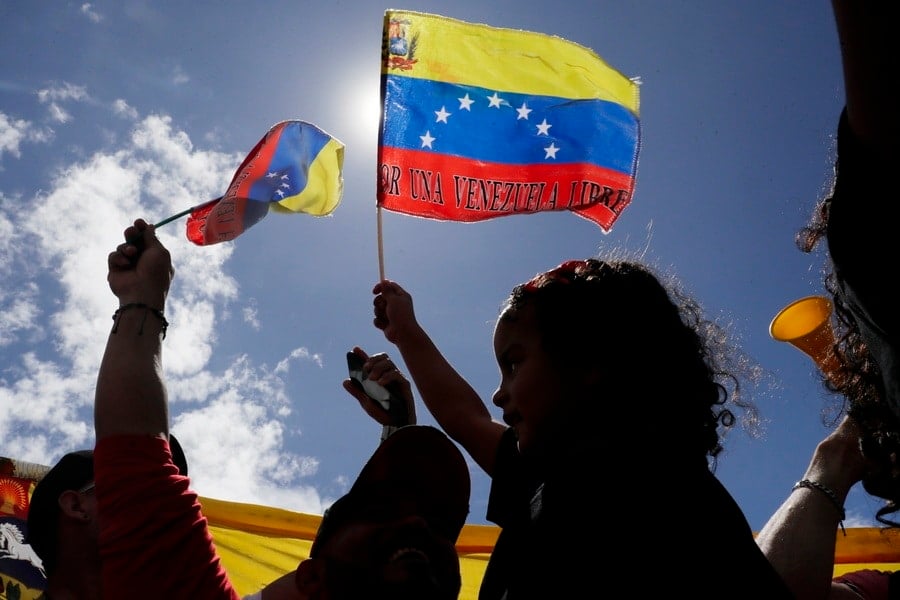
Greece Faces Diplomatic Dilemma Over U.S. Capture of Venezuela’s Maduro

Latest from X
Greece Faces Diplomatic Dilemma Over U.S. Capture of Venezuela’s Maduro
Athens, January 4, 2026 – The capture of Venezuelan President Nicolás Maduro by U.S. forces on January 3, 2026, has thrust Greece into a challenging diplomatic position, caught between its long-standing alliance with the United States and its commitment to international law. As global reactions pour in following Washington's most direct intervention in Latin America in decades, Greece is navigating a delicate balance, with Prime Minister Kyriakos Mitsotakis facing pressure to address both geopolitical loyalties and legal principles.
The operation, which culminated in Maduro’s arrest alongside his wife, Cilia Flores, has sparked widespread controversy and condemnation from various international leaders. For Greece, a NATO member and a nation with a history of advocating for sovereignty and legal norms, the incident poses a unique challenge. According to a report by Greek Reporter, the Greek government is weighing its strategic partnership with the U.S. against concerns over the legality of the military action, which some experts and leaders have questioned.
Official Response and Internal Debate
Prime Minister Mitsotakis has yet to issue a definitive public statement on the matter, but sources indicate that Athens is deliberating its official stance. Greece has historically supported U.S. foreign policy initiatives within the NATO framework, yet it also maintains a strong commitment to international law, often emphasizing the importance of sovereignty and non-interference in the affairs of other nations. This dual allegiance has placed the country in a diplomatic quandary, as aligning too closely with the U.S. could draw criticism from other European Union partners and global actors who have condemned the operation.
Posts on X reflect a divided sentiment regarding Greece’s position. Some users suggest that Athens has hinted at concerns over the legality of the U.S. action, with one post noting that the Greek Prime Minister may view the removal of Maduro as problematic under international norms. Others indicate that Greece has expressed support for the capture, though these claims remain unverified and highlight the uncertainty surrounding the nation’s official response.
Broader International Context
The U.S. operation in Venezuela, described by Reuters as a culmination of months of pressure from President Donald Trump’s administration, has elicited varied reactions worldwide. While some nations have supported the move as a step toward addressing Venezuela’s political and humanitarian crisis, others have decried it as a violation of sovereignty. This polarized global response further complicates Greece’s position, as it seeks to maintain diplomatic relations across a spectrum of perspectives.
Greece’s role in this unfolding crisis is also influenced by its historical ties to Latin America and its own experience with foreign intervention during the 20th century. These factors contribute to a national sensitivity toward issues of sovereignty, potentially shaping public and political opinion on the Maduro capture.
Background: Greece’s Geopolitical Balancing Act
Greece has long navigated a complex geopolitical landscape, balancing its commitments to NATO and the EU with its geographic proximity to conflict zones in the Eastern Mediterranean and Middle East. Its alliance with the U.S. is a cornerstone of its defense strategy, particularly in light of ongoing tensions with Turkey over maritime boundaries and other regional issues. However, Greece has also positioned itself as a proponent of international law, often advocating for diplomatic solutions and respect for national sovereignty in global forums.
In the context of Venezuela, Greece had previously shifted its stance under Mitsotakis’s conservative government, recognizing opposition leader Juan Guaidó as the interim president in 2019, aligning with U.S. and EU policies at the time. This history adds another layer of complexity to the current situation, as Athens must reconcile past positions with the unprecedented nature of direct U.S. military intervention.
Outlook: A Test for Greek Diplomacy
As the international community awaits further developments in Venezuela, Greece’s response to Maduro’s capture will serve as a litmus test for its diplomatic priorities. Will Athens prioritize its alliance with Washington, or will it take a principled stand on international law, potentially straining relations with its key ally? The coming days are likely to bring clarity, as Mitsotakis and his administration finalize their position amid mounting global scrutiny.
For now, Greece remains a focal point in the broader geopolitical fallout from the U.S. operation in Venezuela. The nation’s ability to navigate this crisis could set a precedent for how medium-sized powers manage competing interests in an increasingly polarized world. As discussions continue in Athens and beyond, the eyes of the international community are watching closely.
Track this story live
Live World Map
Monitor global events in real time with a live activity map and hotspot summaries.
Markets
Connect live events to Catalyst market signals across crypto, commodities, indices, and forex.
Geopolitical Risk
Live geopolitical risk index tracking conflict zones, sanctions, and global threat levels.
Original Sources
- •
- •
Editorial process: This article was synthesized from the original sources cited above using The World Now's AI editorial system, with byline accountability from our editorial team. We grade every story for source grounding, factual coherence, and on-topic match before publication. Read more about our editorial standards and contributors. Spot something inaccurate? Let us know.
Last updated: January 18, 2026






