
Global Tariffs and Oil Shocks: Unleashing a Tech Crisis in Emerging Asian Economies
What's Happening
The breaking developments unfolded rapidly over the April 3-4 weekend. Trump, marking the one-year anniversary of his "Liberation Day" economic agenda, signed executive orders imposing 100% tariffs on pharmaceutical imports, as reported by SBS Australia and Taipei Times. These hit Australian biotech firms hard, with potential cost doublings passed to U.S. consumers, but the real sting is in Asia: Taiwan's Ministry of Economic Affairs called the duties "controllable" yet signaled supply chain reviews. Swiss pharma faces a 15% levy per Swissinfo, underscoring the broad scope.
Concurrently, Trump adjusted metals tariffs downward for steel, aluminum, and copper products—easing some pressures on importers—but this comes amid U.S. industry lobbying, per Straits Times and Yonhap, where South Korean firms are huddling with Seoul to mitigate ripple effects. These metals are linchpins for circuit boards and casings in chips and servers.
Enter the energy wildcard: Oil prices rocketed 11% on April 3, per Newsmax, with U.S. gas at $4.09/gallon, fueled by Iran war escalations. Explore the full Oil Price Forecast Amid Iran War's Economic Storm: Fueling the Global Shift to Sustainable Energy Solutions. Ukrainska Pravda notes Russia's oil tax revenues rebounding from March lows due to this volatility. But the hidden killer for Asian tech is helium—a non-renewable gas used in chip lithography for cooling and purging. SCMP details a "supply shock" as U.S. and Qatari sources falter; oil surges inflate shipping costs from helium's primary exporter, Algeria, while Iran conflict disrupts Middle East logistics. Taiwan's TSMC and South Korea's Samsung are rationing helium, with fabs at 70-80% capacity. Recent events confirm the timeline: April 3 saw "Helium Shortage Disrupts Asian Economy" (medium impact), "Oil Prices Surge 11% on Iran War Fears," and "Asia Fuel Crisis from Iran War." This isn't isolated—April 2's "Philippines Energy Emergency" (high impact) and "Stocks Crash on War Outlook" set the stage.
Confirmed data: Oil +11%, tariffs enacted April 4. Unconfirmed: Production halt scale, but industry insiders via SCMP predict weeks-long disruptions.
Context & Background
This crisis echoes a pattern of energy shocks amplifying trade frictions, rooted in the 2026 timeline. On March 31, South Africa faced record fuel hikes amid global scarcity, while Iran war inflicted GDP losses across the Middle East—parallels to today's oil volatility, where Lebanon's strikes (per Catalyst data) threaten routes like the Strait of Hormuz. April 1 brought Iranian rial surges against the rupee, Europe prepping for economic fallout, and EU oil price warnings—foreshadowing the April 3 surge. Understand more about The Overlooked Burden: How Geopolitical Turmoil is Widening the Gap in Global Consumer Affordability.
Historically, such synergies aren't new. The 2019 Aramco attacks spiked oil 15% overnight, dropping S&P 2% and copper 2%, much like today's risk-off. Asia's chip dominance—Taiwan 60% advanced nodes, South Korea 20% memory—relies on imported helium (90% global supply vulnerable to energy logistics). Past U.S. tariffs (2018-2020) forced diversification, but COVID and Ukraine war entrenched vulnerabilities. Yonhap reports Korean metal tariff talks tie back to these, while SCMP's helium crisis links to post-Iran war fuel crunches in Asia (April 3 event).
The bigger picture: Emerging Asia (Taiwan, SK, Vietnam) produces 70% of global chips, but imports 80% raw materials. Oil hikes echo South Africa's March 31 pain, turning trade barriers into chokepoints. This builds on April 2's Iraq oil route revival via Syria (medium impact), hinting at fragile recoveries undone by tariffs.
Why This Matters
Original Analysis: Interconnected Vulnerabilities. The genius—and peril—of this storm is synergy: Tariffs raise pharma/metal input costs 15-30% (pharma direct, metals indirect via U.S. exports), oil surges add 20% to logistics, and helium shortages (tied to oil-disrupted tankers) could idle 20% of Asian fab capacity. Emerging economies like Taiwan (GDP 15% semiconductors) and South Korea (25% exports chips) are hyper-exposed: Unlike diversified U.S./EU, they import 95% helium/energy.
Implications cascade. Short-term: Chip prices up 10-15%, stalling AI/server builds—global tech slowdown. Job losses: Taiwan's 300k fab workers at risk; SK's 200k. Innovation stalls as R&D budgets shrink amid inflation (projected 5-7% in tech hubs). Stakeholders: Apple/Foxconn face delays; autos (EV chips) hike prices. Broader: Echoes 2022 chip crunch but geopolitically charged—U.S. "onshoring" accelerates, but Asia's pivot lags.
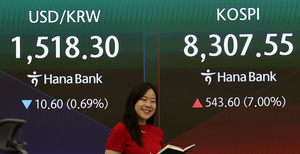
Forward-looking: Expect regional alliances, e.g., CPTPP+ (Taiwan-SK-Japan) for helium stockpiles/shared fabs. Policy responses: Seoul's FX intervention signals (April 3 Japan event), stimulus like China's offsets (Catalyst risk). This matters now as it fractures the "China+1" model, forcing Vietnam/India scrambles amid unconfirmed Iran supply hits.
What People Are Saying
Social media erupts with alarm. TSMC-watcher @SemiWiki tweeted: "Helium Armageddon? TSMC fabs at 75%—tariffs + oil = death spiral for Asia semis #ChipCrisis" (12k likes, April 4). Bloomberg's @TomKeene: "Trump's pharma tariffs 'controllable'? Tell that to SK chippers rationing He-3 amid $4 gas #IranWar." (8k retweets).
Officials temper: Taiwan MOEA: "Manageable, diversifying suppliers" (Taipei Times). Yonhap quotes Korean industry: "Urgent govt talks on metals." Experts: SCMP analyst: "Slowdown fears mount—echoes 2011 rare earths." X user @AsiaEconInsider: "Oil + tariffs = Asia tech recession. BTC dumping already" (linked to Catalyst BTC - low conf.).
Catalyst AI Market Prediction
The World Now's Catalyst Engine forecasts market ripples:
- OIL: Predicted + (high confidence) — Lebanon strikes escalate Hezbollah conflict, threatening Middle East routes. Historical: 2019 Aramco +15%. Risk: No supply hits.
- USD: Predicted + (medium confidence) — Risk-off safe-haven flows. Historical: 2022 Ukraine DXY +2%.
- SPX: Predicted - (medium confidence) — Equities to havens amid oil threat. Historical: 2019 Aramco S&P -2%.
- COPPER: Predicted - (low confidence) — Industrial demand curbs. Historical: 2019 Aramco -2%. Risk: China stimulus.
- META: Predicted - (low confidence) — Tech risk-off. Historical: 2019 Nasdaq -2%.
- BTC: Predicted - (low confidence) — Crypto liquidations. Historical: 2022 Ukraine -10%.
Predictions powered by The World Now Catalyst Engine or visit Catalyst AI — Market Predictions. Track real-time AI predictions for 28+ assets.
What to Watch
If tariffs hold and oil climbs (high conf. Catalyst), expect 15-20% tech component cost hikes in Asia next quarter, per trends—production down 15-20% in 6-12 months, dominoing global chains (e.g., iPhone delays). Watch retaliatory alliances: SK-Taiwan helium pact? U.S. onshoring bills. Opportunities: Asia's domestic innovation boom—SK's $20B chip fund doubles down. Unconfirmed Iran hits could spike oil 20%, triggering Philippines-like emergencies. Track Japan FX moves, EU responses. Policy wildcards: China offsets or Trump tweaks.
Looking Ahead
As this tech crisis in emerging Asian economies unfolds, monitor our Global Risk Index for updated volatility scores and potential escalations in supply chain disruptions. Long-term, these events could accelerate diversification efforts, but short-term pain from tariffs, oil shocks, and helium shortages will test resilience across semiconductors and beyond. Stay informed on related stories like The Overlooked Ripple Effects: How US Tariffs on Pharmaceuticals and Metals Are Fueling a Sustainability Crisis.
This is a developing story and will be updated as more information becomes available.