
Global Geopolitics: Gaza Aid Flotilla Activists Released After Israeli Interception
In the realm of geopolitics global, where maritime routes and humanitarian missions intersect with longstanding blockades, activists aboard aid ships bound for Gaza, including former Pakistani senator Mushtaq Ahmad, have been released following an interception by Israeli forces in international waters near Greece.[1] More than 100 participants were involved in this effort as part of the Global Sumud Flotilla, with some now returning home, including a group arriving in Türkiye.[1][2]
Interception of the Flotilla
The interception of the Global Sumud Flotilla marked a significant moment in ongoing efforts to deliver humanitarian aid to Gaza amid Israel's blockade. Israeli forces seized the vessels carrying more than 100 activists, including former Pakistani senator Mushtaq Ahmad, in international waters near Greece.[1] This action occurred just one day prior to the activists' release, highlighting the swift sequence of events in this maritime operation.[1] The ships were part of a convoy specifically aimed at challenging the restrictions on Gaza by transporting essential humanitarian assistance, a mission that underscores the persistent tensions surrounding access to the region.[1]
Details from the incident reveal that the flotilla's path had brought it into a zone of heightened geopolitical sensitivity, where international waters near Greece became the site of the seizure.[1] The activists aboard were committed to their cause, boarding ships loaded with aid intended to alleviate conditions in Gaza under the blockade.[1] This event fits into a broader pattern of such initiatives, as the flotilla represented a calculated attempt to navigate maritime boundaries while drawing global attention to the humanitarian situation.[1] The precision of the interception by Israeli forces, occurring in international waters, points to the complexities of enforcement in these contested areas, where naval operations must balance security concerns with international maritime law.[1] Reports indicate that the seizure was executed efficiently, leading directly to the subsequent handling of the crew and passengers.[1]
Further context from the operation emphasizes the scale: over 100 individuals from various nationalities were on board, united in their objective to reach Gaza despite the obstacles posed by the blockade.[1] The location near Greece added a layer of regional involvement, as the Mediterranean Sea serves as a critical corridor for such missions, often placing nearby nations like Greece in proximity to these confrontations.[1] This interception not only disrupted the immediate voyage but also reignited discussions on the legality and implications of intercepting civilian vessels in open seas.[1] The flotilla's determination to proceed from its origin point to Gaza illustrates the resolve behind these campaigns, even in the face of anticipated resistance.[1]
Release of Activists
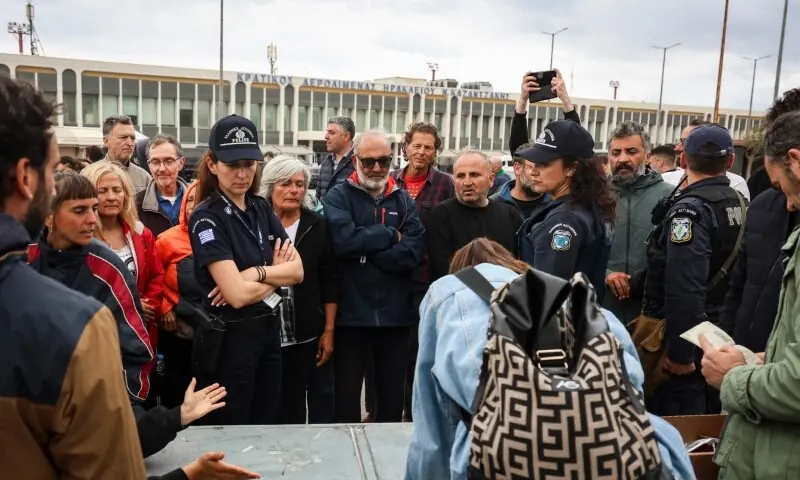
Following the interception, the activists were released and transported to the Greek island of Crete on Friday, providing a resolution to the immediate standoff.[1] This relocation occurred a day after the seizure by Israeli forces, allowing the more than 100 participants, including former Pakistani senator Mushtaq Ahmad, to disembark and continue from there.[1] The release process was orderly, with the individuals moved to Crete, a strategic island in the Mediterranean that served as a neutral hub for their processing and departure.[1]
The decision to take the activists to Crete reflects logistical considerations in managing such interceptions, ensuring they were safely off the vessels and under Greek oversight.[1] Mushtaq Ahmad, a notable figure as a former Pakistani senator, was among those freed, symbolizing the international composition of the group drawn to the flotilla's mission.[1] This event's timing—release on Friday after Thursday's seizure—demonstrates the rapid pace at which authorities handled the situation, transitioning from naval action to onshore release.[1] For the activists, Crete became a temporary waypoint, where they could regroup after their bid to deliver aid to Gaza was halted.[1]
In the aftermath, the release allowed for the dispersal of the group, with some proceeding to their home countries, underscoring the multinational nature of the effort.[1] The Greek island's role was pivotal, offering a location removed from the immediate conflict zone yet accessible via standard maritime routes.[1] This development closed the chapter on the direct confrontation at sea, but it also highlighted the human element: over 100 individuals who had embarked on a humanitarian voyage now faced return journeys instead of their intended destination.[1] The inclusion of high-profile participants like Mushtaq Ahmad further amplified the flotilla's visibility, drawing attention to the blockade's impact on such initiatives.[1]
Arrival in Türkiye
A plane carrying 59 activists from the intercepted Global Sumud Flotilla, including 18 Turkish nationals, has landed in Istanbul, marking the return of a significant portion of the group to Türkiye.[2] This arrival represents a key homecoming for those involved, connecting the Mediterranean interception to broader regional networks.[2] The flight brought back participants who had been part of the aid mission bound for Gaza, intercepted by Israeli forces, and subsequently released.[2]
The landing in Istanbul underscores Türkiye's involvement in these international efforts, with 18 Turkish nationals among the 59 aboard the plane.[2] This group navigated the post-interception logistics, traveling from the region of the seizure to their arrival point in Türkiye.[2] The event ties directly to the flotilla's global reach, as activists from multiple countries, including Türkiye, united for the Gaza aid delivery.[2] Istanbul, as a major hub, facilitated the reintegration of these individuals, allowing them to share accounts of the journey and interception.[2]
Details of the plane's arrival highlight the organized response to the flotilla's disruption, with 59 activists completing their return leg efficiently.[2] The presence of 18 Turkish nationals emphasizes the national stake in the mission, reflecting ongoing solidarity with Gaza amid the blockade.[2] This development provides closure for those on board, shifting focus from the high-seas tension to grounded reunions in Türkiye.[2]
Background on the Flotilla
The Global Sumud Flotilla, described as a second such initiative launched in recent months, was organized to break Israel’s blockade of Gaza through the delivery of humanitarian assistance.[1] The ships set sail from the Spanish port of Barcelona in April, embarking on a voyage that aimed to pierce the restrictions limiting aid to the territory.[1] This flotilla built on prior efforts, positioning itself as part of a sustained campaign against the blockade, with more than 100 activists aboard committed to the cause.[1]
From Barcelona, the vessels charted a course toward Gaza, loading humanitarian supplies intended to address needs exacerbated by the ongoing blockade.[1] The term "Sumud," evoking resilience, encapsulates the flotilla's ethos, as participants sought to embody persistence in the face of naval barriers.[1] As the second iteration in recent months, it signals a pattern of repeated attempts, each drawing international participants like former Pakistani senator Mushtaq Ahmad to challenge the status quo.[1] The April departure from Spain marked the beginning of a multi-week journey, culminating in the interception near Greece.[1]
This background reveals the flotilla's strategic planning: originating from a European port to leverage international waters and visibility, while targeting Gaza's humanitarian crisis.[1] The blockade's context frames these missions, as each sailing represents an assertion of access rights amid enforced restrictions.[1] With over 100 aboard, the operation scaled up participation, fostering a coalition effort that intersected geopolitics global dynamics in the Mediterranean.[1] The Barcelona launch in April set the timeline, aligning with seasonal sailing conditions for such long-haul endeavors.[1]
What to watch next: As this was the second Global Sumud Flotilla launched in recent months to challenge Israel's Gaza blockade, further attempts to deliver humanitarian aid via sea routes may follow, potentially escalating maritime tensions near the region.[1]






