
Geopolitics Global: Israeli Forces Intercept Gaza Aid Flotilla and Release Activists
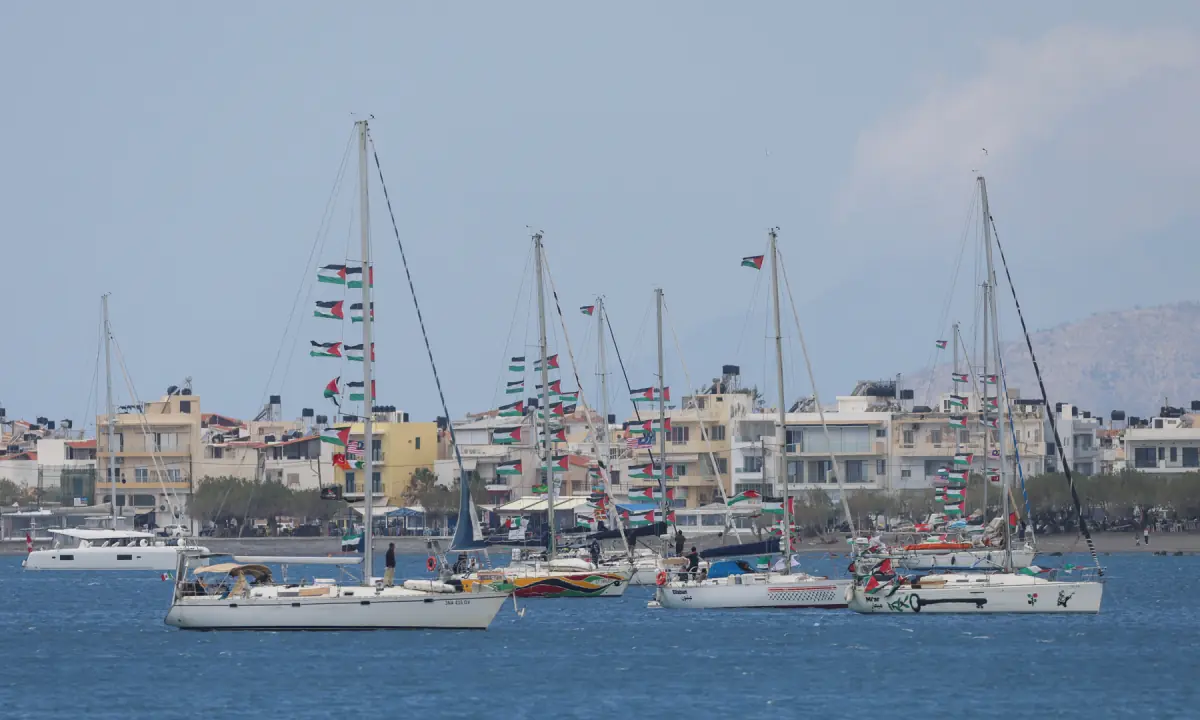
In a significant development in geopolitics global, Israeli forces intercepted the Global Sumud Flotilla, a Gaza-bound aid mission, in international waters near Greece and released the activists, who were then taken to the Greek island of Crete.[1][3][5] This event underscores ongoing tensions surrounding efforts to deliver humanitarian assistance amid Israel's blockade of Gaza, with more than 100 participants involved, including notable figures like former Pakistani senator Mushtaq Ahmad.[1]
The Interception Event
The interception of the Global Sumud Flotilla by Israeli forces occurred in international waters near Greece, marking a direct intervention in the aid mission's path toward Gaza.[1][3][5] According to reports, the vessels were seized on a Thursday, with the activists subsequently released the following day, Friday.[1][3][5] Flotilla organizers confirmed that more than 100 pro-Palestinian activists aboard boats carrying aid bound for Gaza were involved in this operation.[5] The action took place amid the flotilla's attempt to challenge Israel's longstanding naval blockade, which has restricted maritime access to the Gaza Strip.[1][3]
This event echoes previous high-profile confrontations at sea involving aid convoys to Gaza, though specifics here highlight the location in international waters, raising questions about jurisdictional boundaries and freedom of navigation.[5] Israeli forces' decision to board and seize the ships prevented the aid from reaching its intended destination, aligning with Israel's policy of maintaining security control over approaches to Gaza.[1][3] The timing, shortly after the ships' departure from their starting point, disrupted the mission's momentum and forced a rapid relocation of personnel.[5] Detailed accounts from organizers emphasize that the boats were explicitly carrying humanitarian assistance, underscoring the non-combative nature of the flotilla's objectives.[1][3][5]
In the broader context of geopolitics global, such interceptions illustrate the complexities of maritime enforcement in contested regions, where state security measures intersect with international humanitarian initiatives.[1][5] The swift seizure operation, completed without reported casualties based on available details, allowed for the activists' release but effectively neutralized the immediate aid delivery effort.[3][5] This sequence of events—boarding, detention, and release—reflects a pattern in Israel's handling of similar flotillas, prioritizing blockade enforcement while avoiding prolonged detentions.[1]
Activists Involved and Their Release
More than 100 activists participated in the Global Sumud Flotilla, including prominent individuals such as former Pakistani senator Mushtaq Ahmad.[1][3] These participants were aboard aid ships bound for Gaza as part of a concerted effort to deliver humanitarian assistance and challenge the blockade.[1][2][3] Following the interception, the activists were released and transported to the Greek island of Crete, with the process unfolding a day after the vessels were seized.[1][3]
The release process was coordinated such that the group, numbering over 100, was taken to Crete on Friday, providing a safe haven after the disruption at sea.[1][3] Key figures like Mushtaq Ahmad, a former senator from Pakistan, highlight the international composition of the mission, drawing participants from various nationalities committed to the Palestinian cause.[1] Reports indicate no major incidents during the boarding or release, focusing instead on the logistical aftermath of relocating such a large group.[3]
This relocation to Crete served as an immediate endpoint for the intercepted mission, allowing activists to regroup while publicizing their experience.[1][3] The involvement of over 100 individuals underscores the scale of support for breaking the Gaza blockade, with diverse backgrounds contributing to the flotilla's visibility.[2] The release without prolonged detention aligns with diplomatic considerations, particularly given the international waters context and the presence of high-profile activists.[1]
Background of the Global Sumud Flotilla
The Global Sumud Flotilla represented a second attempt in recent months to break Israel’s blockade of Gaza by delivering humanitarian assistance.[1][3][4][5] Launched as part of ongoing efforts, the ships set sail from the Spanish port of Barcelona in April, embarking on a voyage aimed at providing aid to the besieged territory.[1][3] This initiative built on prior missions, positioning itself as a renewed challenge to the restrictions on Gaza's maritime access.[5]
Organizers framed the flotilla as a symbolic and practical response to the humanitarian needs in Gaza, with boats loaded specifically for aid delivery.[1][4][5] The name "Global Sumud," drawing from the Arabic term for steadfastness, reflects the mission's resilience in the face of previous interception attempts.[3] Departing from Barcelona marked a strategic starting point in the Mediterranean, leveraging European ports to rally international support before heading toward the eastern Mediterranean.[1]
As a second flotilla effort, it followed earlier campaigns that faced similar fates, yet persisted in highlighting the blockade's impact on Gaza's population.[4][5] The objective remained clear: to navigate past Israeli enforcement and reach Gaza with supplies, thereby drawing global attention to the siege.[1][3] This background positions the Global Sumud within a lineage of activist voyages, each testing the limits of Israel's naval policy while advocating for unrestricted aid corridors.[5]
Destinations and Immediate Outcomes
Following the interception, the activists were taken to the Greek island of Crete, serving as the primary destination after their release.[1][3][5] This relocation occurred on Friday, providing a base for the more than 100 participants displaced from their vessels.[5] Among the group, a subset of 59 activists, including 18 Turkish nationals, proceeded further by plane, landing in Istanbul, Türkiye.[2]
The journey to Crete highlighted Greece's role as a neutral transit point in the Mediterranean, accommodating the flotilla's human cargo post-interception.[1][5] From there, some activists dispersed, with the Turkish contingent's arrival in Türkiye marking a key immediate outcome of the mission's disruption.[2] This plane transport to Istanbul facilitated a return home for those nationals, while underscoring the multinational makeup of the effort.[2]
These destinations reflect the logistical ripple effects of the seizure, transforming a Gaza-bound voyage into a multi-stop repatriation process.[3][5] The Crete stopover allowed for initial debriefing and media engagement, before subsets like the Turkish group continued onward.[2] Overall, the outcomes emphasized safe release over escalation, though the aid's failure to reach Gaza remained a central setback.[1]
Regrouping Efforts
Despite the interception and detention of activists at sea, Global Sumud Flotilla volunteers in Greece are regrouping for a potential second mission to challenge Gaza's siege.[4] This development signals determination among participants to persist with their objectives, even after Israel's maritime intervention detained 175 activists.[4]
The focus on Greece as a regrouping hub positions it as a staging ground for future attempts, leveraging local support and logistics for renewed efforts.[4] Organizers' statements indicate planning for another voyage, aiming to sustain pressure on the blockade through repeated challenges.[4] This resilience mirrors the flotilla's ethos, transforming setback into momentum for subsequent actions.[4]
What to watch next: Activists regrouping in Greece may launch a second mission to challenge Gaza's siege, as indicated by flotilla volunteers' plans following the detention of 175 participants.[4]