
Geopolitics Global: UN Chief Warns Strait of Hormuz Closure Threatens World Economy
In the latest geopolitics global developments, United Nations Secretary General Antonio Guterres has issued a stark warning about the closure of the Strait of Hormuz, stating that it is "strangling the global economy" and could push tens of millions into poverty, trigger a surge in global hunger, and even tip the world toward recession.[1] This critical chokepoint for international shipping faces escalating restrictions that impede free passage and delivery of essential goods, amplifying risks amid ongoing Middle East tensions.[1] Oil prices have meanwhile soared to a four-year high due to the conflict and limitations on the strait, underscoring the immediate economic pressures.[5]
UN Warning on Strait of Hormuz Closure
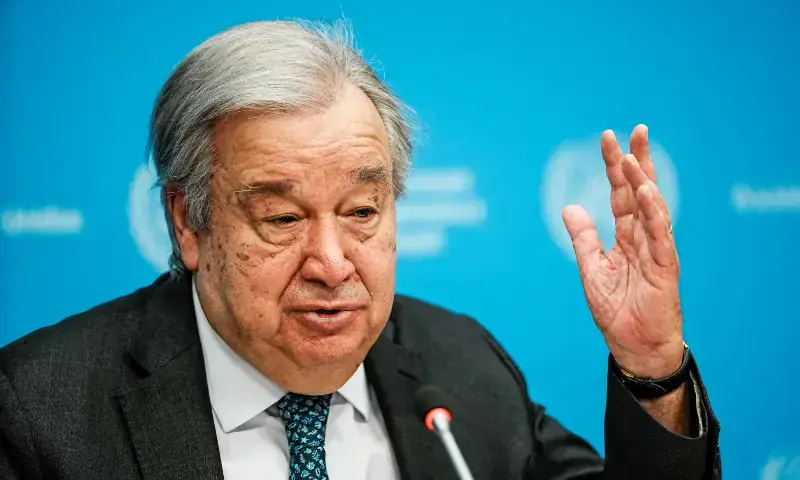
United Nations Secretary General Antonio Guterres delivered a dire assessment during remarks to the press on Thursday, highlighting the profound economic vulnerabilities exposed by the closure of the Strait of Hormuz.[1] He described the situation as one where the vital waterway's restrictions are actively "strangling the global economy," a phrase that captures the severity of impeded maritime traffic through this crucial global chokepoint.[1][5] Guterres emphasized that such disruptions could propel tens of millions of people into poverty, exacerbate worldwide hunger, and precipitate a broader recession, painting a picture of cascading humanitarian and financial crises.[1]
The Strait of Hormuz, a narrow passage connecting the Persian Gulf to the Gulf of Oman, handles a significant portion of the world's oil supply, making any closure or restriction a flashpoint for global trade.[5] Guterres decried these limitations on free passage, noting their direct impact on the delivery of goods essential for economic stability.[1] His comments come amid live updates on Middle East conflicts, where the interplay of regional hostilities has intensified scrutiny on this strategic artery.[5] The UN leader's intervention underscores the international body's role in flagging risks that transcend borders, urging attention to how localized tensions in the strait could ripple outward to destabilize supply chains worldwide.[1] This warning aligns with broader concerns over energy security, as the strait's role in oil transit amplifies the stakes for energy-dependent economies everywhere.[5]
Interception of Gaza Aid Flotilla
Activists from the Global Sumud Flotilla have leveled serious accusations against Israel, claiming the interception of their vessels marks the farthest-ever such action in international waters and signals an expansion of Israel's operational zone.[3] With several boats still en route to Gaza, these activists argue that the incident demonstrates Israel's "impunity" in broadening its interception boundaries beyond established maritime limits.[3] The flotilla, aimed at delivering humanitarian aid, was targeted in what participants describe as an overreach into neutral seas, raising questions about enforcement practices in contested waters.[3]
Iran's foreign ministry has echoed and amplified these claims, condemning Israel's raid and detention of activists aboard the Global Sumud Flotilla as an outright act of "piracy" conducted in international waters.[4] Foreign ministry spokesperson Esmaeil Baghaei characterized the operation as an "attack" that constitutes a "blow to the awakened conscience of humanity," framing it as a violation of international norms.[4] The ministry urged global support for the flotilla's mission to bring aid to Gaza, positioning the event as a test of collective international resolve.[4] This seizure disrupts efforts to alleviate humanitarian needs in the region, intertwining maritime security with aid delivery challenges amid protracted conflicts.[3][4]
India's Operation Sindoor and Terrorism Concerns
Indian Defence Minister Rajnath Singh has defended Operation Sindoor as a calibrated military response that was halted strictly on India's own terms, positioning it as a powerful deterrent against terrorism.[2] Singh asserted that the operation conveyed a strong global message, marking a departure from diplomatic rhetoric toward tangible action in countering terror threats.[2] He explicitly identified Pakistan as the "epicentre of international terrorism," stressing the importance of confronting its ideological underpinnings to prevent further instability.[2]
The minister emphasized India's preparedness for a prolonged engagement if necessary, underscoring the operation's strategic depth and its role in reshaping regional security dynamics.[2] Operation Sindoor, in this context, serves not only as a tactical halt but as a broader signal of resolve, aimed at discouraging cross-border terrorism originating from Pakistan.[2] Singh's statements highlight India's proactive stance in the face of persistent threats, contributing to geopolitics global discussions on state-sponsored militancy and the need for robust countermeasures.[2] This development adds another layer to South Asian tensions, with implications for international efforts to curb terrorism's spread.
Broader Economic Impacts of Middle East Tensions
The ongoing Middle East conflict has driven oil prices to a four-year high, directly linked to restrictions in the Strait of Hormuz and heightened regional hostilities.[5] Live updates from the conflict zone illustrate how these tensions are manifesting in energy markets, with soaring prices reflecting fears over supply disruptions through the strait.[5] The description of the Hormuz closure as "strangling the global economy" by a key figure in U.S. commentary further amplifies the narrative of economic peril, tying local blockages to worldwide repercussions.[5]
These price surges exacerbate inflationary pressures and strain economies reliant on imported oil, potentially slowing growth and increasing costs for consumers and industries alike.[5] The strait's centrality to global oil flows means that even partial restrictions can cascade into broader market volatility, as evidenced by the recent climb to four-year peaks.[5] This economic fallout intersects with geopolitical strains, where Middle East dynamics influence everything from fuel costs to trade balances, demanding vigilant monitoring of energy corridors.[5]
Global Reactions to Escalating Crises
International responses to the crises have been marked by condemnation and calls for restraint, with the UN Secretary General's press remarks setting a tone of urgency regarding the Strait of Hormuz.[1] Guterres' focus on poverty, hunger, and recession risks has galvanized attention to the strait's global stakes, prompting broader diplomatic discourse.[1] Iran's foreign ministry, meanwhile, has rallied for international backing of the Gaza aid flotilla, decrying Israel's actions and appealing to a shared "conscience of humanity."[4]
These reactions highlight a spectrum of concerns, from economic safeguards to humanitarian protections, as stakeholders navigate the fallout from Hormuz restrictions and flotilla interceptions.[1][4] Global actors are thus confronted with interconnected challenges, where maritime freedoms and aid missions intersect with security imperatives.[4]
What to watch next: Monitor developments in the Strait of Hormuz for potential easing of restrictions or further escalations that could impact oil deliveries, alongside updates on the Global Sumud Flotilla's remaining vessels and international responses to the aid seizure.[1][3][4][5]