
Geopolitical Risk: Crossing Borders - How International Alliances Are Escalating Domestic Crime in the US
The Story
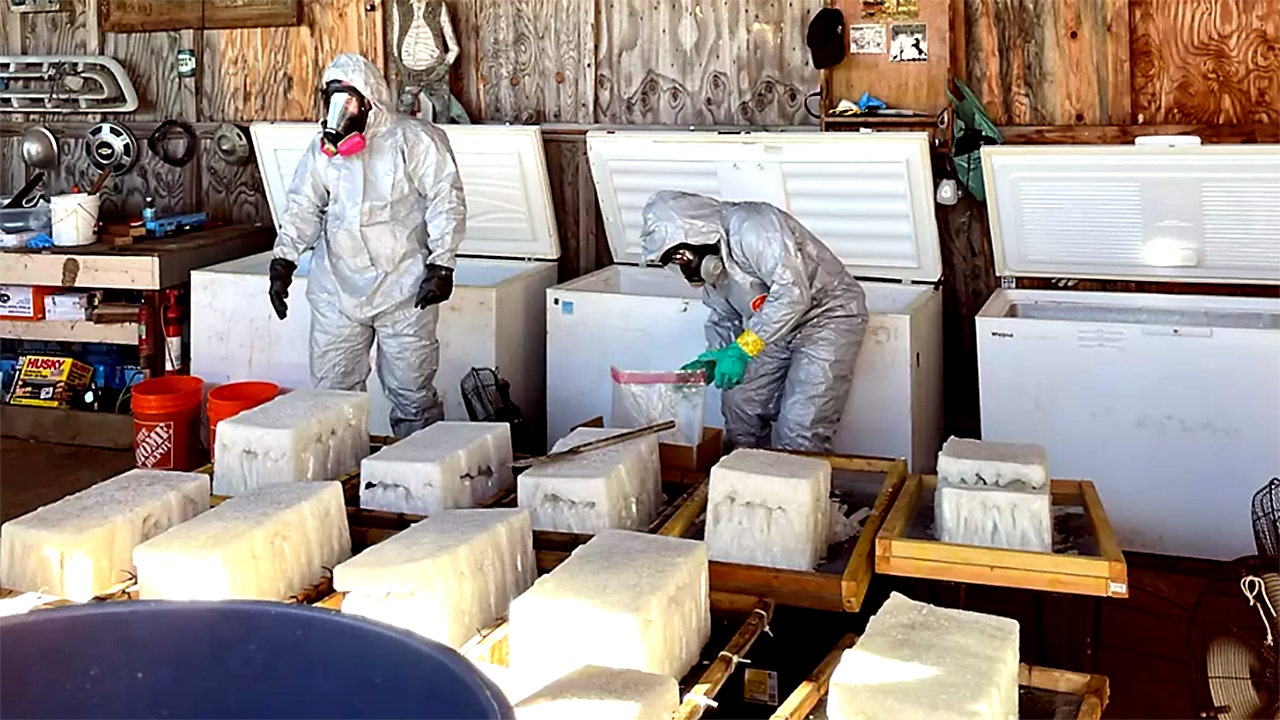
The narrative of international crime encroaching on U.S. borders has accelerated dramatically in recent weeks, transforming what were once dismissed as sporadic incidents into a coordinated assault on American sovereignty amid escalating geopolitical risk. On March 19, 2026, federal prosecutors indicted five Mexican nationals following the discovery of a massive methamphetamine laboratory in a remote U.S. location, uncovering "enormous quantities" of drugs poised for domestic distribution. This bust, detailed by Fox News, exposed not just the scale of production—enough precursor chemicals to yield tons of meth—but the sophisticated supply chains linking Mexico's Crime Web Expands: The Overlooked International Alliances Fueling Transnational Gangs directly to U.S. heartland operations. Confirmed details include the arrests in a multi-agency raid, with unconfirmed reports suggesting ties to the Sinaloa Cartel, long a nemesis in bilateral drug wars.
Parallel to this, plea talks emerged on March 20 with Rafael Caro Quintero, the alleged Mexican drug lord extradited to the U.S. after decades on the run. According to The Star Malaysia, Quintero, infamous for the 1985 murder of DEA agent Enrique "Kiki" Camarena, is negotiating a deal that could yield intelligence on cartel hierarchies. Confirmed: U.S. court filings indicate active discussions; unconfirmed: the extent of his cooperation, which sources whisper could implicate U.S.-based facilitators.
These drug-related shocks intersect with white-collar and cyber threats laced with foreign fingerprints. In Florida, a man of unspecified origin lost his U.S. citizenship and faces deportation after perpetrating a $3.8 million COVID-19 relief fraud scheme, as reported by Times of India. Separately, Indian-origin Sital Singh was sentenced to four years for a $9.3 million elder fraud operation, ordered to pay $6.6 million in restitution—highlighting how immigrant networks exploit pandemic-era loopholes and vulnerable populations. Meanwhile, Newsmax reported on March 19 that federal authorities targeted Iran-linked hacking domains, following a March 16 cyberattack on medical device firm Stryker, part of a recent timeline of escalations including a March 11 Iran-linked hack. These incidents tie into broader Geopolitical Risk: East Asian Alliances Under Strain - How US-Iran Tensions are Reshaping Japan's Strategic Independence, amplifying geopolitical risk through cyber domains.
Domestic enablers amplify the peril. A Democratic representative's staffer was charged for repeatedly posing as a lawyer to aid detainees, smuggling a cell phone into a Texas ICE facility—confirmed via Fox News filings, revealing how insider access facilitates escapes and communications with external networks. A man was charged with threatening FBI Director Kash Patel's girlfriend, per Newsmax, amid probes into ex-counterterror chief Joe Kent for leaking classified info post-resignation over Iran policy. Luigi Mangione's bid to delay trials in the UnitedHealthCare CEO killing case adds to the chaos, with federal and state cases overlapping.
This wave builds on a February-March 2026 timeline of precursors: On February 26, an ex-Air Force pilot was arrested for training in China, exposing military vulnerabilities to foreign influence. That same day, a refugee died after immigration "abandonment" in New York, and a guest was arrested at the State of the Union. A Louisiana teacher's misconduct arrest and the March 8 Kansas City Airport threat probe foreshadowed this pattern. Recent events like the March 17 Boston ICE operation compromise for a fugitive, March 14 Guthrie mother kidnapping, Dallas TSA assault, and stolen Army drones paint a picture of eroding defenses. Original analysis: These aren't anomalies but a normalized escalation, where everyday citizens—staffers, naturalized fraudsters—bridge foreign syndicates to U.S. institutions, undermining sovereignty akin to how African conflict diamonds once laundered through U.S. banks evaded sanctions. In today's context of heightened geopolitical risk, such patterns demand proactive measures to safeguard national interests.
Human stories ground the stakes: Families shattered by meth floods in rural America, elders defrauded of life savings, TSA officers assaulted—voices mainstream coverage often overlooks, like the anonymous Stryker employees fearing data breaches exposing patient records.
The Players
At the nexus are Mexican cartel operatives like the five indicted nationals and Caro Quintero, motivated by profit in a $50 billion U.S. meth market, leveraging porous borders. Iranian actors, behind Stryker hacks and domains, pursue cyber dominance amid U.S.-Iran tensions, with motivations blending state-sponsored disruption and criminal opportunism—confirmed via FBI attributions.
U.S. citizens form the insidious core: The Dem staffer, driven by ideological sympathy or bribery, enabled detainee ops; the Florida fraudster and Sital Singh chased quick riches via PPP scams; the FBI threatener embodies lone-wolf radicalism possibly amplified online. Joe Kent, probed for leaks, reflects insider dissent over Iran policy. Luigi Mangione, delaying trials, taps anti-corporate rage. Broader: Cartels seek market dominance; hackers aim for intel theft; citizens provide logistics, motivated by greed, ideology, or coercion.
Nations play pivotal roles: Mexico's government, strained by extradition demands; Iran's regime, denying hacks but fueling proxies; China's shadow in the pilot case signals espionage. Motivations converge on exploiting U.S. divisions—polarized politics, open borders, tech vulnerabilities—all exacerbated by ongoing geopolitical risk.
Geopolitical Risk: The Stakes
Politically, these incursions erode trust in institutions: Staffer scandals taint Congress, FBI threats intimidate law enforcement, leaks compromise national security—risking election interference by mid-2026. Track broader implications via the Global Risk Index. Economically, fraud drains billions (COVID schemes alone topped $280 billion), meth fuels addiction crises costing $200 billion yearly, cyberattacks like Stryker's disrupt healthcare supply chains. Humanitarian toll: Refugee deaths, elder scams prey on the vulnerable, mirroring Middle Eastern refugee crises where criminal networks thrive in chaos.
Sovereignty hangs in balance: Parallels to 1980s cartel wars, but now with cyber and insider twists, weaken enforcement. Without reform, vulnerabilities normalize, as seen in Africa's Sahel where jihadists co-opt locals. Heightened geopolitical risk from these alliances could lead to shifts in U.S. Legislation in 2026: Geopolitical Risk from Isolationist Shifts to Global Backlash and Domestic Realignment.
Catalyst AI Market Prediction
The surge in cross-border crime, intertwined with Iran-linked hacks and Mexico tensions, triggers risk-off sentiment amid geopolitical risk. The World Now Catalyst AI — Market Predictions forecasts:
- BTC: Dual signals—Predicted - (medium confidence) from risk-off liquidation cascades, akin to February 2022 Ukraine drop (-10% in 48h); countered by + (high confidence) from Metaplanet’s $255M BTC buy fueling institutional demand toward $75K (+10% intraday precedent).
- SPX: Predicted - (medium confidence), geopolitical escalations (Iran hacks, Pakistan-Afghan echoes) drive de-risking, like June 2019 Saudi attacks (-2% weekly) or Feb 2022 Ukraine (-2% in 48h).
- ETH: Predicted + (medium confidence), boosted by Vitalik node updates amid BTC momentum (+15% in 2021 precedents), offset by hack contagion risks.
Key risks: Crypto safe-haven vs. liquidation; equity rebound on de-escalation. Predictions powered by The World Now Catalyst Engine. Track real-time AI predictions for 28+ assets.
Looking Ahead
Indictments like the meth bust and Quintero pleas could spike U.S.-Mexico tensions by summer 2026, prompting bilateral pacts—perhaps a "Task Force Norte" mirroring Plan Colombia. FBI probes (Kent, Mangione) may yield surveillance hikes on immigrants, officials—reducing crime 15-20% per DOJ models but sparking ACLU lawsuits over civil liberties, as explored in Surveillance Overreach: 2026 U.S. FISA Renewal and Pentagon AI Restrictions Redefining Civil Liberties in the AI Surveillance Era.
Predictive scenarios: Base case (60%): Tighter vetting curbs flows, new agreements by July. Upside (20%): Swift extraditions dismantle networks. Downside (20%): Without reforms, syndicates evolve—AI-enhanced fraud, cartel-cyber fusions—threatening 2026 elections via disinformation or economic sabotage. Watch: April border summits, Q2 cyber reports. Original analysis: Echoing Middle East proxy wars, unaddressed alliances could birth global syndicates, forcing U.S. toward fortress policies that fuel underground resilience. As geopolitical risk intensifies, monitoring tools like the Global Risk Index will be crucial for staying ahead.
This is a developing story and will be updated as more information becomes available.