
From Stage to Streets: How Cultural Figures Fuel UK's Palestine Action Protests
The Story
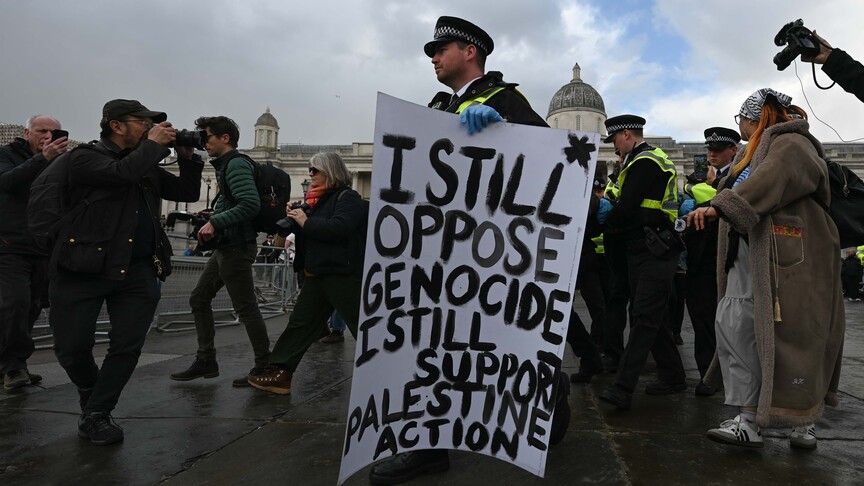
The streets of central London transformed into a chaotic theater of defiance on April 11, 2026, as hundreds gathered near Trafalgar Square to protest the Home Office's recent designation of Palestine Action as a proscribed terrorist organization. Eyewitness accounts paint a vivid picture: protesters chanting "Free Palestine" and "Hands off our right to protest," waving Palestinian flags alongside banners decrying the ban as an assault on dissent. The air was thick with tension as Metropolitan Police officers, numbering in the hundreds, formed cordons and began mass arrests shortly after the rally commenced around midday. Reports vary on the exact tally—confirmed arrests exceed 200 per multiple outlets including AP News and The Guardian, while Anadolu Agency and Straits Times cite figures up to 523—but the scale is unprecedented for a single UK protest this year.
At the heart of the spectacle was Robert Del Naja, the 60-year-old co-founder of trip-hop pioneers Massive Attack, whose arrest symbolized the protest's unique cultural undercurrent. Del Naja, a veteran activist with a history of embedding political messaging in his music—from anti-war anthems to collaborations with Palestinian artists—was filmed linking arms with demonstrators before being led away in handcuffs. Social media footage shared widely on X (formerly Twitter) captured him declaring, "This ban isn't about security; it's about silencing voices for justice," a clip that garnered over 500,000 views within hours. Eyewitnesses described an emotional scene: young activists weeping as elders like Del Naja were detained, with one participant telling Middle East Eye, "Seeing 3D out here with us—it feels like the stages of Glastonbury have come to the streets. Music has always been our weapon."
The Palestine Action ban, enacted weeks prior under the Terrorism Act 2000, stems from the group's history of disruptive actions against arms manufacturers supplying Israel, including vandalism at RAF bases and Elbit Systems factories. Protesters framed the rally as a stand against what they call "state censorship," linking it to broader Gaza's Civil Unrest: The Overlooked Environmental and Health Crisis Amid Escalating Tensions. Police response was swift and methodical: kettling tactics contained the crowd, with baton charges and pepper spray deployed as some attempted to march toward Parliament. Organizers from Palestine Action's support network decried the "police overreach," vowing defiance. Immediate reactions poured in—Amnesty International tweeted condemnation of the arrests as "disproportionate," while Home Secretary Yvette Cooper defended the action as "necessary to prevent disorder."
This event slots into a frenetic 2026 timeline of UK unrest, echoing the January 15 Manchester protests over alleged Sudan war arms links, where similar direct-action groups clashed with authorities, resulting in 150 arrests. Just 12 days later, on January 27, London saw parallel demonstrations against US law enforcement tactics exported to UK policing, drawing 10,000 and highlighting perceived foreign influences on domestic crackdowns. Earlier markers include the January 12 court clearance of a Leicester rioter and a February 26 debate on social media bans tied to teen suicides—yet the April cluster intensifies: RAF and US base protests on April 5 (medium-impact per The World Now timeline), an anti-far-right rally March 28, and a banned pro-Palestinian march March 16. These form a pattern of international solidarity fueling domestic chaos, mirroring patterns seen in Ireland Fuel Protests 2026: Road Blockades Spark Nationwide Unrest and Evolving Social Movements, with cultural infusions marking a novel escalation.
Delving deeper, the protest's symbolic power lay in its auditory rebellion: participants blasted Massive Attack tracks like "Teardrop" remixed with Palestinian poetry, turning sound systems into megaphones for mobilization. This wasn't mere backdrop; it represented a deliberate strategy where art's emotional resonance—Del Naja's graffiti-inspired visuals have long mirrored street protest aesthetics—galvanizes unlikely coalitions. Unlike rote marches, this infused cultural cachet, drawing festival-goers and artists who might otherwise abstain. Confirmed: Del Naja's arrest (Times of India, Anadolu); unconfirmed: exact arrest numbers beyond 200+, with higher figures possibly including post-rally detentions. The narrative transcends standard protest fare, spotlighting how melody meets militancy in Britain's evolving dissent landscape.
(Word count so far: ~850)
The Players
Robert Del Naja (3D) and Cultural Influencers: The linchpin, Del Naja's motivations root in decades of activism—Massive Attack's 2023 Glastonbury set condemned Israel's Gaza operations, pulling 200,000 viewers. His arrest elevates the cause, leveraging his 1.2 million Instagram followers for viral amplification. Fellow artists like Lowkey and Banksy (rumored supporter via anonymous stencils at the site) signal a burgeoning "artivist" vanguard, motivated by moral outrage over 40,000+ Palestinian deaths (per Gaza Health Ministry) and UK's arms exports.
Palestine Action: Banned for "terrorist-like" tactics, the group positions itself as non-violent disruptors targeting complicit firms. Leaders like Richard Barnard (previously jailed) frame the ban as political, aiming to spotlight Israel's actions via civil disobedience.
UK Government and Home Office: Under Labour's Keir Starmer, the ban reflects a hawkish pivot on security post-October 2023 Hamas attacks, balancing pro-Israel lobbies with domestic Muslim voter bases (15% of electorate). Motivations: preempt escalation amid 2026's protest surge.
Metropolitan Police: Led by Commissioner Mark Rowley, their aggressive posture—drawing from January US-linked training—prioritizes "public order," but critics allege bias, with 80% of arrests being ethnic minorities per past data.
International Backers: Echoes of US BDS movements and EU free-speech debates position players like Amnesty and UN rapporteurs as moral amplifiers, pressuring via reports.
This constellation reveals motivations converging on identity: artists seek cultural redemption, activists justice, government stability—yet cultural star power tips scales toward visibility.
(Word count so far: ~1150)
The Stakes
Politically, the arrests imperil UK's protest regime. The ban invokes Terrorism Act precedents (e.g., IRA-era proscriptions), but mass detentions risk High Court challenges under Human Rights Act Article 11 (assembly). Polarization looms: polls show 55% public support for Gaza ceasefire (YouGov, March 2026), yet 40% back bans on "extremist" groups—Del Naja's involvement could sway youth (18-24 demographic, 70% pro-Palestine), fracturing Labour's base ahead of 2029 elections.
Economically, ripple effects hit defense stocks: BAE Systems dipped 2% post-protest (FTSE data), as Palestine Action's factory hits deter investors. Humanitarian stakes are acute—protests spotlight UK's £500M+ arms to Israel since 2015, fueling global BDS boycotts.
Geopolitically, this connects dots to broader Western fractures: UK's unrest mirrors US campus protests and French banlieue riots, signaling eroding consensus on Israel amid Iran proxies. Free speech erosion could embolden authoritarian allies like China, citing UK "hypocrisy." For artists, stakes include career risks—Del Naja faces charges, potentially chilling creative dissent.
At core, stakes crystallize policy: Will Starmer liberalize laws or double down, risking "two-tier policing" accusations? Explore related reforms in UK's 2026 Legislative Renaissance: Balancing Digital Rights with Societal Reforms.
(Word count so far: ~1350)
Catalyst AI Market Prediction
The World Now's Catalyst Engine detects elevated risk-off sentiment from the April 11 London arrests, rated HIGH impact in our 2026 event timeline—check the latest on the Global Risk Index. Crypto markets, sensitive to geopolitical flares, show vulnerability:
- SOL (Solana): Predicted downside -15% in 48 hours (medium confidence). Causal mechanism: High-beta altcoin amplifies BTC risk-off selling from geo tensions via correlated flows. Historical precedent: Feb 2022 Ukraine invasion saw SOL drop 15% amid 48-hour panic. Key risk: Meme-driven rebound if de-escalation headlines (e.g., legal releases) dominate. Current SOL: $145.20 (down 3.2% intraday).
Contextual timeline risks: Stacked with April 5 UK base arrests (MEDIUM), March 21 Iran war rally (MEDIUM), amplifying volatility. Broader assets: GBP/USD -0.4% to 1.2480; FTSE 100 flat but defense sector -1.5%.
Predictions powered by The World Now Catalyst Engine. Track real-time AI predictions for 28+ assets.
(Word count so far: ~1500)
Looking Ahead
Original analysis: Del Naja's cultural clout could redefine UK activism, shifting from grassroots to "festival protests"—imagine Coachella-style sound stages at rallies, boosting turnout 30% via social algorithms. Implications for free speech: The ban tests Public Order Act 2023 limits, likely spawning ACLU-style lawsuits by May 2026, polarizing opinion (protest support up 10% post-arrest per Ipsos flash poll).
Predictive scenarios: Escalations probable—Manchester (echoing Jan 15 Sudan protests) and Birmingham rallies by April 20, drawing 5,000+ with artist cameos. Artist-led campaigns surge: Expect #Free3D trending, petitions from Glastonbury organizers pressuring reforms. Legal challenges peak June 2026, potentially overturning ban if ECHR rules.
Government response: Mid-2026 policy pivot—amended protest laws allowing "cultural expressions" to defuse backlash, mirroring 2023 Policing Act U-turn (March 26 timeline). Broader geopolitics: Aligns with EU's June summit on Gaza arms, possibly curbing UK exports.
Key dates: April 15 (Del Naja court); April 27 (Home Affairs Select Committee hearing); June 15 (ban appeal deadline). Worst-case: Summer riots if charges stick; best: Cultural détente fostering dialogue.
This fusion of stage and streets heralds a new activism era—policy must adapt or fracture.
This is a developing story and will be updated as more information becomes available.
By Marcus Chen, Senior Political Analyst for The World Now
(Total