
G7 Demands Halt to Sudan Violence in El-Obeid as Drone Strikes and Cholera Spread
G7 foreign ministers have called for an immediate halt to violence in Sudan's El-Obeid amid ongoing fighting, drone strikes, cholera outbreaks and a death sentence issued in absentia against RSF leader Hemedti for war crimes in West Darfur.
G7 Call for Ceasefire and Humanitarian Access in Sudan
G7 foreign ministers urge an immediate halt to violence in Sudan's El-Obeid. [1] G7 foreign ministers urge an immediate halt to violence in Sudan's El-Obeid. [1] 'We call on parties to the conflict to guarantee safe voluntary passage, and to facilitate rapid and unimpeded humanitarian access into and around El-Obeid and throughout the country,' says statement. [1] G7 ministers urged parties to the Sudan conflict to guarantee safe voluntary passage and facilitate rapid humanitarian access into and around El-Obeid and throughout the country. [1] The statement emphasizes the need for parties to ensure safe passage for civilians and aid workers amid the fighting in the area. [1] This call comes as part of broader diplomatic efforts to address the humanitarian situation in Sudan. [1]
Escalating Drone Attacks Endangering Civilians and Aid
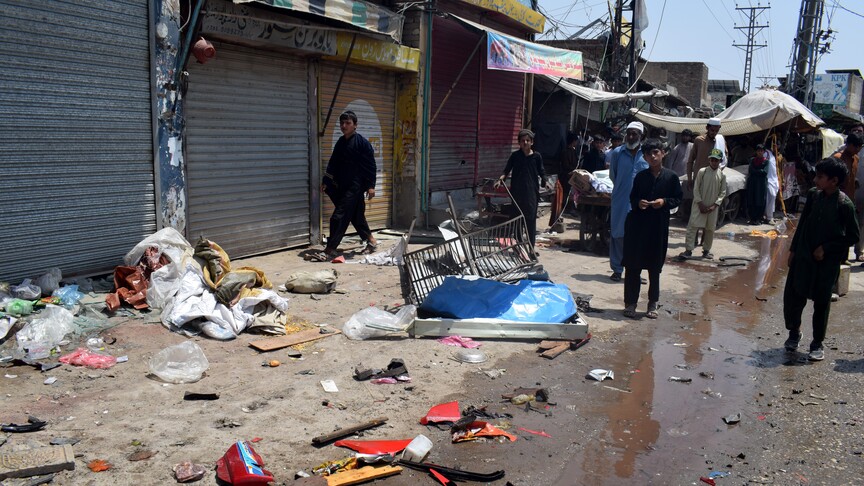
OCHA warns that fighting and disease outbreaks continue to take a heavy toll on civilians across Sudan. [2] Multiple drone attacks have been reported across Darfur and Kordofan. [2] In North Kordofan State, humanitarian partners reported that on Sunday a drone reportedly struck a fuel station in the Al Malaja area of El Obeid. [2] On the same day, in North Darfur, partners reported that a drone struck several trucks traveling along the road between El Fasher and Um Kadada. [2] In a separate incident, another reported drone attack resulted in civilian casualties in Kubum town in South Darfur State. [2] These strikes have raised concerns about risks to civilians and disruptions to aid operations in the affected regions. [2] Humanitarian partners continue to monitor the situation following the reported incidents. [2]

G7 foreign ministers call for immediate halt to violence and improved humanitarian access in Sudan. — Source: ocha
Cholera Outbreak Worsens in Conflict Zones
Cholera continues to spread to new areas in Darfur and Kordofan. [2] New cases were reportedly confirmed in Kampala displacement camp in South Darfur and the first suspected case was reported in Tawila locality in North Darfur. [2] In West Kordofan, which has seen the highest number of cases, six new suspected cases and two associated deaths had been recorded by health partners, while in North Kordofan, 32 new suspected cholera cases were reported on Sunday in Gharb Bara locality. [2] According to the World Health Organization (WHO), 1,330 cases and 114 deaths were confirmed as of 7 July. [2] The UN and its partners continue to pre-position supplies and scale up the response to the outbreak. [2] On 12 July, UNICEF delivered essential health supplies to El Fula in West Kordofan to support the ongoing cholera response. [2] The supplies are expected to benefit more than 429,000 people. [2] In Nyala South, partners continued preventive and control measures, including community outreach and health awareness campaigns, household chlorination, and the distribution of chlorine strips to reduce the risk of transmission. [2] This time last year, Sudan faced a major cholera outbreak that resulted in more than 80,000 suspected cases and over 2,000 associated deaths. [2] OCHA once again calls for the protection of civilians and civilian infrastructure and reiterates the need for rapid and flexible funding so partners can respond to growing needs across Sudan. [2]
Court Convicts RSF Leadership of Genocide and War Crimes
A Sudanese court has sentenced the leader of the Rapid Support Forces (RSF), Mohamed Dagalo, known as Hemedti, to death over atrocities committed in West Darfur. [5] The court in Port Sudan convicted and sentenced him for war crimes, crimes against humanity and genocide in absentia. [5] Mr Dagalo was on Monday sentenced to death in absentia alongside five other RSF members for the same crime. [5] Those sentenced include Hemedti’s brother and deputy, Abdelrahim Dagalo, another brother, Al-Qoni Dagalo, and the RSF’s West Darfur commander, Abdul Rahman Barkallah. [5] Al Jazeera reports that the court also ordered the confiscation of all RSF assets and the issuance of Interpol Red Notices for the arrest and extradition of those convicted. [5] This is the first legal conviction of leaders of the paramilitary group since the civil war broke out in 2023. [5] The trial focused primarily on the RSF’s actions in el-Geneina, the regional capital where some of the most heinous atrocities in West Darfur were allegedly carried out. [5] The Sudan Founding Alliance, which includes the RSF, has also described the Sudan court proceedings as a “sham trial” that “does not even deserve a comment.” [5] The paramilitary group has yet to comment on the conviction. [5]
G7 foreign ministers call for immediate halt to violence and humanitarian access in Sudan's El-Obeid. — Source: anadolu
Broader Sudan Conflict Context and Humanitarian Toll
Although Sudan has had a long history of violence, the current civil war broke out due to a vicious struggle for power between the Sudanese army, led by Abdel Fattah al-Burhan, and a powerful paramilitary RSF led by Hemedti. [5] The main points of discord were over plans to integrate the RSF into the Sudanese army and who would control the new force, as both leaders desperately wanted to hold onto their positions. [5] The war broke out in Khartoum and eventually spread to other parts of the country. [5] The war led to famine and genocide in the western Darfur region captured by the RSF. [5] More than 150,000 people have died in the conflict across the country, and about 12 million have fled their homes. [5] The United Nations identified Sudan as the country with the world’s largest health and humanitarian crisis. [5] The body, alongside other rights organisations, has accused the RSF of ethnically targeted attacks against the Masalit population in West Darfur. [5] The International Criminal Court’s deputy chief prosecutor also previously stated there was “concrete evidence” linking RSF leaders to war crimes. [5] The paramilitary body has, however, previously rejected these allegations. [5] OCHA warns that fighting and disease outbreaks continue to take a heavy toll on civilians across Sudan. [2]
Parallel Crises in Gaza, Lebanon, DRC and Other Conflicts
OCHA says that the UN and its humanitarian partners continue to face significant challenges in reaching communities located near the “Yellow Line” in northern Rafah in the Gaza Strip. [2] Yesterday, OCHA and humanitarian partners consulted representatives of 17 displacement sites hosting about 3,000 families, following reports of movements of Israeli forces and disruptions to humanitarian services in the area. [2] Community representatives reported that the yellow blocks marking the line had moved northward. [2] They described daily movements of Israeli tanks, construction of sand embankments, and recurrent gunfire. [2] Families reportedly remain inside their tents for much of the day due to fears of being injured by gunfire or stray bullets. [2] Humanitarian partners also received reports this afternoon of intensified military activity in the vicinity of sites near the “Yellow Line,” including reported tank movements towards one of the sites. [2] Initial reports indicate that one Palestinian was killed and three others were injured at one of the sites. [2] The injured were reportedly transferred to the International Committee of the Red Cross Field Hospital for treatment. [2] Humanitarian partners report that the insecurity is severely disrupting the delivery of essential assistance, including water, food, bread, hygiene support and routine site-management services. [2] A water-truck driver was reportedly injured by gunfire last Wednesday. [2] OCHA reports that between 10 July and yesterday, settlers reportedly attacked Palestinians working on agricultural land in an area in southern Hebron governorate. [2] Some 30 Palestinians were injured, including children, women and older persons. [2] Damage to olive trees and agricultural infrastructure was also reported. [2] During the incidents, Israeli forces reportedly arrived at the scene, declared the area a closed military zone and ordered Palestinian farmers to leave, while settlers remained in the area. [2] OCHA reports that people continue to return to their communities in southern Lebanon, although many families remain unable to go home. [2] More than 430,000 people are still internally displaced. [2] Since the latest ceasefire announcement, 50 collective shelters have closed in South Governorate, while 45 remain open, hosting around 7,000 people. [2] New shelters have also been set up in Tyre district for families moving closer to their communities but unable to return because their homes have been damaged or destroyed. [2] Insecurity, damaged homes and infrastructure, the presence of unexploded ordnance, and limited access to basic services are hindering safe and sustainable returns. [2] Partners continue to respond to growing needs. [2] Since the escalation began, they have reached more than 330,000 people with protection services, including child protection assistance and support for survivors of gender-based violence. [2] The US$640 revised Lebanon Flash Appeal is only 43 per cent funded, constraining the response at a time when humanitarian needs remain high. [2] OCHA reports that efforts to contain the Ebola outbreak are scaling up following the spread of the disease to the Democratic Republic of the Congo's two additional provinces, Haut-Uele and Tshopo. [2] The confirmation of cases in Kisangani – a city of more than 1.6 million people and a major transport hub linking east and west of the country – highlights the risk of wider transmission along key transport corridors, including the Congo River. [2] As of 12 July, national health authorities have reported 1,963 confirmed Ebola cases across Ituri, North Kivu, South Kivu, Haut-Uele and Tshopo provinces. [2] The UN Senior Ebola Coordinator, Julien Harneis, returned yesterday from a mission to Kisangani with the Congolese Minister of Health, the Incident Managers from Africa Centres for Disease Control and Prevention, and the WHO, to support provincial authorities in strengthening the response. [2] National organizations, faith-based groups and local community networks are already mobilized on the ground. [2] The UN and its humanitarian partners, in support of the authorities, are expanding surveillance, laboratory capacity, case management and community engagement efforts to contain the outbreak. [2] The response has made important gains in recent weeks, with 85 per cent of alerts now being investigated, and 80 per cent of identified contacts being traced and monitored. [2] Eleven decentralized laboratories are now operational, raising testing capacity to up to 250 samples per day. [2]
What to watch next: OCHA continues to monitor developments in Sudan, Gaza, Lebanon and the Democratic Republic of the Congo, with calls for protection of civilians and sustained humanitarian access across these regions.