
Fatal Collision at Helsinki's Kruunuvuorensilta Bridge Site Prompts Negligence Charges Against Project Managers
Helsinki, Finland – A tragic boat collision with a steel beam at the ongoing Kruunuvuorensilta bridge construction site in Helsinki has resulted in one fatality, prompting prosecutors to file charges of negligent homicide and negligent bodily injury against three senior project managers. The incident, which occurred amid the high-profile infrastructure project, has raised questions about workplace safety protocols on one of Finland's most ambitious urban developments.
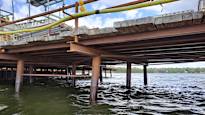
The accident took place at the Kruunuvuorensilta worksite, part of Helsinki's expansive Crown Bridges initiative. According to details emerging from the investigation, a boat struck a steel beam (teräspalkki), leading to the death of one individual. While specifics on the exact circumstances—such as the boat's purpose or the victim's identity—remain limited in public reports, the severity of the event has escalated scrutiny on the project's oversight. Prosecutors have accused the three responsible project personnel of kuolemantuottamus (death by negligence) and vammantuottamus (injury by negligence), formal charges under Finnish criminal law that carry significant penalties if convicted.
The charged individuals, described as key vastuuhenkilöt (responsible persons) for the bridge project, have denied all allegations of criminal wrongdoing, according to the prosecutor. This development marks a pivotal moment in the legal aftermath of the January 10, 2026, incident, with the case now advancing through Finland's judicial system. No trial date has been announced, but such negligence charges in construction-related deaths typically involve rigorous examination of safety measures, equipment placement, and managerial decision-making.
Background on Kruunuvuorensilta and the Crown Bridges Project
Kruunuvuorensilta, often referred to as the Kruunuvuori Bridge, is a cornerstone of the €1.3 billion Crown Bridges (Kruunusillat) project, approved in 2015 and slated for completion in phases through the late 2020s. Spanning approximately 1.1 kilometers, the cable-stayed bridge will connect the Helsinki mainland to the islands of Laajasalo and Jätkäsaari across the Baltic Sea, alleviating traffic congestion and enhancing public transport links. The project, managed by the Helsinki City Transport Infrastructure (HSL) and contractors including YIT and Kreate, incorporates cycling and pedestrian paths alongside tram lines, aiming to serve up to 70,000 daily users by promoting sustainable mobility.
Construction began in earnest in 2020, with significant progress on pillars and deck sections by 2025. However, the site has presented unique challenges due to its maritime location, including strong currents, ice risks in winter, and the need for precise coordination between land-based and waterborne operations. Finnish authorities have historically emphasized stringent safety standards in such environments; the Occupational Safety and Health Act (työturvallisuuslaki) mandates risk assessments for hazardous activities like those involving heavy steel components near waterways.
This incident is not isolated in Finland's construction sector, which has seen a uptick in workplace fatalities in recent years. Data from the Finnish Institute of Occupational Health (TTL) indicates that construction remains one of the riskiest industries, with 20-25 deaths annually nationwide, often linked to falls, machinery mishaps, or, as here, unexpected collisions. The Kruunuvuorensilta case echoes prior high-profile accidents, such as the 2022 collapse at a Turku shipyard that injured multiple workers, prompting nationwide safety audits.
Investigation and Broader Implications
Prosecutors' decision to press charges underscores a zero-tolerance stance toward lapses in duty of care. Under Finnish law, negligent homicide can result in up to two years' imprisonment, while negligent injury carries lighter sentences but still professional repercussions. The trio's denial suggests a defense centered on unforeseeable factors or compliance with existing protocols, potentially including arguments over signage, barriers, or vessel traffic management around the site.
Helsinki authorities have not issued a formal halt to construction, but the event has amplified calls from labor unions like Rakennusteollisuus RT (Finnish Constructional Industries Federation) for enhanced maritime safety measures. Experts note that temporary exclusion zones and radar monitoring are standard for bridge works over water, and any lapses could influence future tender processes for similar megaprojects.
The accident also occurs against a backdrop of Finland's robust infrastructure push, funded partly by EU recovery funds post-COVID. The Crown Bridges project is vital for Helsinki's 2030 carbon-neutral goals, reducing car dependency by 30%. Delays from investigations could push back the bridge's 2027 opening, impacting commuters and costing millions in overruns.
Outlook
As the case progresses, it will likely draw parallels to accountability in other Nordic megaprojects, such as Sweden's Slussen redevelopment. Finnish prosecutors will present evidence from site inspections and witness statements, while the defendants prepare rebuttals. For now, the focus remains on honoring the victim and preventing recurrence, with HSL pledging full cooperation.
This tragedy highlights the inherent risks of modern infrastructure amid urban expansion, reminding stakeholders that safety must anchor even the most innovative endeavors. Updates on the trial and project status are anticipated in coming weeks.
(Word count: 712)