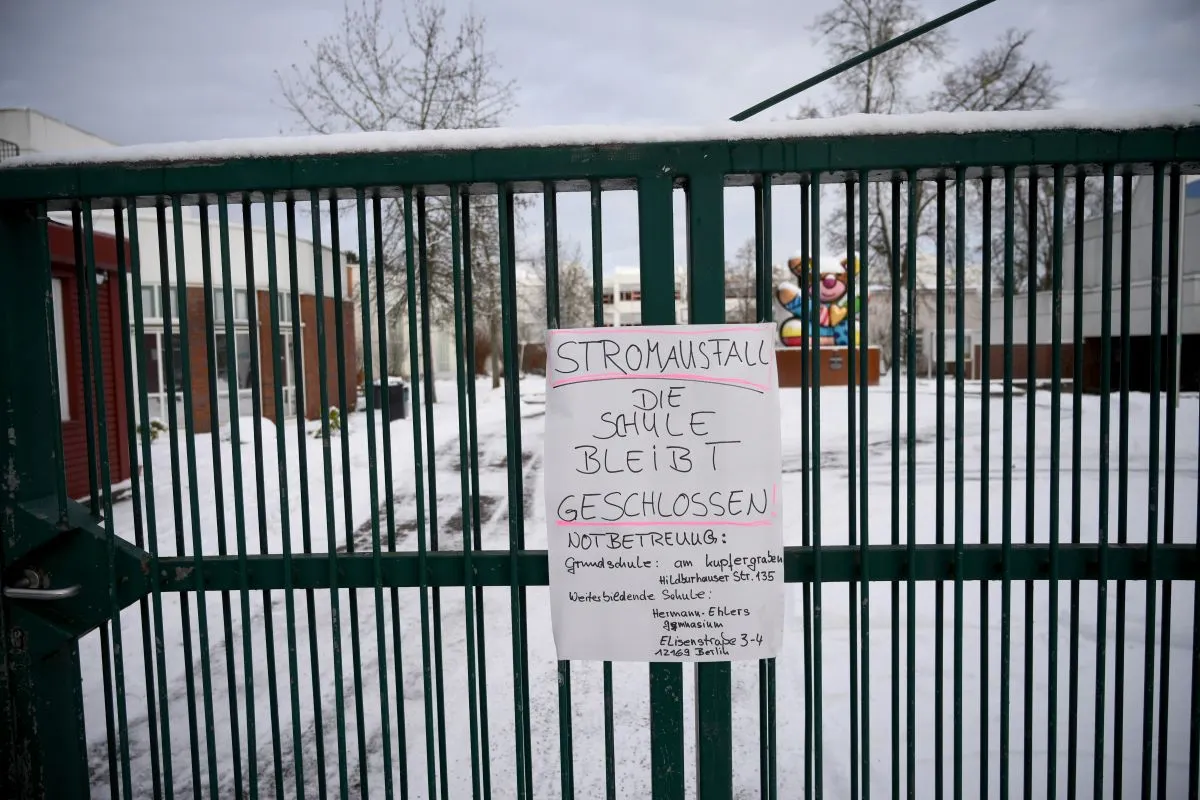

Far-Left Arson Attack Plunges Tens of Thousands in Berlin into Mid-Winter Blackout, Sparking Public Anger and Disruptions
Berlin, Germany – An arson attack claimed by a far-left group has triggered a major power outage in the German capital, leaving tens of thousands of residents without electricity amid freezing winter temperatures. The incident, which began on January 5, 2026, has led to school closures, transport chaos, and growing frustration among affected communities.
The blackout started around 11:07 GMT on Monday, January 5, when unknown perpetrators set fire to critical electrical infrastructure in Berlin. According to reports, the attack targeted high-voltage pylons or substations, severing power to large swathes of the city. By Tuesday morning, anger was palpable in the impacted neighborhoods, where residents faced "icy darkness" without heating, lighting, or essential services during one of the coldest periods of the year.
Local authorities have confirmed the arson's role, with the far-left group publicly claiming responsibility shortly after the incident. This has intensified public outrage, as the mid-winter timing exacerbates hardships—temperatures in Berlin hovered around freezing point, dipping lower overnight. Schools in affected districts shut down, public transport lines ground to a halt, and emergency services scrambled to manage the fallout. Traffic lights failed across key intersections, leading to gridlock, while hospitals relied on backup generators to maintain operations.
The outage's scale underscores vulnerabilities in urban power grids. Berlin's electricity network, managed primarily by Berliner Stadtwerk, supplies over 3.5 million residents through a mix of underground cables and overhead lines. Sabotage of this sort disrupts not just households but also businesses, data centers, and public facilities. Initial estimates suggest at least 50,000 homes and businesses were impacted, though exact figures remain fluid as restoration efforts continue.
Context of Civil Unrest and Extremist Activity
This event fits into a broader pattern of civil unrest and targeted attacks on infrastructure in Germany, where far-left and far-right extremists have occasionally resorted to arson and sabotage. Far-left groups, often linked to anti-capitalist or autonomist ideologies, have a history of protesting against perceived symbols of state or corporate power. Notable precedents include attacks on railway lines and construction sites during the 2023-2024 climate protests by groups like the "Last Generation," though those were largely non-violent. More directly comparable are sporadic arson incidents claimed by radical left-wing cells, such as the 2022 fires at Tesla's Gigafactory site near Berlin, which delayed expansion and drew international attention.
Germany's domestic intelligence agency, the Bundesamt für Verfassungsschutz (BfV), monitors around 40,000 left-wing extremists as of late 2025, with a focus on those engaging in "violent anti-fascism" or eco-anarchist actions. The BfV has warned of rising risks to critical infrastructure amid economic pressures, including energy costs strained by the ongoing Russia-Ukraine conflict and Germany's Energiewende transition to renewables. Berlin, with its vibrant activist scene and history of squatter movements dating back to the 1980s, remains a hotspot for such tensions.
Police have launched an investigation, treating the arson as a potential terrorist act. No arrests have been reported as of Tuesday, January 6, but forensic teams are examining the site. City officials urged calm while prioritizing power restoration, with mobile generators deployed to hospitals and elderly care facilities. Transport operator BVG reported delays on U-Bahn and S-Bahn lines, advising remote work where possible.
Public Reaction and Government Response
Residents expressed fury over the disruption. Social media posts from blackout zones highlighted families huddled in cold apartments, with one local paper quoting an unnamed Neukölln resident: "This isn't protest; it's terrorism in the dead of winter." Simmering anger has fueled calls for tougher measures against extremists, echoing national debates on balancing civil liberties with security.
Berlin Mayor Kai Wegner addressed the crisis in a press conference, condemning the attack as "an assault on our city's lifeline" and vowing swift justice. Federal Interior Minister Nancy Faeser echoed this, stating that attacks on infrastructure "threaten democracy itself." The incident occurs against a backdrop of heightened security concerns, including recent far-right protests and migrant-related unrest in other cities like Chemnitz and Magdeburg.
Outlook and Restoration Efforts
As of early Tuesday, power was partially restored in some areas, but full recovery could take days due to damage assessments and weather complications. Utility crews worked around the clock, with reinforcements from neighboring states. The medium-severity classification by monitoring agencies suggests manageable long-term impacts, but it highlights the need for hardened infrastructure.
This blackout serves as a stark reminder of Germany's exposure to domestic extremism amid geopolitical strains. With winter persisting and elections looming in 2026, authorities anticipate stepped-up vigilance. Investigations continue, and the public awaits clarity on the perpetrators' motives and any broader network involvement.
(Word count: 612)






