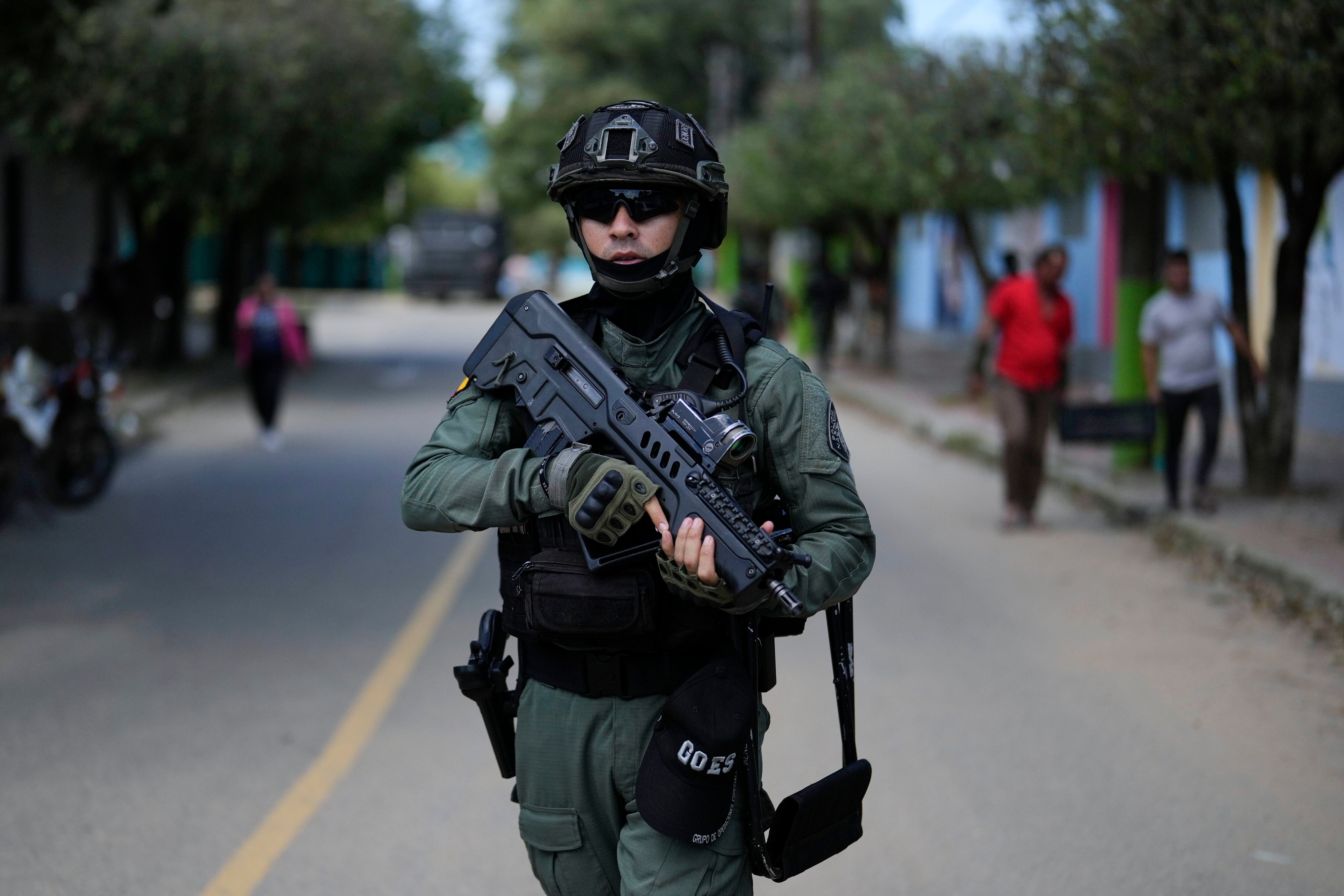

Explosions in Caracas Signal Escalating Instability in Post-Maduro Venezuela Amid Border Guerrilla Clashes
Caracas, Venezuela – Multiple explosions rocked the Venezuelan capital of Caracas on January 3, 2026, as witnessed by a CNN news team on the ground, heightening fears of renewed violence in a nation already reeling from the recent downfall of President Nicolás Maduro. These blasts, reported at around 06:43 GMT, come amid persistent guerrilla activity along the Colombian border, where the National Liberation Army (ELN) continues its offensive, exacerbating a humanitarian crisis in the Catatumbo region.
The Caracas incidents mark a sharp escalation in urban unrest following Maduro's ouster, which has plunged Venezuela into a precarious transitional phase. Eyewitness accounts from the CNN team described the explosions as audible and visible, suggesting organized or high-impact devices amid potential ongoing conflict. No immediate casualties or official claims of responsibility have been confirmed, but the severity of the event—classified as high—has prompted heightened security alerts in the capital.
Simultaneously, on the Venezuelan-Colombian border, the ELN guerrilla group shows no signs of relenting, according to a January 7 report from El País. The article details an unrelenting offensive in the Catatumbo border region, where the group's rearguard remains vulnerable following Maduro's downfall. The humanitarian crisis triggered by these clashes persists unresolved, with displaced civilians, disrupted supply lines, and intensified fighting between ELN forces and local actors. Catatumbo, a rugged area known for coca cultivation and cross-border smuggling, has long been a flashpoint for Colombian insurgent groups like the ELN, which has historically operated with tacit tolerance from Maduro's government.
Context of Venezuela's Fractured Transition
Venezuela's political landscape has undergone dramatic shifts in recent weeks. Nicolás Maduro, who assumed power in 2013 after the death of Hugo Chávez, faced mounting opposition amid hyperinflation, mass emigration, and U.S. sanctions. Contested elections in 2024, marred by fraud allegations, led to widespread protests and international condemnation. Maduro's downfall—reported in late 2025—appears to stem from a combination of internal military dissent, opposition mobilization led by figures like María Corina Machado and Edmundo González, and pressure from regional powers.
The power vacuum has emboldened non-state actors. The ELN, Colombia's last major guerrilla force with around 5,000-6,000 fighters, has capitalized on the instability. Historically, Maduro's regime provided safe havens for the ELN in exchange for border security assistance against rival groups like dissident FARC factions. With Maduro gone, the group's "rearguard"—its logistical and command structures in Venezuela—is reportedly in jeopardy, prompting a more aggressive posture to secure territory.
El País highlights the Catatumbo crisis as far from resolved, with ongoing offensives displacing thousands and straining humanitarian aid efforts. Colombian President Gustavo Petro's administration has pursued peace talks with the ELN since 2022, but stalled negotiations and border incursions have renewed hostilities. Venezuelan border states like Táchira and Apure, adjacent to Catatumbo, have seen spillover violence, including ambushes and roadblocks.
Broader Implications and Regional Concerns
The Caracas explosions, occurring just days into 2026, underscore the risks of urban spillover from rural conflicts. While no direct link to the ELN has been established, the timing aligns with post-Maduro chaos, where armed loyalists, opposition militias, and criminal gangs vie for control. Security analysts note that Caracas, home to over 2 million residents, has experienced sporadic protests and clashes since 2014, but explosive devices signal a tactical shift toward asymmetric warfare.
Internationally, the United States, European Union, and Organization of American States have called for free elections and humanitarian corridors. Neighboring Colombia has bolstered its military presence along the 2,200-kilometer border, while Brazil monitors the southern frontier. The United Nations has warned of a potential refugee surge, building on the 7.7 million Venezuelans who have fled since 2014.
As of January 7, no unified interim government has stabilized the country. Opposition leaders demand transparency, while Maduro holdouts allege foreign interference. The ELN's persistence suggests that Venezuela's conflicts—rooted in oil wealth mismanagement, ideological divides, and narco-trafficking—will not abate without coordinated regional intervention.
In outlook, the convergence of capital-city blasts and border warfare points to a volatile 2026 for Venezuela. Resolution hinges on inclusive power-sharing and renewed peace processes with groups like the ELN, amid urgent calls for de-escalation to avert a full-scale humanitarian catastrophe.
(Word count: 612)






