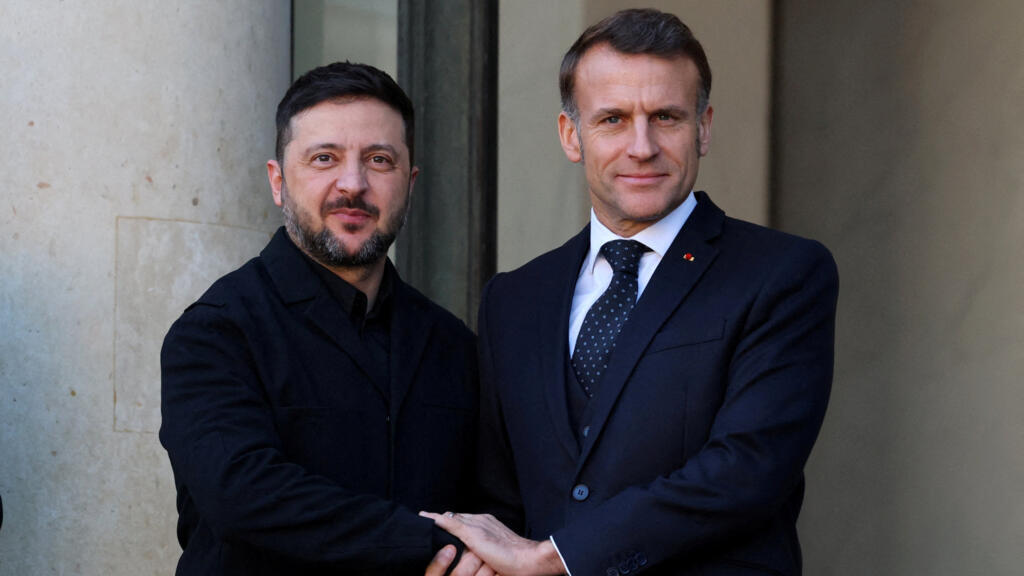

European and US Leaders Hold High-Stakes Talks in Paris on Ukraine Security Guarantees Amid Relentless Russian Strikes
Paris, France – European allies of Ukraine and top US envoys convened in Paris on January 6, 2026, for critical discussions with Ukrainian President Volodymyr Zelensky aimed at forging security guarantees to underpin any potential ceasefire in Russia's ongoing war against Ukraine. The summit, hosted by the so-called "Coalition of the Willing," unfolds against a backdrop of intensified Russian military actions, including strikes that have caused civilian casualties, highlighting the urgency of diplomatic efforts nearly four years into the conflict.
The gathering represents the latest push in months of intermittent ceasefire negotiations, as fighting shows no signs of abating. According to reports from France 24, the talks focus on aligning Western support to ensure robust protections for Ukraine should a truce be achieved. Key participants include representatives from major European nations supportive of Kyiv, alongside high-level US diplomats, all meeting Zelensky in the French capital. This coalition, comprising committed Ukraine backers primarily from Europe, seeks to bridge gaps in strategy amid stalled progress on the battlefield and at the negotiating table.
Details of the agenda remain closely guarded, but sources indicate discussions center on the specifics of security assurances. These could encompass long-term military aid commitments, NATO-like defense pacts, or multilateral guarantees to deter future Russian aggression. The Paris venue underscores France's pivotal role in European diplomacy, with President Emmanuel Macron having previously hosted Zelensky and other leaders for similar high-level meetings. The event's timing coincides with heightened Russian aerial and missile barrages across Ukraine, which have reportedly led to recent civilian deaths, amplifying calls for a breakthrough.
Persistent Sticking Points in Ceasefire Efforts
Despite multiple rounds of on-again, off-again talks over the past year, substantive progress has been elusive. Major hurdles include Russia's demands for territorial concessions, particularly in eastern and southern Ukraine, and Kyiv's insistence on full withdrawal of Russian forces and reparations. Western allies have grappled with internal divisions over the extent of military support, including the provision of long-range weapons and restrictions on their use inside Russian territory.
The "Coalition of the Willing" emerged as a flexible grouping of pro-Ukraine states, allowing for agile decision-making outside broader NATO or EU frameworks. France, Germany, the UK, Poland, and the Baltic states have been prominent members, coordinating aid packages totaling billions in weapons, ammunition, and financial assistance. US involvement remains crucial, with envoys representing the Biden administration's – or potentially a successor's – policy on sustained support for Ukraine.
France 24 reporting emphasizes that the Paris summit occurs without any de-escalation from Moscow. Russian forces continue advances in the Donbas region, while Ukraine conducts counteroffensives bolstered by Western-supplied F-16 jets and ATACMS missiles. Recent strikes, including those on civilian infrastructure in Kharkiv and Odesa, have drawn international condemnation and renewed pledges of aid from the European Union.
Historical Context of the Ukraine Conflict
Russia's full-scale invasion of Ukraine began on February 24, 2022, following years of tensions over NATO expansion, Crimea’s 2014 annexation, and separatist conflicts in Donetsk and Luhansk. What was initially framed by Moscow as a "special military operation" has evolved into a protracted war of attrition, with over 500,000 combined casualties estimated by Western intelligence agencies. Previous diplomatic initiatives, such as the Istanbul talks in March 2022 and Switzerland-hosted summits in 2024, faltered over irreconcilable red lines.
Paris has served as a diplomatic hub before, notably during the 2022 Normandy Format revival attempts involving France, Germany, Ukraine, and Russia. The current "Coalition of the Willing" builds on this legacy, adapting to post-2024 shifts, including potential changes in US leadership and Europe's push for strategic autonomy in defense.
European nations have shouldered much of the burden, with the EU approving over €100 billion in aid since 2022, including a €50 billion multiyear package in 2024. The US has contributed approximately $175 billion, though congressional debates have occasionally delayed deliveries.
Outlook for Paris Talks and Beyond
While no immediate ceasefire is anticipated, the Paris discussions could yield concrete commitments on security architecture, potentially paving the way for broader involvement from global players like China or Turkey. Success hinges on unity among participants and Russia's willingness to engage, which remains doubtful given ongoing offensives.
Analysts note that any agreement must address enforcement mechanisms to prevent violations, as seen in the Minsk accords' failures. For Ukraine, these guarantees are existential, ensuring sovereignty against revanchist threats. As the war enters its fifth year, the Paris summit underscores the West's resolve, even as war fatigue grows amid global economic pressures and competing crises.
The outcome of these talks will be closely watched, with implications for European security, NATO cohesion, and transatlantic relations. Updates from Paris are expected as deliberations continue.
(Word count: 712)






