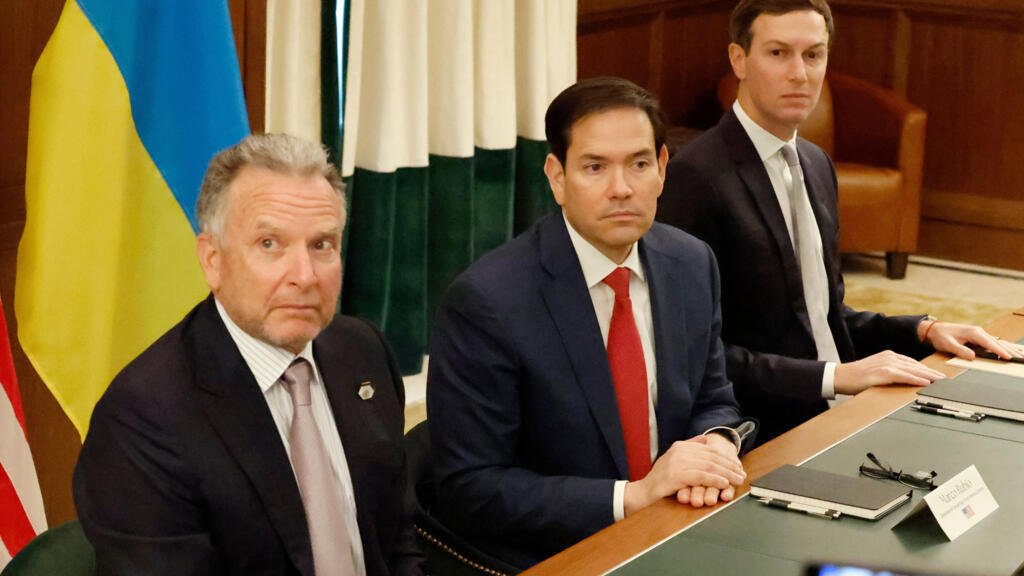

European and US Leaders Converge in Paris for Renewed Ukraine Peace Push Amid Deadly Russian Strikes
Paris, France – High-level European and US officials are gathering in Paris today for a critical meeting aimed at reviving peace talks to end the protracted war in Ukraine, even as fresh Russian strikes have claimed civilian lives, heightening the stakes for diplomacy.
The "coalition of the willing," as described by organizers, will convene on Tuesday, January 6, 2026, to deliberate on security guarantees and a near-finalized peace plan. This renewed diplomatic effort comes against the backdrop of overnight Russian attacks on Monday that resulted in civilian casualties, underscoring the fragile humanitarian situation on the ground and the pressing need for a breakthrough.
France 24 reports that the Paris summit represents a concerted push by Western allies to broker an end to the conflict that has raged since Russia's full-scale invasion of Ukraine in February 2022. Discussions are expected to center on robust security assurances for Kyiv, potentially including NATO commitments or bilateral defense pacts, alongside territorial and economic elements of a comprehensive peace agreement. While specifics of the peace plan remain under wraps ahead of the talks, sources indicate it has reached an advanced stage after months of behind-the-scenes negotiations.
The timing of the gathering could not be more urgent. Russian forces have intensified aerial bombardments in recent days, targeting civilian infrastructure and residential areas in Ukrainian cities. Monday's strikes alone killed several non-combatants, according to Ukrainian authorities, prompting international condemnation and calls for immediate de-escalation. These attacks have not only exacerbated the humanitarian crisis—displacing millions and straining global food supplies—but also tested the resolve of Ukraine's Western backers amid war fatigue in some European capitals.
Background on the Ukraine Conflict and Prior Diplomatic Efforts
The war in Ukraine, now entering its fourth year, stems from Russia's February 24, 2022, invasion, which Moscow justified as a "special military operation" to "denazify" and demilitarize its neighbor. Kyiv and its allies view it as an unprovoked act of aggression aimed at subjugating a sovereign nation. What began as a rapid advance on Kyiv has devolved into a grinding war of attrition, with frontlines largely stalemated along a 1,000-kilometer line from Kharkiv in the east to Kherson in the south.
Previous peace initiatives have faltered. Early talks in Istanbul in March 2022 yielded tentative agreements on ceasefires and prisoner swaps but collapsed amid mutual distrust and battlefield escalations. Ukrainian President Volodymyr Zelenskyy's 10-point peace formula, presented at the G20 summit in November 2022, demanded full Russian withdrawal, restoration of territorial integrity, and reparations—demands rejected by the Kremlin. Subsequent formats, including the Switzerland-hosted peace summit in June 2024, excluded Russia and made little progress.
The Paris meeting marks a shift toward inclusivity within the Western bloc, billed as a "coalition of the willing" comprising key European powers like France, Germany, the UK, and Poland, alongside US representatives. France, as host, has positioned itself as a neutral mediator, leveraging President Emmanuel Macron's repeated calls for dialogue. The US, under a new administration navigating post-2024 election dynamics, appears committed to supporting the effort while balancing domestic pressures to reduce overseas commitments.
This summit also reflects evolving geopolitical realities. Russia's alliances with North Korea and Iran have bolstered its military supplies, while Ukraine grapples with manpower shortages and delayed Western aid deliveries. European nations, bearing much of the refugee burden—over 6 million Ukrainians hosted across the continent—face economic strains from energy disruptions and inflation tied to the conflict.
Key Stakes and Potential Outcomes
Participants will grapple with thorny issues: the status of Crimea and Donbas regions annexed or occupied by Russia, demilitarization timelines, and enforcement mechanisms for any ceasefire. Security guarantees are pivotal; Ukraine seeks ironclad protections akin to NATO's Article 5, though full membership remains elusive amid alliance divisions.
While optimism is tempered, the near-finalized peace plan suggests tangible progress. French officials have hinted at compromises, such as phased troop withdrawals and international monitoring, though Russian President Vladimir Putin has yet to signal participation. Moscow's demands—Ukraine's permanent neutrality and recognition of annexed territories—continue to clash with Western red lines.
The Paris talks occur as winter deepens, amplifying civilian suffering through blackouts and shortages. Success here could pave the way for broader negotiations, potentially involving Turkey or China as guarantors. Failure risks further escalation, with Ukraine warning of intensified Russian offensives in 2026.
As leaders arrive in the French capital, the world watches closely. The coalition's ability to translate urgency into action may determine whether diplomacy can finally eclipse the battlefield in shaping Ukraine's future.
(Word count: 612)






