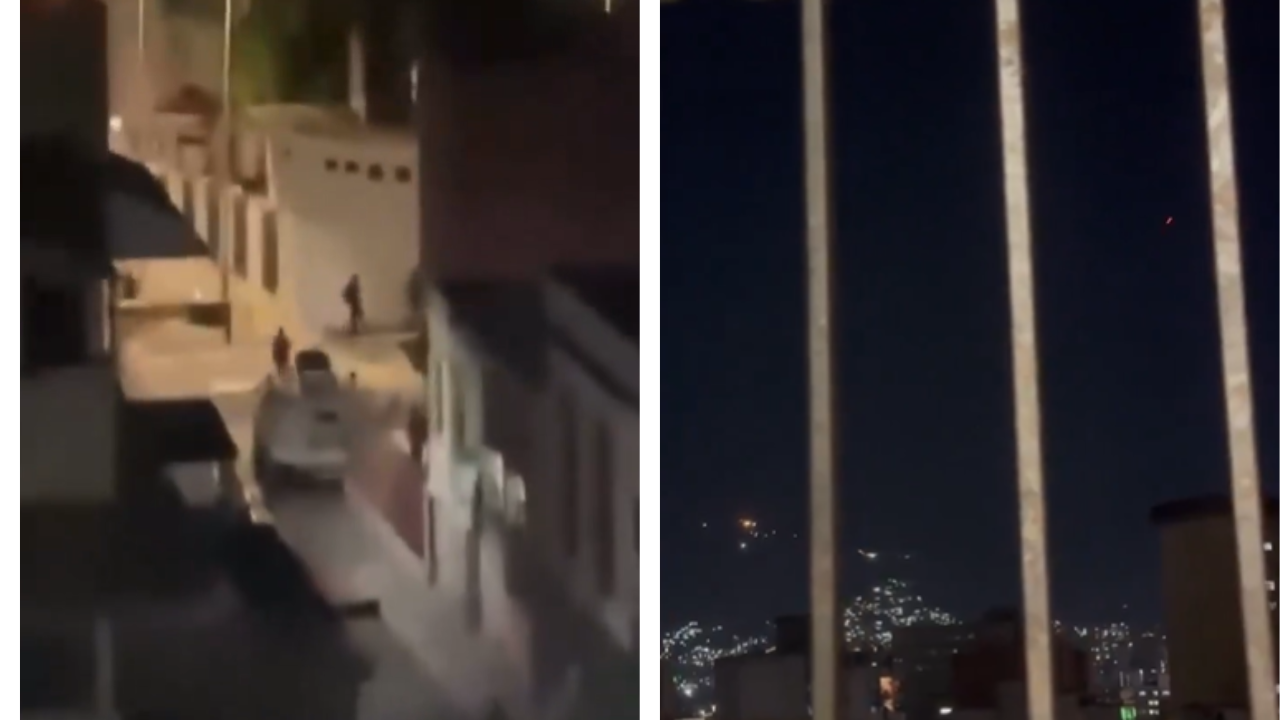

Escalating Violence Grips Caracas: Explosions and Gunfire Erupt After Maduro's Ouster
Caracas, Venezuela – Multiple explosions rocked Caracas on January 3, 2026, as witnessed by a CNN news team, signaling heightened tensions in the Venezuelan capital just days after President Nicolás Maduro's ouster. Reports of heavy gunfire near the presidential palace followed on January 6, underscoring the fragility of the country's political transition amid ongoing conflict.
The explosions, which occurred around 06:43 GMT on Saturday, January 3, were described as high-severity incidents indicative of potential violence or armed clashes in the area. Eyewitness accounts from the CNN team highlighted the immediate risks to civilians and infrastructure in the heart of Caracas, though specific casualties or damage assessments remain unconfirmed from available reports. This event marked an early flare-up in what appears to be a volatile post-Maduro era.
By Tuesday, January 6, the situation intensified with heavy gunfire reported in proximity to the Miraflores Presidential Palace, the longtime seat of Venezuela's executive power. According to coverage from the Times of India, the gunfire erupted days after Maduro's removal from office, raising alarms about rival factions vying for control. The incidents point to a deepening security crisis, with armed groups potentially loyal to the former regime or opposing forces engaging in open confrontation.
Timeline of Recent Events
The sequence began with Maduro's ouster, a pivotal shift in Venezuela's protracted political drama. While details on the exact mechanism of his removal—whether through military intervention, popular uprising, or international pressure—remain sparse in initial reports, it has clearly destabilized the capital. The January 3 explosions, visible and audible to international journalists on the ground, suggested the use of explosives in urban combat or sabotage operations. No group has claimed responsibility, but the timing aligns with power vacuums often exploited by militias or security forces.
The subsequent gunfire near Miraflores Palace, as detailed in the Times of India article published early on January 6, evoked memories of past Venezuelan unrest. The palace, a symbol of Chavismo governance since Hugo Chávez's era, has been a focal point for protests and clashes, including during the 2019 uprising attempts led by opposition leader Juan Guaidó.
Broader Context of Venezuela's Crisis
Venezuela's turmoil traces back over two decades to the Bolivarian Revolution under Chávez, who rose to power in 1999 promising social equity funded by oil wealth. Maduro, his handpicked successor, assumed office in 2013 amid economic decline, hyperinflation, and U.S. sanctions. The crisis peaked after the disputed July 2024 presidential election, where opposition candidate Edmundo González claimed victory based on tally sheets showing a landslide, while Maduro's National Electoral Council declared him the winner amid fraud allegations.
International observers, including the Carter Center and the European Union, criticized the lack of transparency. Mass protests ensued, met with crackdowns by security forces and pro-Maduro colectivos militias. By late 2024 and into 2025, economic collapse—marked by a 99% GDP contraction since 2013, per IMF data—fueled mass migration of over 7.7 million Venezuelans, according to UNHCR figures. Regional powers like Brazil and Colombia hosted exiles, while the U.S. and EU imposed sanctions on Maduro allies.
Maduro's ouster in early 2026 represents a potential turning point, possibly orchestrated by opposition coalitions, defecting military elements, or foreign influence. However, the immediate violence indicates no smooth handover. Historical precedents, such as the 1992 coup attempts against Chávez or the 2002 brief ouster, show how such transitions can devolve into civil strife.
Security and Humanitarian Implications
The high-severity explosions and gunfire have prompted fears of broader escalation. Caracas, home to 2 million residents, has long suffered from one of the world's highest homicide rates, exacerbated by fragmented security forces including the Bolivarian National Guard and National Police. International monitors, including the UN Human Rights Office, have documented over 300 extrajudicial killings in protest-related violence since 2014.
Civilian impacts are severe: shortages of food, medicine, and fuel persist, with 2025 World Bank reports estimating 80% of Venezuelans in poverty. The renewed conflict risks disrupting aid corridors and triggering further displacement.
Regional leaders have expressed concern. Colombia's President Gustavo Petro, who shares leftist roots with Chavismo, called for dialogue, while U.S. officials monitored developments closely, given Venezuela's role in migration flows and oil markets.
Outlook Amid Uncertainty
As of January 6, 2026, no official statements from interim authorities or Maduro loyalists have clarified the gunfire's origins or casualties. The international community watches warily, with the Organization of American States potentially convening emergency sessions. Stabilization hinges on unified opposition leadership and military neutrality, but history suggests protracted instability.
Venezuela's crisis, now marked by these explosive events, underscores the high stakes of its political rebirth—or relapse into chaos.
(Word count: 712)






