
Escalating Tensions: US Strikes Venezuela, Captures President Maduro
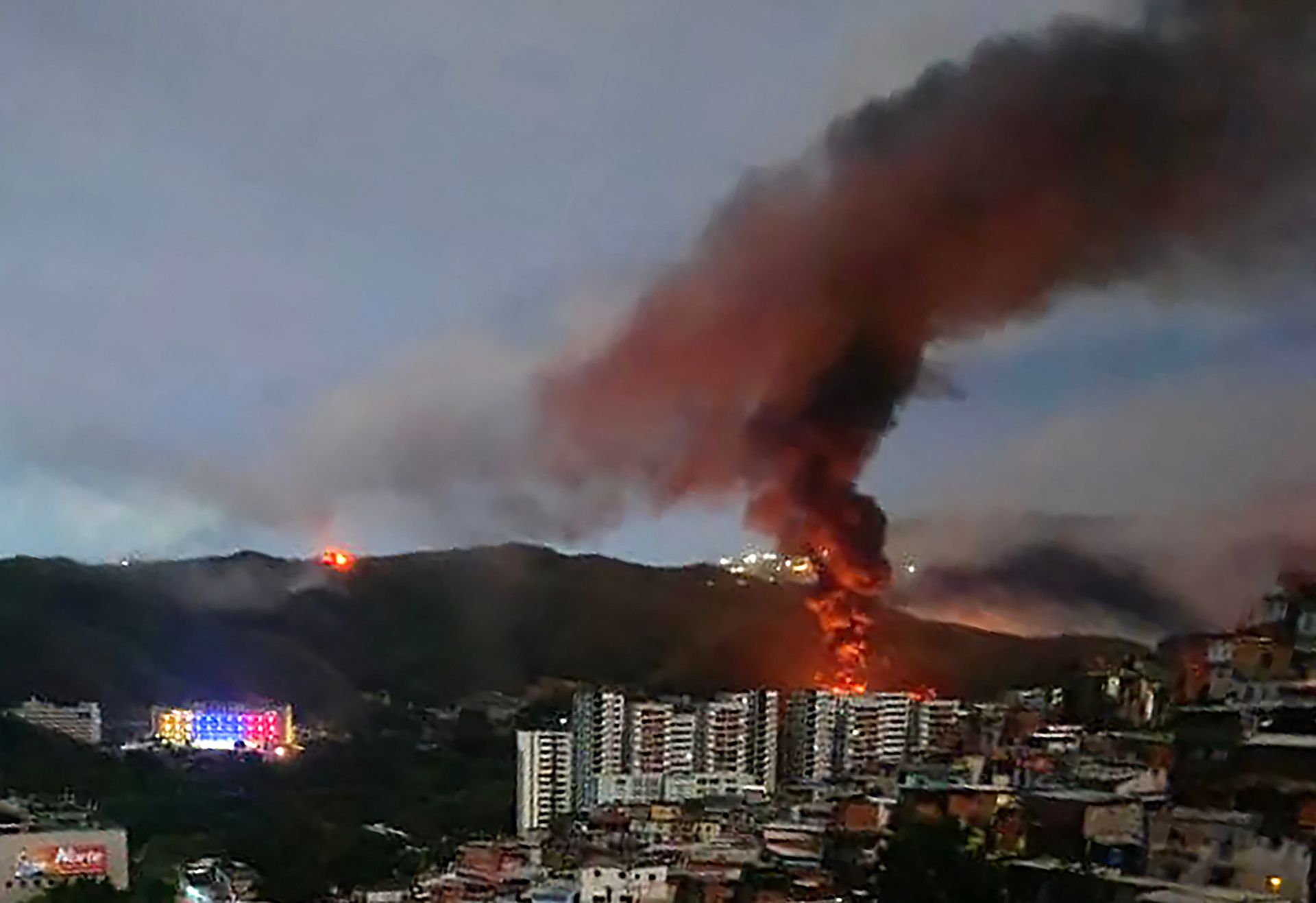
In a dramatic escalation of tensions, the United States conducted air strikes on Venezuelan military facilities early Saturday, January 3, 2026, leading to the reported capture of President Nicolás Maduro. President Donald Trump announced the operation, claiming it targeted sites linked to drug trafficking and military operations. The strikes followed multiple explosions that rocked Caracas, the Venezuelan capital, just hours earlier.
Details of the Strikes
According to reports, at least seven explosions were heard in Caracas around 2 a.m. local time, accompanied by the sound of low-flying aircraft. Panic ensued as residents described a chaotic scene with air raid sirens blaring and smoke rising from military installations. The Fuerte Tiuna military complex, which serves as a key military hub in Venezuela, was among the facilities targeted, leading to significant damage and casualties, though exact figures are still unclear.
In a post on his social media platform, Trump confirmed the actions taken against the Maduro government, stating, "The United States of America has successfully carried out a large-scale strike against Venezuela and its leadership." He further claimed that Maduro and his wife had been "captured and flown out" of the country, a statement that has yet to be independently verified by other sources.
Maduro's Response
In response to the strikes, Maduro declared a nationwide state of emergency, accusing the U.S. of "very serious military aggression." He urged citizens to mobilize against what he described as an invasion, emphasizing that the Venezuelan military would defend the nation’s sovereignty. The Venezuelan government has characterized the U.S. actions as an illegal act of war, further inflaming the already tense geopolitical landscape in the region.
International Reactions
The strikes have sparked a wave of condemnation from various quarters. U.S. lawmakers expressed concerns over the legality of the military action, with Democratic Senator Ruben Gallego calling it "illegal" and condemning it as the "second unjustified war in my lifetime." The international community is closely monitoring the situation, with many nations urging diplomatic resolutions rather than military engagements.
Background Context
The U.S. has long been critical of Maduro's government, which it accuses of human rights violations and corruption. The country has been mired in economic turmoil and political instability for years, with opposition groups frequently calling for international intervention. The strikes come amid a broader campaign by the Trump administration to confront perceived threats in the region, including a military buildup and recent confrontations over oil tanker seizures.
Outlook
As the situation unfolds, the potential for further conflict remains high. With Maduro's fate uncertain and the Venezuelan military on high alert, the possibility of retaliatory actions is looming. The international community faces the challenge of addressing the crisis while navigating the complex political dynamics that have long defined U.S.-Venezuela relations.
The events of the past few days mark a significant turning point in Venezuelan history, with implications that could reverberate throughout Latin America and beyond. As the world watches, the need for a peaceful resolution becomes increasingly urgent.






