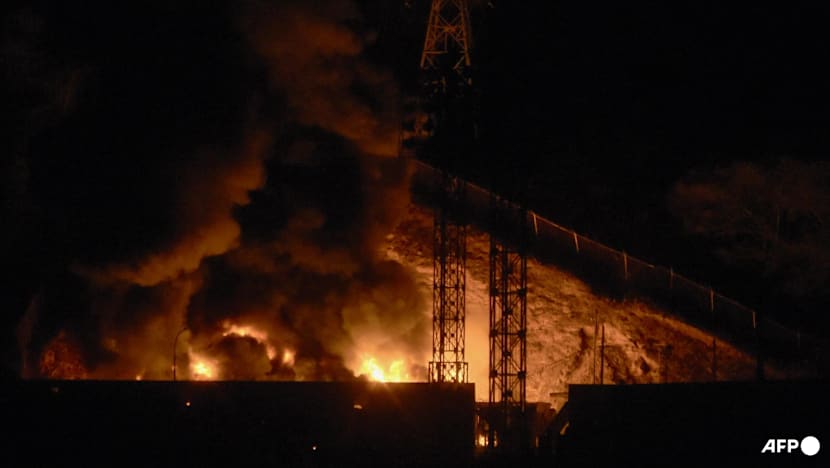

Escalating Tensions: US Drone Strike Targets Venezuelan Drug Facility, Maduro Captured
In a dramatic escalation of U.S. military involvement in South America, a drone strike conducted by the United States targeted a facility in Venezuela allegedly linked to drug trafficking. The strike, which took place on December 31, 2025, resulted in significant developments that have further destabilized the region, including the capture of Nicolás Maduro, the country's embattled president.
President Donald Trump announced the drone strike as part of a broader strategy to combat drug trafficking and corruption in Venezuela, a nation long plagued by economic turmoil and political unrest. According to reports, the facility was associated with operations that the U.S. believes facilitate the production and distribution of narcotics.
The implications of the strike have garnered international attention, raising concerns about the erosion of established norms in global governance and the potential for further U.S. military actions in Latin America. Stefan Wolff, a professor of international security, noted that if the strike is deemed successful, it could set a precedent for U.S. interventionism in the region, making countries wary of future U.S. intentions.
Following the drone strike, the situation intensified when Maduro was reportedly captured by U.S. forces and transported to New York. This unprecedented move has sparked a myriad of reactions both domestically within Venezuela and internationally. Trump declared that the U.S. would "run" the country, signaling an intent to exert control over Venezuela's political future.
The drone strike and subsequent capture of Maduro have been met with mixed reactions. Supporters of the U.S. action see it as a necessary step to dismantle a regime they view as corrupt and detrimental to the Venezuelan people. However, critics argue that such military actions could lead to long-lasting instability and further exacerbate the humanitarian crisis already affecting millions of Venezuelans.
Background on U.S.-Venezuela Relations
The relationship between the United States and Venezuela has been fraught with tension for years, particularly under Maduro's leadership. The U.S. has long accused the Maduro government of human rights abuses, corruption, and enabling drug trafficking, while Venezuela has accused the U.S. of imperialistic ambitions and interference in its internal affairs.
Historically, U.S. interventions in Latin America have often led to significant geopolitical ramifications. The recent events in Venezuela could mark a turning point in the region, drawing comparisons to past interventions in countries like Panama and Grenada.
Conclusion
The U.S. drone strike on Venezuela marks a significant escalation in U.S. foreign policy and military engagement in Latin America, with potential ramifications for regional stability and international relations. As the world watches the unfolding events surrounding Maduro's capture, questions arise about the future of Venezuela and the role of the United States in shaping its political landscape. The situation remains fluid, with multiple stakeholders poised to react to the new developments in this long-standing crisis.






