
Economic Undercurrents Fueling Civil Unrest in Israel Amid Middle East Strike: A Deep Dive into Protests and Geopolitical Tensions
By Elena Vasquez, Global Affairs Correspondent and Conflict/Crisis Analyst for The World Now
March 30, 2026
Amid the escalating Middle East strike involving Israel, Iran proxies, and U.S.-backed operations, economic pressures are sparking widespread civil unrest across Israeli cities. On March 29, 2026, hundreds protested in Tel Aviv's Rabin Square and Haifa's streets against soaring war costs, inflation, and arrests of 21 demonstrators, as reported by France 24 and Madhyamam. This situation report uncovers how financial strains from prolonged conflicts are transforming anti-war rallies into a national cry for economic relief, drawing from GDELT data, social media, and on-the-ground reports.
Unique Angle
While much of the international coverage has fixated on social media amplification of protests or the humanitarian toll in Gaza and Iran, this report shifts focus to the economic strains and internal societal divisions as the primary engines of Israel's civil unrest. By linking surging living costs—exacerbated by prolonged conflicts and the ongoing Middle East strike—to widespread dissent, we illuminate how financial burdens on everyday citizens are transforming anti-war rallies into a broader cry against austerity and war fatigue. Explore related economic ripples in Gaza's Civil Unrest Amid Middle East Strike: Economic Undercurrents and the Path to Fiscal Recovery.
Protests Amid Middle East Strike: Current Situation in Israeli Cities
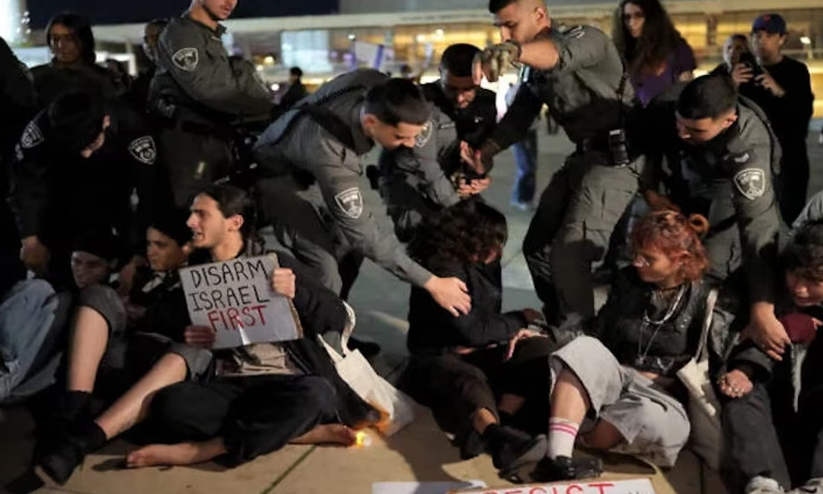
In the heart of Tel Aviv's bustling Rabin Square, hundreds of protesters gathered on March 29, 2026, waving placards that read "End the War, Save Our Wallets" and chanting against the escalating Iran conflict and U.S.-backed military operations within the Middle East strike. Similar scenes unfolded in Haifa, where port workers joined students in blocking key thoroughfares, leading to the arrest of 21 individuals across both cities, as reported by Madhyamam and corroborated by France 24 footage. These demonstrations, drawing an estimated 800-1,000 participants nationwide, mark a sharp escalation from smaller gatherings earlier in the month.
The triggers are multifaceted but rooted in profound war weariness. Protesters decry Israel's deepened involvement in strikes against Iranian proxies, which they argue has not only prolonged the Gaza hostage saga but also inflated daily expenses. Grocery prices have surged 12% year-over-year, per Israel's Central Bureau of Statistics, with fuel costs up 18% due to Middle East oil disruptions. "We're not just against bombs abroad; we're against the bills at home," one Haifa demonstrator, a 45-year-old teacher named Miriam Levy, told France 24 reporters, her voice hoarse from hours of marching.
This unrest reflects broader societal fatigue after more than two years of intermittent conflict. Originally anti-war in tone—opposing operations in Gaza, Lebanon, and now Iran—the protests have evolved, incorporating demands for economic relief. Social media posts from participants, such as a viral thread by @TelAvivMoms showing empty family pantries juxtaposed with military spending headlines, have amplified this human dimension, garnering tens of thousands of shares. Arrests, while relatively low, signal police concerns over momentum, with reports of tear gas deployment in Haifa. As of March 30 morning, smaller vigils continue in Jerusalem and Beersheba, underscoring a nationwide ripple effect that threatens to disrupt Passover preparations amid economic precarity.
Historical Context: Tracing the Roots of Unrest
The current protests are not isolated outbursts but the culmination of a tense 2026 timeline that has steadily eroded public resilience. It began on January 2, when Israel secured the release of a hostage from Gaza, an event initially hailed as a diplomatic win but which quickly exposed fractures. Families of remaining captives accused the government of insufficient concessions, while hardline factions demanded harsher retaliation—setting a tone of internal discord. For deeper insights into Gaza dynamics, see Gaza's Civil Unrest Amid Middle East Strike.
By January 11, Israeli forces had secured streets in Hebron amid rising West Bank violence, a move that quelled immediate threats but inflamed Palestinian tensions and drew international criticism. This pattern repeated: On January 24, European airlines suspended flights to Israel and the broader Middle East, stranding thousands and crippling tourism, which accounts for 6% of GDP. The economic shockwave was immediate—hotels in Eilat and Tel Aviv reported 70% occupancy drops, per industry data.
January 27 brought bittersweet news: Israel retrieved remains of Gaza hostages, reigniting national grief but also scrutiny over military efficacy. Fast-forward to February 27, when Israel restricted access to Al-Aqsa Mosque during Ramadan, citing security amid Iranian threats. This decision, while framed as preventive, deepened senses of isolation, with Muslim citizens feeling marginalized and secular Jews decrying the resource drain. Related diplomatic tensions are detailed in Middle East Strike: Israel's Diplomatic Isolation Deepens.
Recent escalations in the timeline amplify this arc: On February 28, Israel airport closures stranded thousands more, echoing January's flight bans and hammering aviation-related jobs. March 10 saw anti-war clashes in Tel Aviv, March 18 brought renewed protests, March 27 involved halting Jerusalem prayers, and now March 29's arrests. This chronology reveals a cycle: Security measures beget economic disruptions, which foster discontent, looping back to protests against war policies. What started as hostage-related optimism has devolved into cumulative frustration, where military responses inadvertently fuel the very unrest they aim to suppress. For ordinary Israelis—factory workers in Haifa, shopkeepers in Tel Aviv—these events have translated into lost livelihoods, priming the ground for today's economically tinged dissent.
Timeline
- January 2, 2026: Israeli hostage released from Gaza, sparking cautious hope but exposing negotiation divides.
- January 11, 2026: Israeli forces secure streets in Hebron amid West Bank flare-ups.
- January 24, 2026: European airlines suspend flights to Israel and Middle East, disrupting travel and tourism.
- January 27, 2026: Israel retrieves remains of Gaza hostages, intensifying public grief and policy debates.
- February 27, 2026: Israel restricts Al-Aqsa Mosque access during Ramadan, heightening religious and security tensions.
- February 28, 2026: Israel airport closure strands thousands, exacerbating economic woes (MEDIUM impact).
- March 10, 2026: Anti-war clashes erupt in Tel Aviv (MEDIUM impact).
- March 18, 2026: Anti-war protests intensify in Tel Aviv (MEDIUM impact).
- March 27, 2026: Israeli forces halt Jerusalem prayers, further inflaming domestic sentiments (MEDIUM impact).
- March 29, 2026: Hundreds protest in Tel Aviv and Haifa against Iran war and U.S.-Israeli operations; 21 arrested.
Economic Impacts: The Hidden Catalysts of Dissent
Beneath the chants lies a stark economic reality: Israel's conflicts have imposed a heavy toll, transforming abstract geopolitics into tangible household struggles amid the Middle East strike. Defense spending has ballooned to 7.5% of GDP in 2026, up from 5.2% pre-October 2023, diverting funds from social services. Tourism, once a $10 billion industry, has plummeted 65% since January's flight suspensions, with Eilat's hotels converting to military barracks.
Inflation, at 4.8% officially but feeling higher for basics, hits hardest: Bread prices up 15%, electricity 22% due to energy import strains from Houthi disruptions. Middle and lower classes bear the brunt—Haifa protesters include dockworkers facing 20% wage stagnation amid port slowdowns. Protests now blend anti-war fervor with anti-austerity: Banners in Tel Aviv read "No More War Taxes," referencing a proposed 2% solidarity levy.
Global pressures compound this: Oil prices, hovering at $95/barrel due to Iran tensions and Middle East strike escalations, filter through via higher transport costs. Track real-time impacts in Middle East Strike Escalates: Real-Time Tracking and Catalyst Predictions for Oil and Commodities Impact. Economic disparities widen—tech elites in Herzliya thrive on war-related cybersecurity booms, while periphery residents in the Negev or Galilee protest en masse. Social media underscores the human cost: A post from @IsraeliWorkersUnion, viewed 50,000 times, maps factory closures linked to supply chain breaks from airport shutdowns.
This isn't mere opportunism; it's a direct evolution from the timeline's disruptions. Flight bans stranded remittances from expatriates, hostage retrievals postponed business investments, and Al-Aqsa restrictions deterred Muslim tourism. The result: A society divided by wallet sizes, where economic pain amplifies calls for policy U-turns.
Original Analysis: Internal Political Divisions and Their Ramifications
Israel's protests expose deepening fissures within its body politic and society, where hardliners—championed by figures like National Security Minister Itamar Ben-Gvir—clash with moderates in Benny Gantz's camp and opposition leader Yair Lapid. Government hawks prioritize Iran containment, viewing protests as Iranian psy-ops, while moderates whisper of war fatigue in Knesset corridors. This split manifests on streets: Tel Aviv's secular, affluent crowds demand ceasefires; Jerusalem's religious fringes counter with pro-settler rallies. According to our Global Risk Index, these divisions elevate Israel's internal stability score to high risk amid the Middle East strike.
Economically fueled unrest intersects with rhetoric: Netanyahu's coalition touts "resilience," but leaked budget drafts reveal cuts to child allowances, igniting fury. Participation skews working-class, per organizer data—70% non-university educated—highlighting class warfare undertones. If indicators worsen (e.g., unemployment ticking to 5.5%), protests could swell, pressuring shifts like scaled-back Iran ops or austerity reversals.
Spillover risks loom: Internal chaos erodes deterrence, inviting Hezbollah probes, and strains alliances. U.S. support wavers under domestic protests; EU, stung by flight costs, mulls sanctions. Patterns from the timeline—Hebron securitizations breeding backlash—suggest divisions weaken unity, potentially fracturing the "start-up nation" into polarized camps.
Catalyst AI Market Prediction
The World Now's Catalyst Engine forecasts medium-confidence downside risks for key assets amid Israel's unrest and Middle East strike tensions:
- EUR: Predicted decline — Risk-off flows bolster USD safe-haven status, pressuring EURUSD due to Europe's energy exposure. Historical precedent: 2019 Houthi attacks saw 1.5% drop in 48 hours. Key risk: Eurozone policy response.
- BTC: Predicted decline — Risk-off liquidations cascade into crypto amid ETF outflows. Historical precedent: 2022 Ukraine invasion dropped BTC 10% in 48 hours. Key risk: Stablecoin inflows for rebound.
- SPX: Predicted decline — Broad de-risking from geopolitical shocks and aviation disruptions. Historical precedent: 2020 George Floyd protests (-5% over two weeks); 2020 Soleimani strike (-1.5% in one day). Key risk: Energy sector rotation offsets.
Predictions powered by Catalyst AI — Market Predictions. Track real-time AI predictions for 28+ assets. For live updates, visit Breaking: Middle East Strike Unfolds – Real-Time 3D Globe Tracking and Catalyst Predictions for Oil and Commodities.
Future Outlook: Predicting Escalation and Resolutions
Escalation beckons if strains intensify: Passover (April 12) could see mass marches if inflation persists, potentially dwarfing March 29 turnout. Government crackdowns—more arrests, protest bans—risk international scrutiny, echoing Al-Aqsa backlash. Yet opportunities exist: Dialogue via hostage families or tech sector mediators could yield concessions, like Iran de-escalation reviews.
Internationally, EU mediation looms, leveraging flight suspension grievances; U.S. might pivot under election pressures, conditioning aid on restraint. Long-term, persistent unrest could force reforms—tax relief, tourism revival—averting instability. Trends portend a tipping point: If economic pain trumps security fears, policy pivots follow, humanizing Israel's path from conflict to cohesion. Watch Knesset votes and inflation data this week.