
Earthquake Japan: 7.7-Magnitude Quake Strikes Off Coast, Triggers Tsunami Warnings
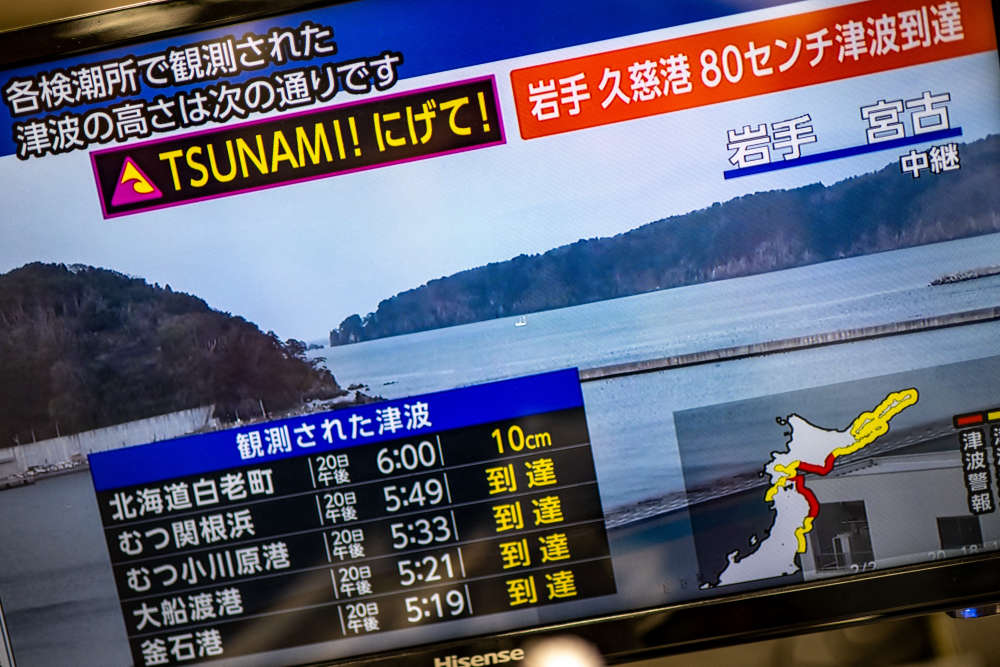
A 7.7-magnitude earthquake struck off Japan's northeastern coast, triggering tsunami warnings.[2][4] This earthquake Japan event, centered near Iwate prefecture, prompted swift action from authorities as waves of up to three meters were initially anticipated along parts of Honshu and Hokkaido.[2]
The Earthquake Event
The earthquake Japan tremor registered at a magnitude of 7.7 and occurred off the northeastern coast of Japan, specifically in Pacific waters near Iwate prefecture.[2][4][5] This powerful seismic event took place on Monday, sending shockwaves through the region and immediately raising alarms due to its intensity and proximity to populated areas.[2][4] According to reports, the quake's epicenter was positioned offshore, which amplified concerns over secondary effects like tsunamis given Japan's vulnerability to such combined disasters in this tectonically active zone.[1][4] The Japan Meteorological Agency quickly assessed the situation, confirming the 7.7 magnitude scale, a measure that underscores the event's significant energy release and potential for widespread impact.[2][5] Eyewitness accounts and initial seismic data highlighted the jolt's strength, with the ground shaking felt across northern regions, though specific damage assessments were not detailed in early reports.[4] This offshore location near Iwate, a prefecture with a history of seismic activity, positioned the event as a stark reminder of Japan's position on the Pacific Ring of Fire, where such quakes are not uncommon but demand rigorous preparedness.[5] The timing on a Monday added to the urgency, as coastal communities were thrust into emergency protocols without delay.[2] Source monitoring from global event trackers like GDELT captured the quake's immediate prominence, labeling it a major 7.5-to-7.7 magnitude occurrence that hit off Japan and triggered tsunami protocols.[1] While magnitudes varied slightly in preliminary reports—7.5 in some aggregators versus 7.7 from official Japanese sources—the consensus settled on 7.7, reflecting refined data from the Japan Meteorological Agency.[2][4][5] This event's basic details, including its depth in Pacific waters and northern focus off Iwate, set the stage for the cascading warnings that followed, emphasizing the rapid dissemination of information critical to public safety.[5]
Tsunami Warnings and Updates
Japan's response to the earthquake swiftly escalated with tsunami warnings issued by the Japan Meteorological Agency, initially forecasting waves up to three meters along the coasts of Honshu and Hokkaido.[2][4] These alerts were critical, as authorities anticipated significant inundation risks in coastal zones directly exposed to the offshore epicenter near Iwate prefecture.[2] The warnings prompted a heightened state of readiness, with the potential for 3-meter waves—equivalent to about 10 feet—posing threats to infrastructure, homes, and lives in low-lying areas.[4] However, as monitoring progressed, the situation evolved favorably; recorded tsunami waves reached a maximum height of only one meter, leading to a downgrade of the advisory.[2] This adjustment reflected real-time data from tide gauges and coastal observations, signaling that the initial worst-case projections had not materialized.[2] The downgrade did not eliminate caution, but it allowed for a recalibration of response efforts, underscoring the effectiveness of Japan's advanced early-warning systems in mitigating panic while ensuring preparedness.[4] Reports from multiple outlets detailed this sequence: from the high alert of up to three meters to the confirmed one-meter peaks, highlighting the dynamic nature of tsunami forecasting post-quake.[2] Copenhagen Post coverage noted the transition explicitly, tying it to the 7.7 magnitude strike off the coast.[2] Similarly, JoyOnline emphasized the easing back after the initial 3-meter expectations, as residents heeded calls to avoid coastal zones.[4] This progression from warning to downgrade illustrates the layered approach of Japan's disaster management, where initial conservatism gives way to data-driven de-escalation without complacency.[2]
Immediate Response by Authorities
In the wake of the 7.7-magnitude earthquake near Iwate prefecture, authorities mobilized with urgency, issuing directives for immediate evacuations to higher ground across affected coastal regions.[2] The Japan Meteorological Agency's tsunami warning for up to three meters catalyzed this response, as residents in Honshu and Hokkaido were urged to move inland promptly to avoid potential flooding.[2] Government spokesperson Minoru addressed the public, reinforcing the need for compliance amid the unfolding crisis.[2] Parallel to evacuations, officials explicitly warned residents to stay away from coastal areas, where the highest tsunami risks were concentrated.[2][4] This directive was echoed in broader calls from authorities, emphasizing the dangers of returning too soon even as waves were monitored.[4] The coordinated effort highlighted Japan's well-drilled emergency protocols, with evacuations executed to minimize exposure in the critical first hours post-quake.[2] Such actions prevented larger-scale incidents, as the subsequent wave measurements stayed below initial fears.[2] The response's efficiency stemmed from pre-established plans tailored to offshore quakes of this scale, ensuring that communities near Iwate and beyond acted decisively.[2]
Risk of Additional Quakes
Following the initial 7.7-magnitude event, Japan's meteorological agency elevated concerns by warning of a possible stronger earthquake within the next week.[3][5] This alert specified an increased risk of quakes reaching magnitude 8.0 or higher, particularly in the seismic zone off northern Iwate prefecture.[5] The pronouncement placed the nation on high alert for a potential "huge" second quake, reflecting aftershock patterns common in major seismic sequences.[3] BBC reporting captured this tension, noting the agency's forward-looking caution after the tsunami warning had been managed.[3] Channel News Asia detailed the Pacific waters focus, linking the powerful jolt to broader instability that could spawn even more potent tremors.[5] Such warnings are grounded in probabilistic models assessing fault stress changes post-event, urging sustained vigilance rather than immediate panic.[3][5] For residents and officials, this meant extended preparedness, including monitoring for foreshocks or swarm activity that could precede a larger rupture.[5] The one-week horizon underscored the temporal window for elevated risk, a standard in Japan's seismic advisory framework.[3]
Current Status
As of the latest updates, the tsunami warning has been downgraded following the 7.7-magnitude earthquake off Japan's coast near Iwate, with maximum recorded waves at one meter.[2] Evacuations to higher ground proceeded as planned, and authorities continue to advise against approaching coastal areas pending full all-clear.[2] Government communications, via spokesperson Minoru, have maintained a steady line on safety measures amid the resolved initial tsunami threat.[2] The focus has shifted toward ongoing seismic monitoring, with no major damage reports specified in immediate post-event coverage.[2]
What to watch next: Monitor Japan Meteorological Agency updates for any escalation in the warned risk of magnitude 8.0 or stronger quakes within the next week, particularly off Iwate prefecture.[3][5]






