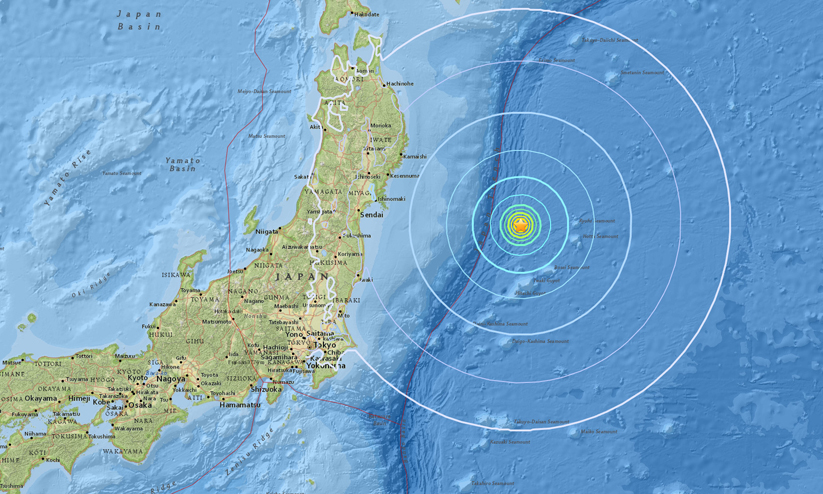

Earthquake Japan: 7.5-Magnitude Quake Strikes Off Coast, Tsunami Warnings Issued
A magnitude 7.5 earthquake struck off the northeastern coast of Japan, triggering tsunami warnings for waves up to 3 meters. This earthquake Japan event has prompted immediate safety measures as authorities respond to the potential for significant coastal impacts.[1]
Overview of the Earthquake
The earthquake, registering at a magnitude of 7.5, occurred off the coast of Japan, marking a significant seismic event in a region known for its tectonic activity.[1][3][5] Reports from multiple outlets consistently describe the quake's intensity, with headlines emphasizing its major scale and the immediate issuance of tsunami warnings.[3][5] One source notes a slightly lower preliminary magnitude of 7.4, but the prevailing assessments align on 7.5, reflecting the rapid refinement of data from monitoring agencies as initial shakes were recorded.[2]
This event underscores the ongoing seismic risks in Japan, where the Pacific Ring of Fire convergence frequently produces powerful quakes. The 7.5 magnitude places it in the "major" category, capable of causing serious damage in populated areas, though its offshore epicenter may have mitigated some direct structural impacts on land.[1] Detailed reports highlight the quake's occurrence as a sudden jolt felt across northeastern regions, prompting swift alerts to mitigate secondary hazards like tsunamis.[3][5] The consistency across sources in labeling it a "major 7.5-magnitude quake" provides a clear picture of its scale, with no discrepancies beyond minor initial variations.[1][3]
In the context of Japan's earthquake preparedness, such events test the nation's extensive monitoring networks, which detected and reported the quake almost instantaneously.[5] The overview from these reports paints a picture of a precisely located offshore tremor that escalated quickly from detection to public warnings, emphasizing the efficiency of early warning systems.[1]
Location and Impact
The earthquake struck off the northeastern coast of Japan, with specific mentions of the Sanriku Coast area, a region historically vulnerable to seismic and tsunami events.[1][4] Tsunami warnings were activated for northern Japan, focusing on coastal zones where waves posed the greatest threat.[4] The epicenter's offshore position likely spared immediate inland destruction, but the proximity to populated coastal areas raised concerns for wave inundation.[1]
Sources detail the quake hitting off the Sanriku Coast, activating warnings across northern Japan, which includes rugged shorelines prone to amplification of tsunami energies.[4] The northeastern coastal focus aligns with the tectonic subduction zone where the Pacific Plate dives beneath the Eurasian Plate, a hotspot for megathrust earthquakes.[1] Initial impacts centered on evacuation needs rather than widespread structural collapse, given the marine origin, though the potential for coastal flooding loomed large.[4]
This location's significance cannot be overstated; the Sanriku region endured devastating tsunamis in past events, such as 2011, making current warnings a critical echo of historical vulnerabilities.[1][4] Reports indicate no immediate casualty figures but stress the quake's reach into northern prefectures, where residents faced the highest risks from approaching waves.[4]
Tsunami Warnings Issued
Tsunami warnings were promptly issued following the 7.5-magnitude quake, with expectations of waves reaching up to 3 meters (10 feet) along affected coasts.[1][2][3][4][5] Authorities urged residents to evacuate coastal areas immediately, a standard protocol to prevent loss of life in the face of potential inundation.[1] Multiple sources confirm the warnings targeted northern Japan, including the Sanriku Coast, where tsunami activity was anticipated.[4]
The warnings, described across reports as active and urgent, specified heights that could submerge low-lying areas and cause significant disruption.[1][3][5] One account in a regional language outlet reinforces the northern Japan focus, aligning with English-language summaries of the 7.4 to 7.5 magnitude event triggering alerts.[2] The emphasis on 3-meter waves highlights the tsunami's destructive potential, capable of carrying debris and eroding shorelines.[1]
Safety advisories were clear: stay away from coastal zones, a directive repeated in primary coverage to underscore the immediacy of the threat.[1][4] The breadth of sources—from global news aggregators to detailed quake reports—converges on the warning's scope, covering waves that could impact fishing ports, beaches, and infrastructure.[3][5] This unified messaging reflects coordinated efforts by Japan's Meteorological Agency and local governments to disseminate information rapidly.[2][4]
Timeline of Reports
The earthquake unfolded on April 20, 2026, with source timestamps providing a precise sequence of reporting.[2][3][4][5] Initial alerts emerged around 09:15 UTC, as indicated by the earliest publication on the Sanriku Coast quake and active tsunami warnings for northern Japan.[4] This was followed closely by reports at 09:30 UTC, including the 7.4 magnitude note and a 7.5 confirmation in Japanese context.[2][5]
By 10:30 UTC, broader world news coverage solidified the 7.5 magnitude and tsunami warning narrative.[3] The compressed timeline—from quake detection to widespread reporting within hours—demonstrates the speed of modern seismic monitoring and media dissemination.[2][4] Publications clustered around mid-morning UTC on April 20, reflecting the event's local timing in Japan's evening or late afternoon hours, adjusted for time zones.[3][5]
This sequence allows reconstruction of the response: quake at approximately the 09:15 mark, warnings by 09:30, and global awareness by 10:30.[4][2] The gdelt-sourced entries, with their UTC timestamps, offer granular insight into how information propagated, starting with localized impacts and expanding to international notice.[3][5]
Official Responses
Authorities responded decisively to the earthquake by urging residents to stay away from coastal areas, where tsunami waves of up to 3 meters were expected.[1] This directive from Japanese officials aimed to preempt any coastal casualties, leveraging public address systems and mobile alerts common in the nation's disaster framework.[1]
The call to evacuate and avoid shores was the centerpiece of initial official actions, as detailed in comprehensive coverage of the event.[1] No further specifics on cabinet-level meetings or military deployments appear in available reports, but the emphasis on resident safety underscores a proactive stance.[1] This response aligns with Japan's world-leading earthquake protocols, prioritizing human life over property in the critical early phase.[1]
What to watch next: Monitor updates on tsunami wave arrivals along the Sanriku Coast and northern Japan, as well as any revisions to magnitude assessments or reports of coastal impacts from authorities.[1][4]






