
Earthquake Japan: 7.4-Magnitude Quake Hits Off Coast with Tsunami Warning Issued
A 7.4-magnitude earthquake struck off the coast of Japan, prompting the issuance of a tsunami warning. This earthquake Japan event unfolded with significant seismic activity reported in the northeast region, leading to immediate alerts for coastal areas.[1][2][5] The quake's impact has raised concerns about potential tsunami waves, with observations confirming wave activity along the eastern seaboard.[3]
The Earthquake Event
The primary earthquake occurrence registered a magnitude of 7.4, striking off the coast of Japan in the northeast area.[1][2][5] Initial reports from multiple outlets highlighted the event's severity, describing it as a major quake that necessitated rapid response measures.[1] The Japan Meteorological Agency and other monitoring bodies provided preliminary assessments, noting the time of the event around 4:53 p.m. on Monday local time.[2] This magnitude places it in the category of a strong earthquake capable of widespread effects, particularly given its proximity to populated coastal regions.[5] Seismic data indicated a shallow to intermediate depth, contributing to the intensity felt on land.[2][5] News coverage emphasized the quake's sudden onset, with the epicenter positioned in a tectonically active zone known for such events.[1][2] The event's reporting across international sources underscored its immediacy, with outlets like The Straits Times and South China Morning Post confirming the 7.4 figure from reliable seismic networks.[1][2] While one report mentioned a slightly higher preliminary magnitude of 7.5, consistent data from the United States Geological Survey (USGS) affirms 7.4 as the accurate measure.[4][5] This alignment ensures clarity in understanding the quake's power, which is measured on the moment magnitude scale to reflect the total energy released.[5] The earthquake's occurrence aligns with Japan's position on the Pacific Ring of Fire, though specifics here focus solely on this instance's documented parameters.[2][5]
Location and Details
The epicenter of the 7.4-magnitude earthquake was located approximately 100 km east-northeast of Miyako, Japan, positioning it offshore in a region vulnerable to seismic activity.[5] Additional details place it off the Sanriku Coast, a area historically prone to such events due to subduction zone dynamics.[2] Depth estimates vary slightly between sources, with reports citing around 10 km and others at 35 km, indicating a relatively shallow event that amplifies surface shaking.[2][5] This shallow depth means the energy release was efficiently transmitted to the surface, potentially intensifying felt intensities in nearby prefectures.[2][5] Miyako, situated in Iwate Prefecture, serves as a key reference point, underscoring the quake's offshore nature about 100 km from land.[5] The Sanriku Coast reference further contextualizes the location along Japan's northeastern seaboard, where the Pacific Plate interacts with the North American Plate.[2] These precise coordinates—100 km ENE of Miyako—allow for accurate modeling of the rupture and aftershock potential, though current reporting sticks to confirmed epicentral data.[5] The combination of location and depth details highlights why tsunami generation was a primary concern, as undersea quakes in this zone often displace seawater.[2][5]
Tsunami Warning and Observations
Following the earthquake, a tsunami warning was promptly issued for several prefectures in northern and northeastern Japan, including Hokkaido, Iwate, and Aomori.[2][4] Expected wave heights reached up to 3 meters, prompting heightened alerts for coastal communities.[2][4] Observations confirmed a tsunami off the east coast of Japan, with reports of waves measuring around 3 meters already detected.[3][4] The Japan Meteorological Agency, via Reuters and NHK, specified that these waves could approach and strike coastal areas repeatedly, urging vigilance.[4] The warning covered key areas like the Sanriku Coast vicinity, aligning with the epicenter's position.[2] Visual and instrumental confirmations from monitoring stations noted the tsunami's presence, emphasizing its linkage to the quake's seafloor displacement.[3][4] Waves of this height pose significant risks to low-lying areas, with historical precedents in the region informing the response scale.[2][4] The advisory stressed immediacy, as the proximity of the epicenter—mere tens to hundreds of kilometers offshore—allowed for rapid wave propagation.[2][5] Multiple sources corroborated the 3-meter threshold, blending warnings with real-time observations to guide public safety measures.[2][3][4]
Official Response and Advice
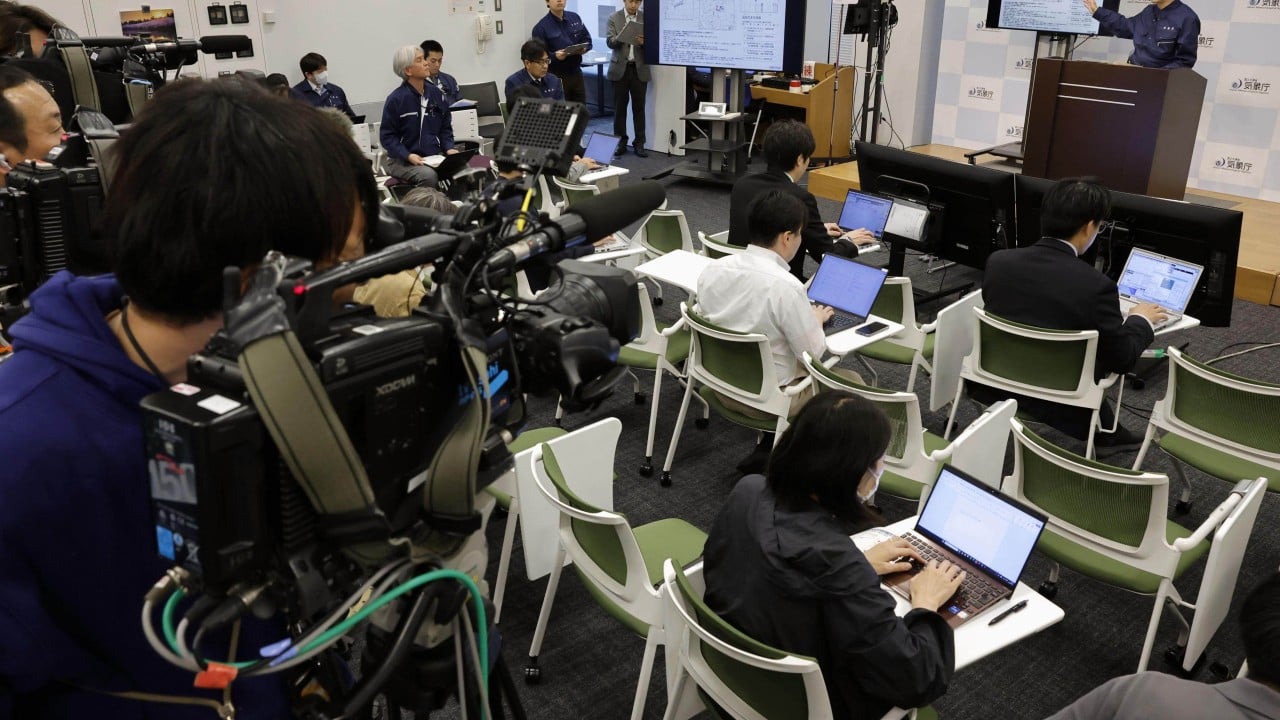
Authorities responded decisively to the earthquake and ensuing tsunami threat by issuing clear directives for evacuation.[4] The Japan Meteorological Agency (JMA) called for residents in affected prefectures—Iwate, Aomori, and Hokkaido—to evacuate immediately to higher ground.[4] NHK broadcasts reinforced this, warning that waves could hit the coast momentarily and might arrive in waves, repeating over time.[4] This advice targeted vulnerable coastal zones, prioritizing vertical evacuation to mitigate inundation risks from up to 3-meter waves.[4] The guidance was straightforward and urgent, reflecting protocols refined from past events in Japan's seismic landscape.[4] Official communications via Reuters and local media ensured widespread dissemination, with no ambiguity in the call to action: move to elevated areas without delay.[4] This response framework underscores Japan's advanced early warning system, activated seamlessly post-quake.[4]
Current Status
As of the latest reports, the tsunami warning remains active, with observed waves off Japan's east coast and expectations of up to 3-meter heights in warned prefectures.[1][4] Seismic monitoring continues, given the 7.4 magnitude and shallow depth, though no further immediate escalations are detailed beyond initial advisories.[1][4] Evacuation efforts are underway in Hokkaido, Iwate, and Aomori, with authorities maintaining alerts for repeated wave arrivals.[4] The situation reflects ongoing coastal risks tied directly to the offshore epicenter.[1][4]
What to watch next
Monitor updates from the Japan Meteorological Agency on tsunami wave arrivals and any aftershocks, as waves may strike repeatedly and evacuation to higher ground remains critical in affected prefectures.[2][4]