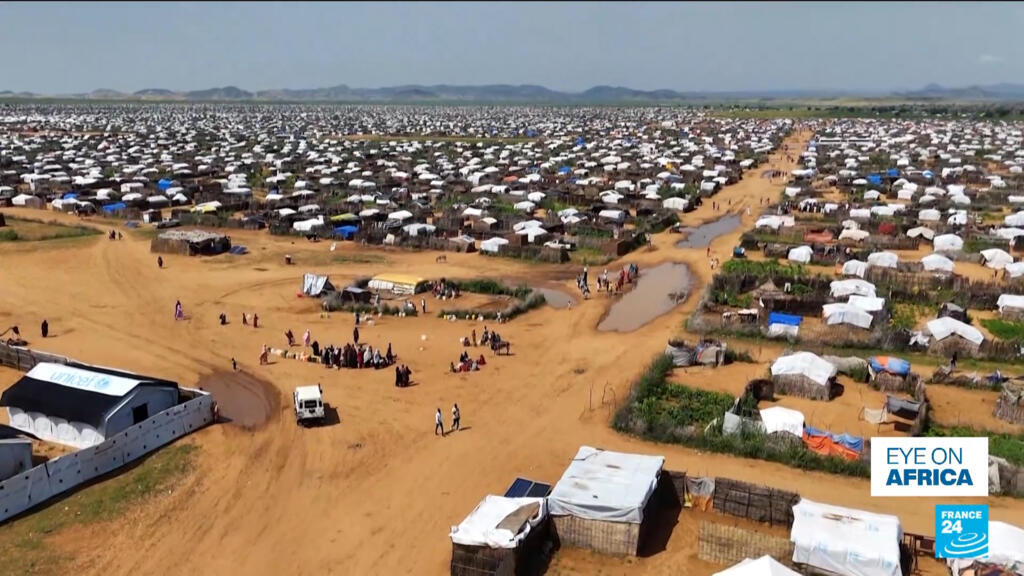

Displacement Crisis Deepens in Sudan's El-Fasher Amid Ongoing Conflict
As the war in Sudan continues to escalate, the city of el-Fasher is witnessing a significant surge in displacement, with thousands fleeing the violence and seeking refuge in makeshift camps. The conflict, which has been ongoing since April 2023, has led to dire humanitarian conditions and a growing crisis for the civilian population.
Reports indicate that as of December 31, 2025, displacement camps in el-Fasher are expanding rapidly, with many families arriving daily to escape the fighting between the Sudanese Armed Forces (SAF) and the Rapid Support Forces (RSF). The influx of displaced individuals is straining resources and exacerbating the already critical humanitarian situation in the region.
Eyewitness accounts describe harrowing conditions in the camps, where access to food, clean water, and medical care is severely limited. Many displaced families have lost their homes and livelihoods, now relying on aid organizations to provide basic necessities. The United Nations and various humanitarian groups are working to deliver assistance, but the ongoing conflict hampers their efforts.
The violence in Sudan, marked by intense clashes and aerial bombardments, has not only affected el-Fasher but has also had ripple effects across the country. The conflict has resulted in widespread fatalities and injuries, with civilians often caught in the crossfire. The situation has drawn international attention and condemnation, with calls for a ceasefire and negotiations to end the hostilities.
The war in Sudan reflects a broader struggle for power and control within the country, as various factions vie for dominance in the wake of political instability. The SAF and RSF, both historically linked to the previous regime, have engaged in brutal confrontations that destabilize the region and threaten the safety of its inhabitants.
As 2025 draws to a close, the humanitarian crisis in Sudan remains critical. Displacement in el-Fasher is a stark reminder of the war's impact on ordinary people, with entire communities uprooted and facing an uncertain future. International humanitarian agencies are urging the global community to respond with urgency, highlighting the need for increased aid and support for those affected by the conflict.
The situation in Sudan serves as a poignant chapter in the ongoing narrative of conflict and resilience across Africa. While the year has been marked by turmoil, it also features stories of hope and community efforts to rebuild and support one another amidst adversity.
In conclusion, as the displacement crisis deepens in el-Fasher, the need for a sustainable resolution to the conflict becomes increasingly urgent. The international community must prioritize diplomatic efforts to bring peace to Sudan and address the humanitarian needs of its affected populations. The future of many rests on swift action and commitment to ending the violence that has plagued the nation for nearly two years.






