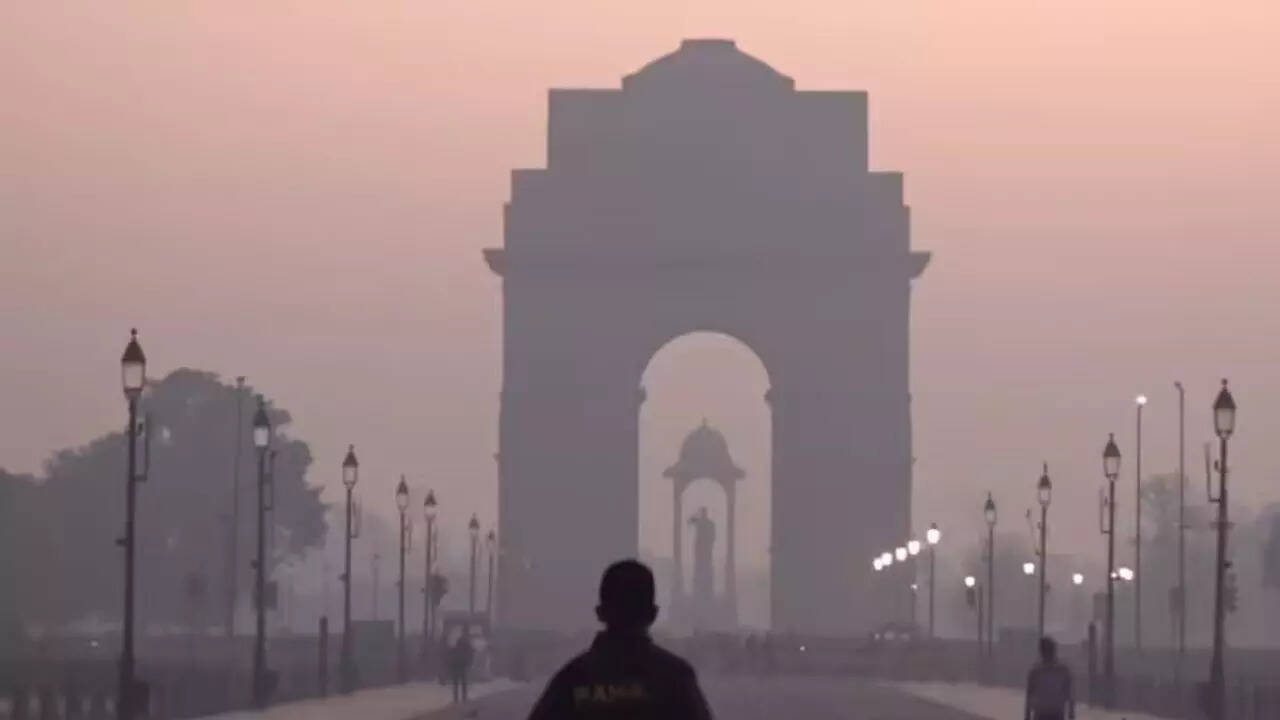

Delhi's Air Quality Deteriorates to Poor Levels as AQI Reaches 288 Amid Dense Smog
New Delhi, India – Delhi's air quality slipped into the "poor" category on Tuesday, with the Air Quality Index (AQI) climbing to 288, blanketing the capital in toxic smog and reducing visibility across the city. While flight operations at the Indira Gandhi International Airport continued under low-visibility Category III (CAT III) procedures, potential delays were reported due to the hazardous conditions.
The deterioration, which began early on January 6, 2026, at approximately 2:23 AM GMT, underscores the recurring wintertime pollution crisis in India's national capital. Prevailing winter conditions, including low wind speeds and stagnant air, have trapped pollutants, exacerbating the smog formation. According to monitoring data cited in reports, the AQI level of 288 falls within the "poor" range (201-300), which is considered unhealthy for sensitive groups such as children, the elderly, and those with respiratory issues.
Impact on Daily Life and Transportation
The thick smog has notably affected visibility, a common hallmark of Delhi's pollution episodes during the colder months. Despite the challenges, aviation authorities maintained operations at the city's primary airport using advanced CAT III instrument landing systems, which allow landings in visibility as low as 50-200 meters. However, passengers were advised to anticipate delays, as crosswinds and reduced visibility periodically disrupted schedules.
On the ground, the poor air quality prompted standard health advisories. Residents were urged to limit outdoor activities, particularly during peak pollution hours, and use masks or air purifiers indoors. Schools and outdoor events have historically been impacted in similar scenarios, though no immediate closures were announced in this instance.
This event aligns with patterns observed in previous winters, where calm meteorological conditions prevent the dispersion of fine particulate matter (PM2.5) and other pollutants. Data from the Central Pollution Control Board (CPCB) consistently shows Delhi's AQI spiking post-Diwali and during farm stubble-burning season in neighboring states like Punjab and Haryana.
Broader Context of Delhi's Air Pollution Challenge
Delhi's air pollution problem is deeply entrenched, driven by a mix of local emissions and regional factors. Vehicle exhaust from the city's over 10 million registered vehicles contributes significantly, alongside industrial outputs, construction dust, and biomass burning. Winter inversions—where cold air traps pollutants near the ground—intensify the issue annually from November to February.
The national capital has implemented the Graded Response Action Plan (GRAP) to combat this, with stages triggered by AQI thresholds. At "poor" levels, measures include enhanced construction dust control, restrictions on coal or biomass burning, and increased parking fees to curb vehicle use. If the AQI worsens to "very poor" (301-400) or "severe" (above 400), stricter actions like school closures, odd-even vehicle rationing, and bans on certain industries are enforced.
Historical data illustrates the severity: In November 2023, Delhi recorded AQI peaks above 400, leading to flight diversions and school shutdowns. Similar episodes in 2024 saw the Supreme Court intervene, directing stubble-burning curbs. As of early 2026, ongoing efforts include the expansion of electric vehicle infrastructure and the National Clean Air Programme (NCAP), aiming for a 40% reduction in PM levels by 2026. However, progress has been uneven, with enforcement challenges and transboundary pollution complicating solutions.
Meteorological forecasts play a critical role. The India Meteorological Department (IMD) has noted that light winds and fog, typical of this season, are primary aggravators. A potential shift in wind patterns could alleviate conditions, but experts caution that without sustained interventions, Delhi risks repeated "severe" classifications.
Government and Expert Responses
Authorities have reiterated commitments to air quality management. The Commission for Air Quality Management (CAQM) monitors real-time data from over 40 stations across the National Capital Region (NCR). Recent statements emphasize coordination with neighboring states to reduce farm fires, a major PM2.5 source.
Environmentalists and health experts have called for long-term reforms. "Delhi's smog is not just a weather event; it's a public health emergency," noted a representative from the Centre for Science and Environment (CSE) in prior analyses. Respiratory illnesses, including asthma and bronchitis, surge during these periods, straining hospitals.
Outlook Amid Winter Woes
As of January 6, 2026, the AQI hovered in the poor range, with no immediate escalation reported. Forecasts suggest stable weather in the short term, potentially prolonging the smog. The IMD predicts clearer skies by mid-week if northeasterly winds strengthen, aiding pollutant dispersal.
This episode serves as a reminder of India's broader air quality battle. With 39 of the world's 50 most polluted cities in India per 2024 IQAir rankings—Delhi often topping urban lists—national initiatives like cleaner fuels and green urban planning are gaining momentum. For Delhi residents, the coming days will test the efficacy of these measures against nature's unyielding winter grip.
(Word count: 612)