
Deadly Economic Protests Grip Iran: At Least 35 Killed, 1,200 Detained as Unrest Persists
Tehran, Iran – Ongoing protests across Iran over economic stagnation have turned violent, with activists reporting at least 35 deaths and more than 1,200 detentions as of January 6, 2026. The demonstrations, which began around January 2, show no signs of abating, drawing international concern and sharp rebukes from Iranian authorities.
The U.S.-based Human Rights Activists News Agency (HRANA) provided the latest casualty figures on Tuesday, highlighting the scale of the crackdown amid widespread frustration with the government's handling of the economy. Protesters are decrying years of repression and hardship, with one activist group co-founder labeling the regime's response as predictably brutal.
Escalating Violence and Government Response
The protests stem from deep-seated economic woes, including high inflation, unemployment, and currency devaluation, exacerbated by international sanctions and domestic mismanagement. Demonstrations have erupted in multiple cities, with reports of clashes between protesters and security forces.
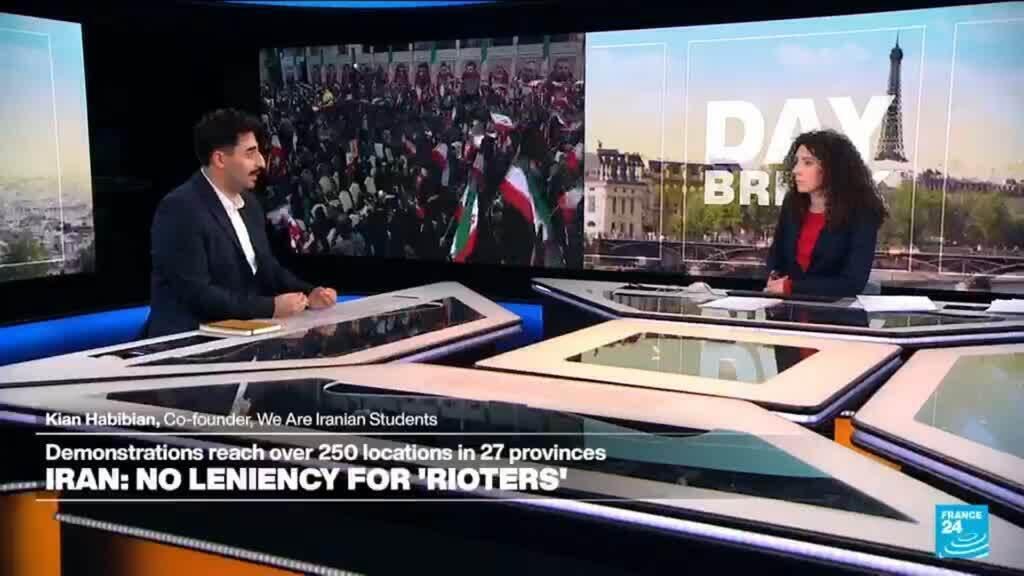
Iran's judiciary issued a stern warning on Monday, stating there would be "no leniency" for those it described as "rioters." This hardline stance echoes the government's approach during previous unrest, prompting criticism from protesters and observers alike.
Kian Habibian, co-founder of the diaspora activist group "We Are Iranian Students," dismissed the judiciary's rhetoric in an interview with France 24. "Was there leniency when they killed 1,500 people in 2019?" Habibian asked, referencing the bloody suppression of nationwide protests sparked by fuel price hikes that year. "There was never any from this regime; their only answer is blood." Habibian's comments underscore a sentiment among protesters that the Islamic Republic, in power since 1979, has consistently met dissent with force.
HRANA's report indicates that the death toll has risen steadily since the protests intensified last week, with detentions numbering over 1,200. The agency, which relies on a network of contacts inside Iran, has been a key source for tracking human rights abuses in the country.
International Calls for Restraint
United Nations Secretary-General Antonio Guterres urged Iranian authorities to respect demonstrators' right to peaceful protest. In a statement amid the deepening unrest, Guterres emphasized the need for dialogue over violence, aligning with broader international pressure on Tehran to address economic grievances without resorting to lethal force.
The UN's intervention comes as Iran's protests draw parallels to earlier waves of civil unrest. In November 2019, similar economic demonstrations led to an estimated 1,500 deaths, according to Amnesty International, marking one of the deadliest crackdowns in the country's modern history. More recently, the 2022 protests following the death of Mahsa Amini in custody resulted in hundreds of fatalities and thousands of arrests, galvanizing global solidarity under the "Woman, Life, Freedom" banner.
Historical Context of Iranian Unrest
Iran has a long history of public dissent against economic policies and political repression. The 1979 Islamic Revolution overthrew the monarchy but installed a theocratic system that has faced periodic challenges. Economic protests have recurred, often triggered by subsidy cuts or price hikes, as seen in 1999, 2009, 2017-2018, and 2019.
Sanctions imposed by the United States and allies since the U.S. withdrawal from the 2015 nuclear deal (JCPOA) in 2018 have crippled Iran's oil exports and banking sector, fueling inflation rates that exceeded 40% in recent years. The rial has plummeted, making basic goods unaffordable for many Iranians. Government efforts to stabilize the economy, including negotiations to revive the JCPOA, have stalled amid geopolitical tensions, including Iran's role in regional conflicts and its nuclear program.
Protesters, many of whom are students and working-class citizens, express exhaustion after 47 years of what they call repressive rule. Videos circulating on social media show crowds chanting against the regime, with some calling for broader political change.
Outlook Amid Continued Demonstrations
As of January 6, the protests persist despite the heavy security presence and arrests. Iranian state media has downplayed the scale of the unrest, framing participants as foreign-instigated agitators, a narrative frequently employed during past flare-ups.
International human rights groups, including HRANA and Amnesty International, continue to monitor the situation, calling for independent investigations into the deaths and detentions. The UN's involvement signals potential for further diplomatic scrutiny, though Iran's track record suggests limited responsiveness.
With economic pressures mounting and no immediate relief in sight, analysts note that sustained protests could strain the regime's resources and legitimacy. However, the government's unified front—bolstered by the Revolutionary Guards—remains a formidable barrier to change.
The death toll and arrests serve as stark reminders of the high stakes in Iran's latest bout of civil unrest, where demands for economic relief have intertwined with long-simmering calls for accountability.
(Word count: 682)






