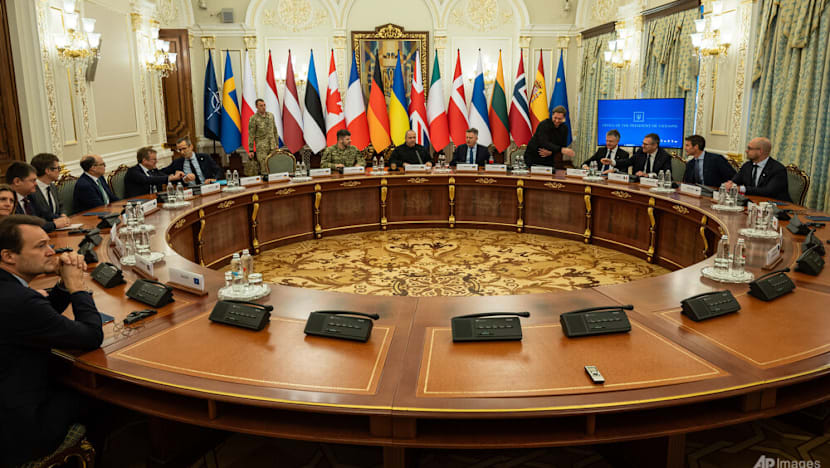

Day 1,406 of the Russia-Ukraine War: Allies Gather in Kyiv to Discuss Future Strategies
As the Russia-Ukraine war enters its 1,406th day, the conflict continues to escalate, prompting Ukraine's allies to convene in Kyiv to formulate strategies aimed at bringing an end to the hostilities. The ongoing war, which began in February 2022, has resulted in significant humanitarian and geopolitical repercussions across Europe and beyond.
On January 3, 2026, key representatives from Ukraine's allied nations assembled in the capital, Kyiv, to engage in talks designed to address the protracted conflict with Russia. The meeting underscores the urgency felt by Ukraine and its allies in seeking a resolution to a war that has claimed thousands of lives and displaced millions.
Key Developments and Context
The meeting in Kyiv comes at a time when both military and diplomatic efforts are crucial. Ukrainian President Volodymyr Zelenskyy has consistently called for increased support from allies, emphasizing the need for military aid and strategic planning to counter Russian aggression. In recent months, Ukrainian forces have made incremental gains, but the situation remains precarious, with heavy fighting reported in several regions.
According to reports, discussions among the allies will focus on a multi-faceted approach to the conflict, including military support, economic sanctions against Russia, and diplomatic efforts to engage in negotiations. The participants are likely to include representatives from NATO member states, as well as other key players in the region.
The Current Situation
As of January 3, 2026, the war's intensity remains high, with ongoing battles in eastern Ukraine and the Donbas region. The situation has drawn international concern, particularly regarding the humanitarian crisis unfolding as civilians continue to suffer from the conflict's ramifications. Reports indicate that Ukraine is facing significant challenges in providing adequate support to those displaced by the fighting, with many seeking refuge in neighboring countries.
Despite the ongoing discussions in Kyiv, the path toward peace appears fraught with challenges. Russia's President Vladimir Putin has shown little inclination to withdraw or negotiate, further complicating the prospects for a peaceful resolution.
Background
The Russia-Ukraine war began in February 2022 following Russia's annexation of Crimea and its support for separatist movements in eastern Ukraine. Over the years, the conflict has evolved into a broader confrontation involving Western nations, with NATO and the European Union providing varying degrees of support to Ukraine. The war has seen its share of escalations and attempts at ceasefires, but lasting peace remains elusive.
As the international community watches closely, the outcomes of the talks in Kyiv could shape the future of the conflict and the geopolitical landscape of Eastern Europe. The stakes are high, not only for Ukraine but for regional stability and international relations.
Conclusion
The ongoing war in Ukraine has entered a critical phase, and the meeting of allies in Kyiv represents a significant step in the collective effort to address the conflict. As discussions continue, the need for a cohesive and effective strategy becomes increasingly apparent. The world waits to see whether these talks will yield meaningful progress in the quest for peace, or if the struggle will persist into another year of uncertainty and strife.






