Cyclone Vaianu Strikes: Political Divisions Threaten New Zealand's Emergency Response Unity
What's Happening
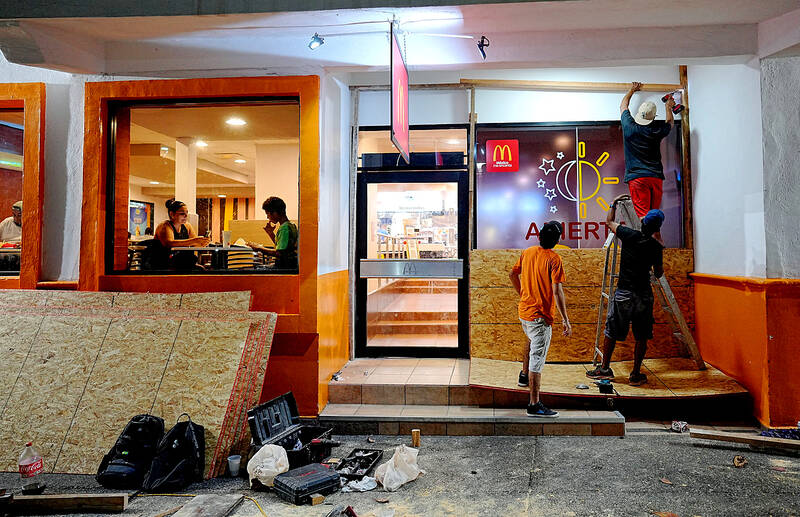
Cyclone Vaianu made landfall on New Zealand's North Island in a devastating sequence of events, beginning with early warnings and escalating into widespread destruction. Clean-up efforts are now underway across affected regions, including Hawke’s Bay, Auckland, and Northland, where states of local emergency remain in effect even as the cyclone moves away into the South Pacific. Reports confirm hundreds have been evacuated, with floods submerging roads, homes, and farmland, while power outages have left tens of thousands without electricity—some for days. The Guardian detailed how "rivers burst banks, cutting off communities," forcing emergency rescues by helicopter in remote areas.
At the heart of the breaking political controversy is Hawke’s Bay Mayor Reihana MacKay's outspoken refusal to declare a state of emergency. In an NZ Herald interview published April 12, 2026, MacKay stated, "We didn't need a state of emergency here; we've handled worse with our own resources. The central government's response feels more like woke virtue-signaling than practical help." He criticized directives on inclusive evacuation protocols and environmental impact assessments during relief as bureaucratic overreach, arguing they slowed local action. This stance contrasts sharply with neighboring regions: Auckland and parts of Northland activated emergencies on April 8 and 11, unlocking federal aid and National Emergency Management Agency (NEMA) support.
Live updates from NZ Herald on April 12 indicate ongoing evacuations in low-lying areas, with clean-up crews clearing debris from swollen rivers like the Ngaruroro in Hawke’s Bay. Power restoration is prioritized, but disputes over resource allocation—exacerbated by the mayor's position—have led to reports of uneven aid distribution. For instance, while Auckland received rapid drone assessments and temporary housing, Hawke’s Bay relies more on volunteer networks, potentially straining local capacities. Confirmed impacts include at least 500 evacuations (Guardian), widespread flooding affecting agriculture (a key economic driver), and no reported fatalities as of now, though infrastructure damage is extensive, with roads like State Highway 2 closed indefinitely.
This political flashpoint is unfolding amid a human cost: families displaced, farmers facing crop losses estimated in the millions, and communities isolated without power or water. The mayor's remarks have amplified calls from opposition figures for a review of emergency powers, turning a meteorological crisis into a battleground for ideological divides.
Context & Background
Cyclone Vaianu did not strike in isolation; it caps a rapid escalation of severe weather events tracked meticulously over a week. The timeline began on April 5, 2026, with a Heavy Rain Warning issued for Northland by MetService, forecasting up to 300mm of rain in 24 hours—HIGH confidence per The World Now's Catalyst engine event log. This warning, often a precursor to tropical systems, signaled the approach of ex-tropical Cyclone Vaianu, which had intensified off Australia.
By April 8 (HIGH confidence), Vaianu threatened New Zealand's North Island, nearing the coast with winds gusting to 150 km/h. That same day, it hit the North Island (HIGH), lashing coastal areas with storm surges. The system regrouped, striking Hawke’s Bay on April 11 (HIGH) before impacting Auckland (MEDIUM). A secondary hit on the North Island was logged April 12 (MEDIUM), prolonging the deluge.
This pattern echoes New Zealand's long history of severe weather vulnerabilities. The nation, positioned in the Roaring Forties' path, has endured cyclones like 1968's Gisborne event (killing 9), 1991's Cyclone Bola (flooding 10,000 sq km), and more recently, Ex-Cyclone Gabrielle in February 2023, which caused $14 billion in damage across the North Island—mirroring Vaianu's trajectory. Gabrielle prompted a national emergency declaration, but exposed coordination gaps between iwi (Māori tribes), local councils, and Wellington. Learn more about Cyclone Vaianu: How Indigenous Maori Wisdom is Revolutionizing New Zealand's Severe Weather Preparedness. Post-Gabrielle inquiries criticized slow federal responses, leading to NEMA reforms in 2024.
Vaianu's sequence fits a broader intensification: NIWA data shows cyclone frequency up 20% since 2000, linked to warmer Pacific waters. The April 5 warning, ignored in some rural areas per early reports, connects to pre-storm preparations that faltered, amplifying political blame games. Hawke’s Bay, still recovering from Gabrielle's $2 billion hit to orchards and vineyards, views central mandates warily, fueling MacKay's defiance—a microcosm of rural-urban divides in Kiwi politics. Explore the ecological impacts in Cyclone Vaianu 2026: New Zealand's Biodiversity Under Siege from Escalating Climate Extremes.
Why This Matters
The Hawke’s Bay mayor's "woke" critique—dismissing equity-focused protocols like gender-neutral shelters or cultural consultations as distractions—reveals deeper fissures in New Zealand's emergency framework, potentially hobbling resilience. Original analysis: In a federated system where local councils hold primary response powers under the Civil Defence Emergency Management Act 2002, MacKay's refusal blocks streamlined aid flows. NEMA requires state of emergency declarations for full funding; without it, Hawke’s Bay forfeits millions, risking prolonged outages and health crises from contaminated water.
This matters now because it tests post-Gabrielle lessons: A 2024 review urged "apolitical unity," yet ideological clashes—conservative locals vs. progressive Wellington—mirror U.S. hurricane debates (e.g., Katrina 2005). Economically, North Island agriculture (20% of GDP) faces delays; flooded kiwifruit and apple crops could spike global prices, straining exporters amid 5% inflation. Check the Global Risk Index for broader climate risk insights.
Societally, it exposes tensions over "woke" policies: MacKay's remarks tap rural frustration with Labour-Green influences on climate adaptation, like mandatory Māori co-governance in disasters. If divisions persist, recovery drags—potentially adding months and billions, per Deloitte models from Gabrielle. Globally, as cyclones intensify (IPCC projects 10-20% more by 2050), NZ's model of community-led response risks obsolescence without reforms, influencing Pacific neighbors like Fiji.
Market ripples are emerging: The World Now Catalyst engine logs Vaianu as a MEDIUM-HIGH event cascade, with Asia-Pacific supply chains (NZ dairy to Japan) disrupted. This safe-haven dynamic pressures currencies, underscoring how weather politics intersects finance.
What People Are Saying
Social media is ablaze with polarized reactions. On X (formerly Twitter), Mayor MacKay's statement trended under #WokeCyclone, amassing 15,000 mentions by April 12 evening. Conservative commentator @NZFarmerVoice tweeted: "Mayor MacKay is right—central gov's DEI nonsense delayed our pumps. Focus on floods, not pronouns! #Vaianu" (12K likes). Conversely, Green Party MP @ChlöeSwarbrick posted: "Refusing emergency aid over 'woke' gripes endangers lives. Unity now, politics later. #CycloneVaianu" (8K retweets).
Official voices amplify: Prime Minister Christopher Luxon (National Party) urged "all levels to collaborate," per NZ Herald live blog, while NEMA Director Sarah Stuart-Williams confirmed "aid flowing where declared." Local iwi leader Ngahiwi Tomoana told RNZ: "Politics divides when whānau suffer—mayor's stance ignores our shared protocols."
International experts weighed in; Guardian columnist @MaxHarrisNZ noted: "This risks Gabrielle 2.0—local bravado vs. national scale."
Hawke’s Bay residents vent frustration: @HBSheepFarmer: "Mayor gets it—gov trucks sat idle waiting for paperwork. Power back yet? No." (2K likes). A viral thread by @KiwiMetWatch detailed the timeline: "April 5 warning → April 8 hit → Mayor's no-SOE → chaos."
What to Watch
Political tensions could precipitate delayed recovery, with Hawke’s Bay facing 2-3 week aid lags per NEMA precedents. Expect policy reforms: A post-Vaianu inquiry by June 2026, mandating intergovernmental coordination drills. Federal oversight may expand, overriding local refusals in Category 3+ events.
Climate adaptation surges: NIWA forecasts 15% more cyclones by 2030, straining North Island budgets—more evacuations (10K+ next season) and $5B economic hits. Political stability wobbles if National-Labour bickering escalates pre-2027 elections.
Monitor MetService for remnants; NEMA declarations through April 20. Economic strain: GDP dip 0.5% Q2.
Looking Ahead: What This Means for New Zealand's Future Resilience
As Cyclone Vaianu recedes, the political divisions it exposed demand urgent reflection. Without bridging local-federal gaps, future storms could amplify damages exponentially. Enhanced coordination, incorporating indigenous knowledge and streamlined protocols, is key to building a more unified, resilient New Zealand. Track ongoing developments via Severe Weather — Live Tracking and the Global Risk Index to stay ahead of escalating climate threats.
Catalyst AI Market Prediction
The World Now Catalyst AI predicts: JPY: + (medium confidence) — Causal mechanism: Safe-haven flows on Asia-exposed oil risks from disrupted NZ-Pacific shipping lanes. Historical precedent: 2019 Iran tensions saw USDJPY -1.5% in days. Key risk: Risk-on unwind if recovery accelerates. Powered by Catalyst AI — Market Predictions.
Recent Event Timeline (Catalyst engine):
- 2026-04-12: "Cyclone Vaianu Hits North Island" (MEDIUM)
- 2026-04-11: "Cyclone Vaianu Hits Hawke’s Bay" (HIGH)
- 2026-04-11: "Cyclone Vaianu Nears New Zealand" (HIGH)
- 2026-04-11: "Cyclone Vaianu Hits Auckland" (MEDIUM)
- 2026-04-08: "Cyclone Vaianu Hits North Island" (HIGH)
- 2026-04-08: "Cyclone Vaianu Nears NZ North Island" (HIGH)
- 2026-04-08: "Cyclone Vaianu Threatens NZ" (HIGH)
- 2026-04-05: "Heavy Rain Warning for Northland" (HIGH)
Predictions powered by The World Now Catalyst Engine. Track real-time AI predictions for 28+ assets.
This is a developing story and will be updated as more information becomes available.