Conflict in Ukraine: 189 Clashes Reported in Past Day
In the latest update on the conflict in Ukraine, the Ukrainian General Staff has reported 189 military clashes at the front on day 1,526 of Russia's large-scale armed aggression against Ukraine.[3] This figure underscores the persistent intensity of engagements along the frontline, as both sides continue their military operations amid evolving tactics and international involvement.
Overview of Recent Clashes
The Ukrainian General Staff's report provides a clear snapshot of the current military situation, noting that 189 military clashes took place over the past day on day 1,526 of Russia's large-scale armed aggression against Ukraine.[3] This tally reflects the high tempo of combat across various sectors of the front, where Ukrainian forces are actively defending against Russian advances and initiating counteractions where possible.
Such daily clash numbers offer insight into the sustained pressure on Ukrainian positions. The General Staff's daily briefings, like this one, consistently track these engagements, highlighting the distributed nature of fighting across multiple fronts.[3] On this particular day, the 189 clashes indicate a continuation of the grinding attrition warfare that has characterized much of the conflict, with no single sector dominating but rather a widespread series of infantry, artillery, and localized assaults.
The reporting from Ukrainska Pravda emphasizes the timeframe explicitly: "Battlefield sees 189 clashes over past day – Ukraine's General Staff. Day 1,526 of Russia's large-scale armed aggression against Ukraine: 189 military clashes occurred at the front."[3] This precision in documentation allows for tracking the progression of the war, where each day's clashes contribute to the overall narrative of endurance and resistance. The absence of detailed breakdowns per region in this report keeps the focus on the aggregate intensity, signaling that no area has seen a decisive shift but that the front remains active throughout.
As the conflict enters its 1,526th day, these clashes represent not isolated incidents but part of a broader pattern of daily confrontations. Ukrainian military assessments, as conveyed through official channels, rely on frontline reports to compile these figures, ensuring a real-time pulse on the battlefield dynamics.[3] The consistency of such high clash counts points to Russia's ongoing commitment to pressure tactics, met by Ukraine's defensive resolve.
Developments in Drone Warfare
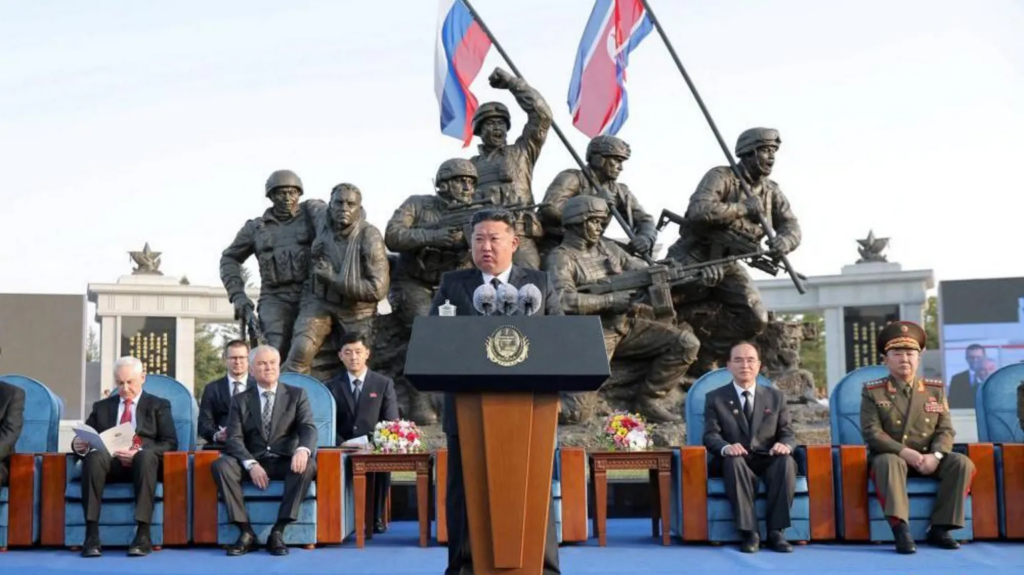
Kim Jong Un praises North Korean troops who self-blasted to avoid capture by Ukraine forces. — Source: myjoyonline
Russia's deployment of Shahed drones, originally designed by Iran, has become a central element in its aerial campaign against Ukraine, with thousands launched monthly.[1] These low-cost, long-range attack drones have earned a reputation as a scourge due to their volume and persistence, forcing Ukraine to innovate in countermeasures.[1] The Japan Times details this challenge: "Inside Ukraine's drive to defeat the dreaded Shahed drone. The pioneering low-cost, long-range attack drones designed by Iran have become the scourge of Ukraine, with Russia unleashing thousands of them on its enemy every month."[1]
Compounding this threat, Russian forces have adapted Shahed and Gerbera-type drones by equipping them with mesh modems, enabling them to fly deeper into Ukrainian territory using relay drones.[5] Ukrainska Pravda reports: "Shahed-type drones fly deeper into Ukrainian rear using relay drones. Russian Shahed and Gerbera-type drones fitted with mesh modems have been flying increasingly deeper into Ukraine's rear, while electronic warfare systems are not always effective against them."[5] This tactical evolution allows the drones to bypass traditional detection and jamming by relaying signals through intermediary drones, extending their reach into rear areas previously considered safer.
Ukraine's defensive efforts are thus multifaceted, targeting these drones through electronic warfare (EW) systems, though their effectiveness varies against the mesh modem-equipped variants.[5] The monthly deployment of thousands underscores Russia's strategy of attrition via aerial bombardment, overwhelming air defenses with sheer numbers.[1] Each Shahed drone, with its Iranian origins, represents a proliferation of affordable weaponry that challenges Ukraine's interception capabilities, prompting ongoing drives to develop superior countermeasures.[1]
The deeper penetration facilitated by relay drones marks a shift in drone tactics, where networked operations enhance survivability and range.[5] Mesh modems enable communication hopping between drones, reducing vulnerability to single-point EW disruptions. Ukrainian reports highlight that while EW systems perform reliably in some instances, they falter against these advanced configurations, allowing strikes further behind the lines.[5] This development necessitates adaptive responses, such as improved detection networks and possibly mobile EW units to cover expanded threat zones.
Russia's reliance on these drones illustrates a broader asymmetry in aerial resources, where quantity compensates for quality in contested airspace.[1] Ukraine's countermeasures, as explored in defensive initiatives, focus on defeating the "dreaded" Shahed through a combination of radar upgrades, kinetic interceptors, and signal jamming tailored to drone swarms.[1] The monthly cadence of thousands launched maintains constant pressure, integrating with other strikes to degrade infrastructure and morale.
Foreign Military Involvement
North Korean leader Kim Jong Un has publicly praised soldiers from his country who chose to kill themselves with grenades—described as "self-blasting"—to avoid capture by Ukrainian forces while fighting alongside Russian troops.[2] This commendation confirms a long-suspected policy among North Korean contingents deployed to support Russia's war effort in Ukraine.
MyJoyOnline reports: "Kim Jong Un praises troops who ‘self-blasted’ to avoid capture by Ukraine. Kim Jong Un has praised North Korean soldiers who killed themselves by detonating their grenades while fighting for Russia against Ukraine, confirming a long-suspected battlefield policy."[2] Such statements from Pyongyang highlight the ideological indoctrination and no-surrender directives imposed on these foreign fighters, who are integrated into Russian units on the Ukrainian front.
The involvement of North Korean troops represents a significant escalation in external support for Russia, with these soldiers engaging directly in combat operations.[2] Kim's praise serves as both motivation for remaining forces and a signal of commitment to the alliance with Moscow, framing self-destruction as heroic adherence to duty. This policy, now openly acknowledged, underscores the high risks and rigid discipline enforced on the North Korean contingent.
Reports of these incidents emerge from battlefield encounters where Ukrainian forces have captured or neutralized North Korean personnel, prompting the extreme measures to prevent interrogation or defection.[2] Kim Jong Un's endorsement elevates these acts within North Korean military culture, potentially influencing future deployments. The confirmation of this battlefield policy reveals the lengths to which participating nations go to maintain operational secrecy and loyalty.
As North Korean soldiers fight for Russia, their presence diversifies the composition of opposing forces, introducing troops trained under a different doctrine.[2] The "self-blasted" incidents, as termed in the praise, occur in the heat of clashes, aligning with the overall intensity reported elsewhere on the front. This foreign involvement adds layers to the conflict's international dimensions, with Pyongyang's leadership openly backing such sacrifices.
Allegations of Attacks on Civilian Areas
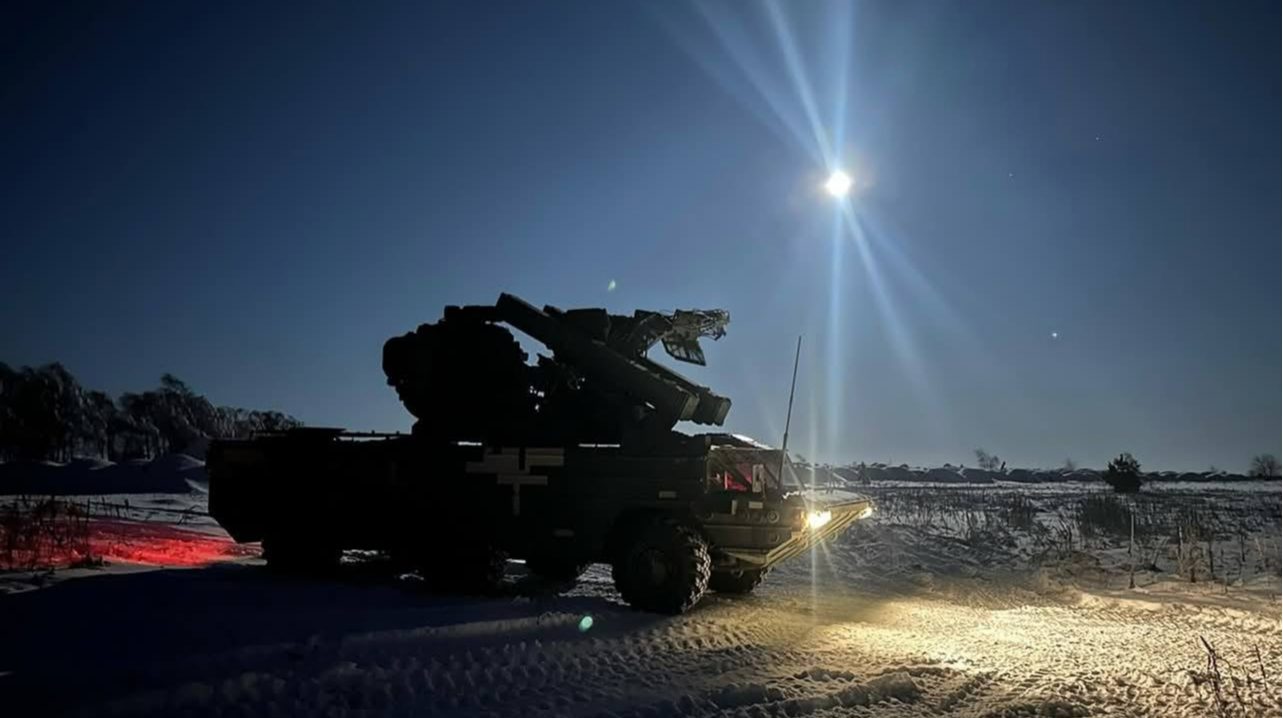
Ukrainian battlefield with 189 reported clashes in the past day. — Source: ukrainskapravda
Russian President Vladimir Putin has stated that Ukraine has intensified its attacks on civilian targets within Russian territory.[4] This claim comes amid ongoing exchanges across the border, where Moscow accuses Kyiv of escalating strikes against non-military sites.
The Straits Times reports: "Putin says Ukraine has intensified attacks on civilian targets in Russia. Putin says Ukraine has intensified attacks on civilian targets in Russia."[4] Putin's remarks frame these actions as a deliberate shift in Ukrainian strategy, targeting population centers and infrastructure deep inside Russia.
Such allegations from Russian leadership highlight the cross-border dimensions of the conflict, where Ukrainian operations reportedly reach into Russian regions.[4] Putin’s assertion of intensification suggests a perceived uptick in frequency or scale, positioning it as a response or provocation within the broader war narrative. Official Russian statements like this often accompany reports of damage or casualties to underscore the impact on civilian life.
The context of these claims ties into the mutual accusations of targeting civilians that have persisted throughout the conflict.[4] By emphasizing civilian targets, Putin’s comments aim to draw attention to the war's spillover effects into Russia proper, contrasting with Russia's own drone campaigns elsewhere. Verification of specific incidents remains tied to Russian reporting channels, with Putin’s direct statement serving as the authoritative voice on Moscow's perspective.
Broader Context of the Conflict
The ongoing conflict in Ukraine weaves together intense frontline clashes, advanced drone tactics, foreign troop deployments, and competing narratives on civilian impacts, all drawn from recent reports.[1][2][3][4][5] Day 1,526 marks another in a sequence of high-engagement days, with 189 clashes reported by the Ukrainian General Staff, reflecting the unrelenting pace of ground operations.[3]
Russia's monthly launch of thousands of Iranian-designed Shahed drones exemplifies aerial attrition, now enhanced by Gerbera variants using mesh modems and relay drones for deeper strikes, where EW countermeasures show mixed results.[1][5] This evolution challenges Ukraine's defensive posture, demanding constant adaptation against penetrating threats.[5]
Parallel to this, North Korean soldiers' involvement, praised by Kim Jong Un for grenade self-destruction to evade capture, confirms external reinforcements fighting for Russia.[2] Such policies underscore the international alliances bolstering Moscow's efforts.[2]
Putin's claims of intensified Ukrainian attacks on Russian civilian targets add a layer of reciprocal escalation rhetoric.[4] Collectively, these elements—clashes[3], drones[1][5], foreign fighters[2], and allegations[4]—paint a picture of a multifaceted war entering prolonged phases, with technological, human, and narrative fronts active.
The integration of relay drone technology allows Shaheds to evade traditional defenses, extending Russia's strike envelope.[5] Meanwhile, the human cost, from North Korean sacrifices to daily clashes, sustains the conflict's toll.[2][3] Civilian targeting claims further complicate the information environment.[4]
Key Developments in the Ukraine Conflict
Drawing from the key facts, Russia's deployment of thousands of Shahed drones monthly, designed by Iran, prompts robust Ukrainian defensive measures.[1] These drones' role as a "scourge" necessitates pioneering countermeasures.[1]
Kim Jong Un's praise for North Korean troops who "self-blasted" with grenades to avoid Ukrainian capture reveals a stark battlefield policy while aiding Russia.[2]
Putin's assertion of heightened Ukrainian strikes on Russian civilian targets frames the conflict's border dynamics.[4]
Shahed and Gerbera drones with mesh modems leverage relay drones for deeper incursions, outpacing some EW effectiveness.[5] These developments collectively amplify the conflict's complexity.
What to watch next
Continued Russian Shahed drone launches, potentially with further relay adaptations,[1][5] North Korean troop policies in action,[2] daily clash tallies like the recent 189,[3] and responses to civilian targeting claims[4] will shape near-term battlefield and diplomatic trajectories.