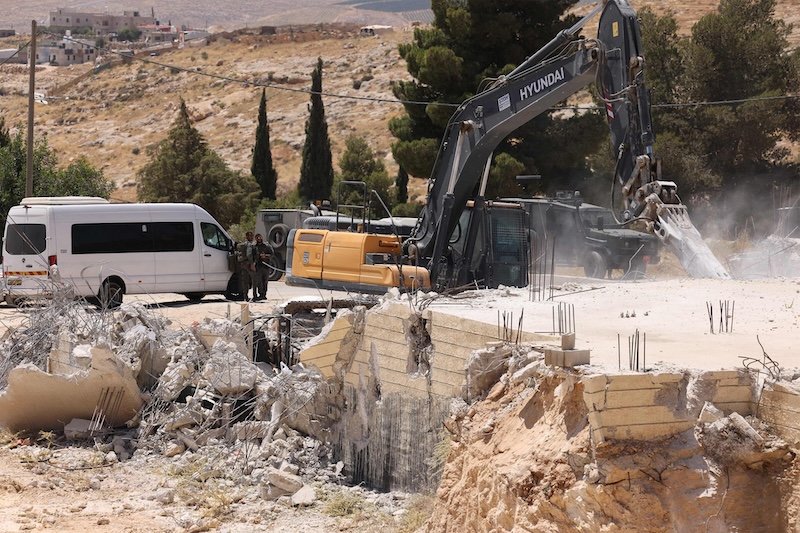
Conflict in Lebanon: Hezbollah States No Ceasefire Amid Continued Israeli Attacks
In the escalating conflict in Lebanon, Hezbollah's Secretary General Naim Qassem has stated that there is no ceasefire as Israeli attacks continue, emphasizing the need for armed resistance and security guarantees.[1] This position comes amid reports of the Israeli military urging residents of multiple towns in southern Lebanon to evacuate due to ongoing operations against Hezbollah.[2][3] Further, the Israeli army has demolished a Christian monastery and a nuns' school in the town of Yaroun in southern Lebanon.[4] Hezbollah is employing close-range 'suicide combat' strategies and drone ambushes in south Lebanon,[5] while criticizing direct talks between Lebanese and Israeli authorities and favoring indirect negotiations with prior security guarantees.[1]
These developments underscore the persistent tensions in the region, where both sides maintain firm stances on military actions and negotiation terms. Hezbollah's leadership views continued Israeli attacks as precluding any immediate halt to hostilities,[1] prompting calls for sustained resistance. Meanwhile, Israeli operations have prompted evacuation warnings and reports of infrastructure damage,[2][3][4] as Hezbollah adapts its battlefield tactics.[5] The interplay of these statements and actions reflects a complex dynamic in southern Lebanon, with no resolution in sight.
Hezbollah's Position on Ceasefire
Hezbollah's Secretary General Naim Qassem has articulated a clear stance against any ceasefire in Lebanon while Israeli attacks persist.[1] In his statements, Qassem emphasized that the ongoing Israeli military actions preclude any possibility of a truce, positioning the conflict as active and unresolved.[1] This declaration serves as a direct response to the current security environment, where Hezbollah perceives continued threats from Israeli operations.[1]
Qassem's remarks highlight the group's commitment to maintaining pressure through armed means until conditions for peace are met.[1] He specifically noted that Israel continues to attack Lebanon, which in his view negates the existence of a ceasefire.[1] This position aligns with Hezbollah's broader strategy of resistance, aimed at preventing Israel from establishing any lasting presence or advantage in the region.[1] By framing the situation this way, Qassem reinforces the necessity of ongoing military engagement as a deterrent.[1]
The emphasis on armed resistance is central to Hezbollah's messaging.[1] Qassem stated that the group must continue its operations to counter Israeli advances, underscoring a policy of vigilance and proactive defense.[1] This approach is presented not merely as a tactical choice but as an essential requirement for Lebanon's security.[1] In the context of repeated Israeli strikes, Hezbollah's leadership argues that passivity would invite further encroachment.[1]
Furthermore, Qassem's comments reflect a strategic patience regarding de-escalation. Without a cessation of attacks, Hezbollah sees no basis for halting its activities.[1] This stance shapes the group's interactions with other parties involved in the conflict, prioritizing military readiness over premature diplomatic concessions.[1] Reports from Middle East Eye capture this sentiment directly, quoting Qassem on the absence of a ceasefire amid unrelenting Israeli actions.[1] Such pronouncements serve to rally supporters and signal resolve to adversaries.
Hezbollah's position also ties into larger concerns about territorial integrity. Qassem warned of the risks posed by Israeli footholds, advocating for resistance as the primary safeguard.[1] This narrative positions armed struggle as indispensable, influencing both domestic and regional perceptions of the conflict.[1] As long as attacks continue, Qassem maintains, the battlefield remains the decisive arena.[1]
Israeli Military Evacuation Orders
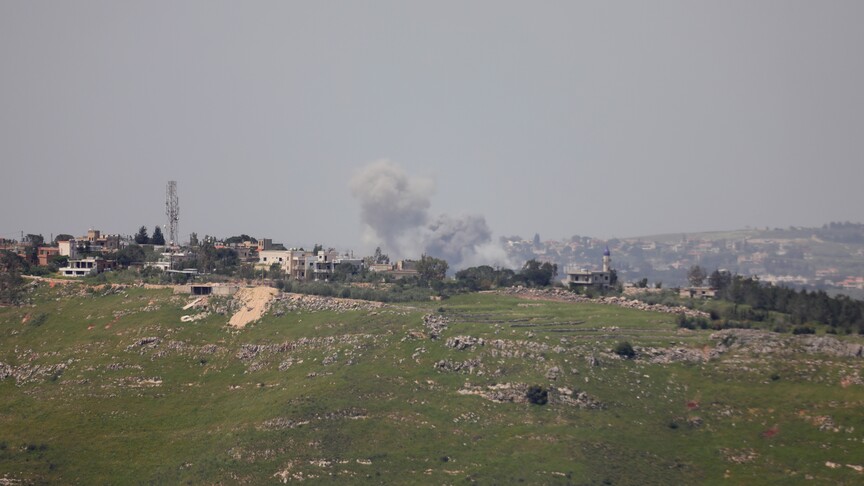
Israeli army demolishes a Christian monastery and nuns' school in southern Lebanon. — Source: anadolu
The Israeli military has issued urgent calls for residents of multiple towns in southern Lebanon to evacuate, citing ongoing operations against Hezbollah.[2][3] These orders are part of broader efforts to conduct military activities in the area, aimed at targeting Hezbollah positions and infrastructure.[2][3] Reports from The Straits Times detail how the Israeli forces have communicated these directives to civilians, emphasizing the need to leave for safety reasons amid active combat.[2][3]
This development indicates an intensification of Israeli ground and air operations in southern Lebanon.[2][3] The evacuation warnings cover several towns, reflecting the scope of the military campaign against Hezbollah.[2][3] By urging departure, the Israeli army seeks to minimize civilian risks while pursuing its objectives against the militant group.[2][3] The repeated reporting from The Straits Times underscores the immediacy of these calls, linking them directly to anti-Hezbollah actions.[2][3]
The context of these orders reveals a pattern of escalating engagements. Israeli operations have expanded to necessitate such measures, signaling sustained pressure on Hezbollah strongholds.[2][3] Civilians in the affected areas are instructed to vacate promptly, as military maneuvers proceed without pause.[2][3] This approach prioritizes operational freedom while acknowledging the human cost of the conflict.[2][3]
Analysts note that such evacuation directives often precede significant advances or strikes, allowing forces to engage targets more effectively.[2][3] In southern Lebanon, where Hezbollah maintains a presence, these orders facilitate maneuvers against embedded positions.[2][3] The Israeli military's communication strategy aims to ensure compliance, reducing potential casualties among non-combatants.[2][3]
The issuance of these warnings also communicates intent to Hezbollah and the Lebanese population.[2][3] By specifying multiple towns, the orders cover a wide swath of territory under contention.[2][3] This reflects a comprehensive operational phase, where Hezbollah activities are met with direct countermeasures.[2][3] Coverage from The Straits Times highlights the linkage between evacuations and the fight against Hezbollah, providing a factual basis for understanding the military's rationale.[2][3]
Reported Destruction of Infrastructure
Reports indicate that the Israeli army has demolished a Christian monastery and a nuns' school in the town of Yaroun in southern Lebanon.[4] According to Anadolu Agency, citing a state news agency, the structures—a monastery and school run by the Sisters of the Holy Savior—were targeted and destroyed.[4] This incident represents a specific case of infrastructure damage attributed to Israeli military actions in the region.[4]
The demolition occurred in Yaroun, a town in southern Lebanon, highlighting the reach of operations into civilian and religious sites.[4] The affected facilities were religious institutions, underscoring the impact on non-military targets.[4] State media reports detail the army's role in leveling these buildings, prompting questions about the scope of military engagements.[4]
This event fits into the pattern of reported destructions amid the conflict.[4] The monastery and school, operated by the Sisters of the Holy Savior, were completely demolished, as per the accounts.[4] Anadolu Agency's reporting relies on official Lebanese sources, providing a traceable narrative of the incident.[4]
The destruction raises concerns over collateral effects of operations against Hezbollah.[4] Yaroun's location in southern Lebanon places it within areas of active contention.[4] The choice of targets, while not detailed further in sources, is presented as a direct action by the Israeli army.[4]
Such reports contribute to the documentation of infrastructure losses.[4] The involvement of a Christian monastery and nuns' school adds a layer of specificity to the claims.[4] Anadolu Agency's coverage ensures the details are linked to state news verification.[4]
Hezbollah's Tactical Approaches

Hezbollah fighters employing suicide combat strategies in southern Lebanon. — Source: thenewarab
Hezbollah is deploying close-range 'suicide combat' units and drone ambushes in south Lebanon, marking a significant shift in its tactics.[5] According to The New Arab, this strategy involves high-risk, proximity engagements designed to challenge advancing forces.[5] The term 'suicide combat' refers to these aggressive, close-quarters operations where fighters engage at short distances.[5]
This tactical evolution signals Hezbollah's adaptation to the dynamics of the conflict.[5] Drone ambushes complement the ground-based suicide combat, providing layered threats to opponents.[5] In south Lebanon, these methods are employed to disrupt Israeli operations and inflict casualties.[5]
The use of 'suicide combat' units emphasizes willingness for intense confrontations.[5] Fighters close in on targets, accepting high risks to achieve objectives.[5] This approach contrasts with more distant engagements, bringing the fight nearer to enemy lines.[5]
Drone ambushes add a technological dimension, allowing precise strikes from afar.[5] Combined with suicide units, they create a multifaceted defense.[5] The New Arab describes this as a key shift, reflecting Hezbollah's response to pressures in the south.[5]
These tactics are tailored to the terrain and operational tempo in south Lebanon.[5] Close-range actions exploit familiarity with the area, while drones extend reach.[5] The strategy aims to bog down advances and raise costs for adversaries.[5]
Hezbollah's implementation demonstrates tactical innovation.[5] Reports detail deployments signaling a departure from previous patterns.[5] This positions the group to counter ongoing threats effectively.[5]
Context of Ongoing Conflict
The ongoing conflict in Lebanon intertwines Hezbollah's declarations with battlefield realities.[1][5] Naim Qassem's assertion of no ceasefire amid Israeli attacks frames the situation as one of active hostilities.[1] Continued operations necessitate armed resistance, as per Hezbollah's view.[1]
Hezbollah's tactical shifts, including suicide combat and drone ambushes, align with this resistance posture.[5] These methods respond to Israeli pressures in south Lebanon.[5] Qassem's call to prevent Israeli footholds underscores the stakes.[1]
Evacuation orders and infrastructure reports further contextualize the intensity.[2][3][4] Hezbollah's preference for indirect talks with guarantees reflects negotiation wariness.[1] Direct Lebanese-Israeli discussions are criticized, favoring mediated paths.[1]
This dynamic perpetuates a cycle of action and reaction.[1][5] Hezbollah's strategies aim to maintain parity.[5] Israeli operations drive the urgency of resistance.[1]
The interplay reveals no immediate off-ramps.[1][5] Statements and tactics reinforce entrenched positions.[1][5]
What to watch next
Key developments to monitor include potential progress on indirect negotiations if security guarantees are addressed,[1] Hezbollah's sustained use of suicide combat and drone tactics in south Lebanon,[5] and further Israeli evacuation orders or operations amid the conflict.[2][3]