
Conflict in Lebanon: Ceasefire Takes Effect but Netanyahu Signals Ongoing Mission
In the ongoing conflict in Lebanon, a ceasefire between Israel and Hezbollah has taken effect, providing a temporary halt to intense fighting, but Israeli Prime Minister Benjamin Netanyahu has made clear that Israel's mission against Hezbollah is far from complete.[1] This development comes amid celebrations in Lebanon for the respite, yet persistent obstacles and reports of violations raise serious doubts about the agreement's durability.[2][4][5]
Overview of the Ceasefire
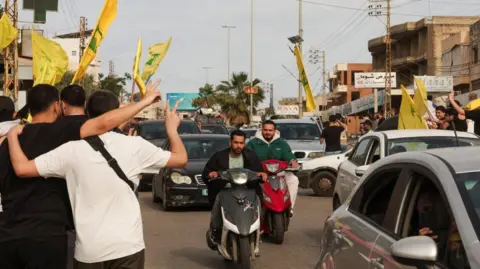
The ceasefire agreement between Israel and Hezbollah in Lebanon represents a critical pause after weeks of escalating cross-border exchanges that had intensified regional tensions.[4] Taking effect at midnight on Thursday, this 10-day truce was intended to curb the violence that had plagued southern Lebanon and northern Israel, offering a brief window for de-escalation.[4][5] In Lebanon, the immediate aftermath brought a sense of relief, with many residents celebrating the end of relentless airstrikes and ground operations that had defined the recent phase of the conflict.[2]
Reports indicate that the agreement emerged from international diplomatic efforts, though its terms have quickly come under strain. The Lebanese army's observations post-implementation highlight the fragility of this arrangement, as initial compliance appeared uneven.[5] This ceasefire does not erase the underlying hostilities; instead, it serves as a tentative framework amid a backdrop of mutual distrust built over prolonged military engagements.[2] Sources describe it as a respite rather than a resolution, emphasizing that ensuring its longevity will prove challenging given the history of violations and the entrenched positions of both sides.[2] The halt to fighting has allowed for some normalization in affected areas, but the potential for rapid reversion to hostilities underscores the precarious nature of this diplomatic achievement.[4][5]
Further context reveals that the ceasefire's activation followed a period of heightened exchanges, including rocket fire and aerial responses, which had drawn international attention.[4] While specifics of the agreement's enforcement mechanisms remain limited in available reports, the immediate context points to a need for robust monitoring to prevent slippage into renewed conflict.[2] Lebanon's leadership and military have been thrust into a pivotal role, tasked with upholding the truce on their territory, even as external pressures mount.[5] This overview paints a picture of a hard-won but inherently unstable pause, where the line between cessation and continuation of hostilities remains thinly drawn.[2][5]
Statements from Key Figures
Prominent leaders have issued stark assessments of the ceasefire's viability, reflecting divergent perspectives on its future. Israeli Prime Minister Benjamin Netanyahu explicitly stated that Israel's "mission" against Hezbollah persists despite the truce, signaling that military objectives remain unmet.[1] In a direct address, he referenced ongoing plans to counter "the remaining rocket threat and the drone threat," declining to elaborate on specifics but underscoring a commitment to neutralize these capabilities.[1] This position stands in tension with international commitments, including those from former U.S. President Donald Trump to prohibit further Israeli attacks on Lebanon, highlighting a potential rift in allied expectations.[1]
French President Emmanuel Macron echoed concerns from a European vantage, warning that the fragile ceasefire "may already be undermined" due to reported violations in southern Lebanon.[4] Macron's statement came swiftly after the truce's implementation, framing it as a 10-day arrangement at risk of collapse following weeks of escalating fighting.[4] His remarks emphasize the diplomatic stakes, positioning France as a vocal proponent of stability in the region and cautioning against actions that could unravel the hard-fought agreement.[4]
These pronouncements from Netanyahu and Macron illustrate the ceasefire's contentious status. Netanyahu's forward-leaning rhetoric suggests Israel views the truce as tactical rather than conclusive, prioritizing security threats over immediate restraint.[1] In contrast, Macron's alert focuses on preservation, urging adherence to prevent a broader unraveling.[4] Together, they frame a narrative of guarded optimism tempered by realism, where leadership statements serve both as policy signals and warnings to domestic and international audiences.[1][4]
Reports of Violations
Early signs of non-compliance have emerged, casting shadows over the ceasefire's first hours. The Lebanese army reported Israeli violations shortly after the midnight implementation, detailing incursions or actions that contravened the agreement's terms.[5] These reports align with broader accounts of breaches in southern Lebanon, a hotspot for prior exchanges between Hezbollah and Israeli forces.[4]
French President Macron highlighted these incidents as evidence that the truce is already at risk, noting that violations could precipitate a full collapse after the weeks of buildup that preceded it.[4] Such reports are not isolated; they fit a pattern where initial ceasefires in protracted conflicts often face testing through probing actions or retaliatory moves.[4][5] The Lebanese military's documentation adds official weight, positioning the violations as verifiable events rather than mere allegations, though details on scale and response remain sparse.[5]
The implications of these breaches are profound, potentially eroding trust and inviting escalatory cycles. In southern Lebanon, where fighting had concentrated, any perceived infraction could mobilize Hezbollah supporters or prompt Israeli preemptive measures, perpetuating the volatility.[4] International observers, through figures like Macron, have stressed the need for accountability to salvage the agreement, but the reports underscore enforcement gaps.[4][5] This section of developments reveals a ceasefire hanging by a thread, where isolated violations threaten to cascade into wider confrontation.[4][5]
Broader Context and Risks
The ceasefire unfolds against a landscape of enduring challenges that complicate lasting peace. In Lebanon, the halt to weeks of fighting is welcomed, yet obstacles to sustaining it loom large, rooted in unresolved threats and historical animosities.[2] Netanyahu's insistence on addressing rocket and drone capabilities points to persistent Israeli security concerns, framing the truce as insufficient for comprehensive threat elimination.[1] These elements suggest that while the immediate violence has paused, the structural risks— including armament caches and operational capacities—persist unabated.[1][2]
Obstacles to peace are multifaceted, with celebrations in Lebanon tempered by skepticism over durability.[2] The difficulty in ensuring the ceasefire lasts stems from mutual suspicions and the potential for low-level provocations to reignite hostilities.[2] Netanyahu's non-detailed plans for future actions amplify these risks, indicating that Israel may interpret the agreement narrowly, focusing on self-defined red lines rather than blanket restraint.[1] This broader context reveals a conflict in Lebanon where temporary halts have historically given way to renewed clashes, demanding vigilant diplomacy to bridge divides.[1][2]
Risks extend to humanitarian and strategic domains, though sources emphasize the primacy of military flashpoints. The respite offers breathing room, but without addressing core grievances like rocket threats, the peace remains provisional.[1][2] Analysts grounded in these reports would note that such truces often serve as interludes, with the true test lying in the weeks ahead amid competing narratives of compliance and violation.[2]
International Implications
The ceasefire carries ripples beyond Lebanon, touching on global chokepoints like the Strait of Hormuz. Iran's Foreign Minister affirmed that the strait remains open following the truce's activation, linking regional de-escalation to maritime stability.[5] This statement positions the Lebanon agreement within a wider Middle Eastern framework, where interconnected conflicts influence trade routes vital to world energy supplies.[5]
While the sources do not delve into economic forecasts, the Iranian remarks suggest an awareness of how Levant tensions intersect with Persian Gulf dynamics.[5] The Lebanese army's violation reports add a layer of caution, implying that any unraveling could have cascading effects on international navigation and alliances.[5] These implications highlight the ceasefire's role in a networked security environment, where local truces bear on global interests.[5]
What to watch next: Monitor reports of further violations from the Lebanese army and statements from Netanyahu on rocket and drone threats, as well as Macron's updates on the truce's fragility, to gauge if the ceasefire holds or collapses amid ongoing obstacles.[1][2][4][5]