
CIA Dismisses Putin's Ukrainian Attack Allegations as EU Faces Backlash Over Russian Gas Imports
Moscow/Washington/Brussels – In a sharp escalation of rhetorical hostilities, the U.S. Central Intelligence Agency (CIA) has categorically rejected Russian President Vladimir Putin's claims of a Ukrainian drone attack on his personal residence, even as Moscow released what it described as photographic and video evidence of the incident. This development coincides with growing accusations against the European Union for indirectly sustaining Russia's war machine through continued imports of Russian liquefied natural gas (LNG), highlighting persistent geopolitical frictions surrounding the ongoing Russia-Ukraine conflict.
The alleged attack on Putin's residence occurred on January 2, 2026, prompting immediate condemnation from the Kremlin. Russian state media reported that debris from Ukrainian drones was found near the property, with officials claiming the strike was a failed assassination attempt amid heightened cross-border hostilities. Putin himself addressed the incident in a televised statement, framing it as further proof of "Kyiv's terrorist activities" backed by Western intelligence agencies. Russia has shared images purportedly showing drone remnants and impact sites, which it insists validate the claims.
However, the CIA swiftly dismissed these allegations as "baseless propaganda." In an official statement, agency spokespeople emphasized that no credible intelligence supports the notion of a targeted Ukrainian operation against Putin's residence. "These claims are part of a pattern of disinformation designed to justify further aggression," a CIA representative told reporters. The rebuttal underscores ongoing U.S. support for Ukraine, including intelligence sharing and military aid, which has been pivotal since Russia's full-scale invasion in February 2022.
This exchange comes against the backdrop of the protracted Russia-Ukraine war, now entering its fourth year. What began as a special military operation, as termed by Moscow, has resulted in tens of thousands of casualties, widespread destruction in Ukraine, and global economic ripple effects. Western sanctions have aimed to isolate Russia economically, yet incidents like the claimed residence attack revive narratives of direct NATO involvement, a long-standing Kremlin accusation.
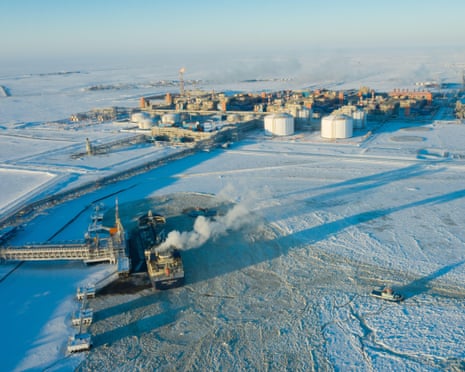
Compounding these military tensions are economic critiques leveled at Europe. According to a report in The Guardian, the EU stands accused of undermining its own sanctions regime by ramping up imports of Russian LNG. Despite pledges to phase out Russian fossil fuels following the 2022 invasion, EU nations imported record volumes of Russian LNG in 2025, valued at billions of euros. Critics, including Ukrainian officials and environmental groups, argue this revenue stream—estimated at over €10 billion last year—directly funds Moscow's military expenditures.
"The EU's addiction to cheap Russian gas is prolonging the war," said a spokesperson for the Ukrainian government, as cited in the Guardian article. Data from Eurostat shows LNG imports from Russia rose by 15% in the latter half of 2025, filling gaps left by curtailed pipeline gas flows through Ukraine and the Baltic Sea. Proponents of continued imports, primarily in energy-dependent nations like Germany and Hungary, cite energy security and the lack of immediate alternatives amid global supply constraints.
Background on Russia-West Tensions
The Russia-Ukraine conflict has reshaped global geopolitics since 2014, when Moscow annexed Crimea, but intensified dramatically with the 2022 invasion. Putin has repeatedly accused the West of provoking Russia through NATO expansion and arming Ukraine. The U.S. and allies have provided over $100 billion in aid to Kyiv, including advanced weaponry like HIMARS systems and ATACMS missiles, which Russia claims enable strikes deep into its territory—including the recent alleged incident at Putin's residence, located in the Moscow region.
Energy has emerged as a key battleground. Pre-war, Russia supplied 40% of Europe's gas needs. Post-invasion sanctions targeted pipelines like Nord Stream, but LNG shipments via Arctic and Baltic routes have surged. The EU's REPowerEU plan aims for zero Russian fossil fuels by 2027, yet LNG terminals in places like Germany's Wilhelmshaven continue to receive Russian cargoes, drawing ire from Warsaw and Kyiv.
Outlook Amid Escalating Claims
Neither side has provided independent verification of the residence attack evidence, leaving the incident mired in mutual recriminations. Russia's presentation of materials to international outlets has not swayed Western skeptics, while the CIA's rejection reinforces transatlantic solidarity with Ukraine.
On the economic front, EU leaders face mounting pressure ahead of upcoming energy summits. Proposals for stricter LNG bans are gaining traction, but implementation hinges on diversified supplies from the U.S., Qatar, and Norway.
These intertwined events—alleged attacks and energy dependencies—signal no de-escalation in sight. As winter deepens and battle lines hold firm in eastern Ukraine, Russia-West relations remain fraught, with each provocation risking broader confrontation.
(Word count: 612)






