
China Severe Weather From Typhoon Bavi Cancels Over 2,800 Flights
Typhoon Bavi made landfall in eastern China's Zhejiang province on Saturday night, the second major storm to hit the country in a week, prompting the evacuation of more than 2.4 million people and the cancellation of thousands of flights and trains. This China severe weather event follows extreme conditions that already affected southern and central regions earlier in the week.
Typhoon Makes Dual Landfall in Zhejiang
Typhoon Bavi first came ashore in Taizhou, Zhejiang at 11:12pm with winds up to 144 km/h before a second landfall in Wenzhou around midnight, then weakened into a tropical storm while moving inland. [1] The typhoon first came ashore in Yuhuan city in Zhejiang province at around 11:20 pm Saturday, packing winds swirling at up to 144 kilometres an hour. [4] The storm bounced back away from land and hit a second time in Yueqing City about 20 minutes later. [5] Bavi was expected to keep moving to the northwest while weakening. [4] Zhejiang provincial officials forecast torrential rain in coastal regions and the possibility of flash floods, transportation disruptions, rivers overflowing their banks and farmland being inundated. [5]
Mass Evacuations Across Eastern Provinces
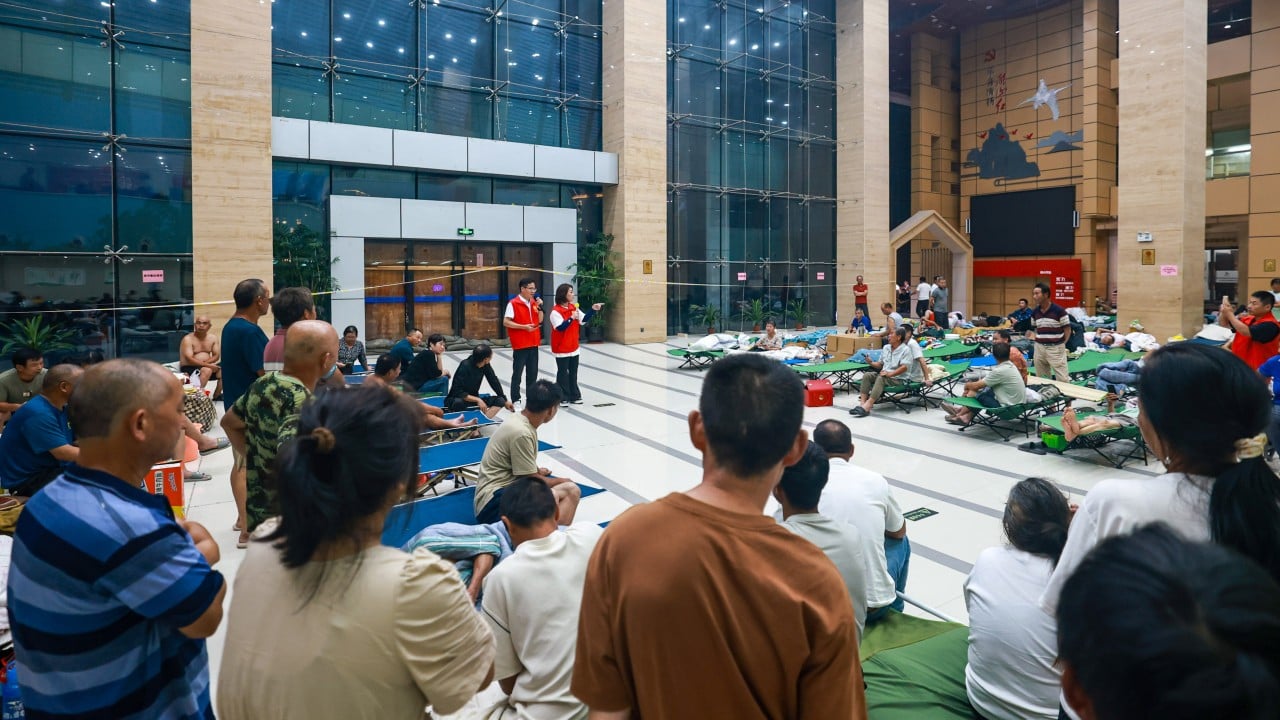
Nearly 2 million people were evacuated in Zhejiang, with additional evacuations of over 130,000 in Fujian, 34,000 in Shanghai, and more than 100,000 in Beijing due to torrential rains and flood risks. [2] As of Saturday morning, authorities had evacuated 1.72 million people to safe places. [4] Ahead of the storm's arrival, classes, work, transport and outdoor activities were suspended, and more than 400 flights and dozens of train services were cancelled in the province. [5] The proactive, all-out mobilisation, which is sparing no effort or cost, is undertaken entirely to guard against the (worst-case) scenario, the government in Wenzhou stated. [4] Torrential rain further north prompted the evacuation of more than 100,000 people from their homes in Beijing, as water discharge flows from the capital's Miyun Reservoir were ramped up to capture potential floodwaters. [4] More than 130,000 people have fled their homes in Fujian and around 34,000 people from Shanghai's coastal areas and high-risk areas. [5]
Widespread Flight and Train Cancellations
More than 2,800 flights were expected to be cancelled by Chinese airlines on Saturday, with Shanghai's two main airports cancelling over 650 flights and Hangzhou cancelling 296. [1] Shanghai’s Pudong and Hongqiao airports were set to cancel over 650 flights, about 30 per cent of their capacity. [1] Hangzhou Xiaoshan Airport also cancelled 296 flights on Sunday but planned to resume flights after noon as Bavi’s influence weakened. [1] Two of the four main stations in the city – the southern and western stations – cancelled all trains for the day, while some other services were also suspended. [1]
Impacts on Taiwan and Regional Effects
The storm caused fallen trees, landslides, and flooding in eastern coastal areas; it previously lashed northern Taiwan, injuring 134 people with no reported deaths. [2] Before reaching China, the storm lashed northern Taiwan and Japan's remote southwestern islands, toppling trees and leaving tens of thousands without power. [4] In Taiwan, more than 14,000 people have been evacuated from their homes, hundreds of flights cancelled and more than 170,000 households across the island hit with power outages because of the storm. [5] Taiwan's Central Weather Administration warned of extremely torrential rain across northern Taiwan and dangerous waves of up to 10 metres along the coast as Bavi skirted the island's north. [5] In the Philippines, the death toll from landslides and other incidents triggered by heavy rains driven by Bavi rose to 18, most on the southern island of Mindanao. [4] Nearly 11,000 people across the archipelago fled their homes and dozens of ports remain closed, with 313 vessels taking shelter. [5] Thousands of households and facilities across Okinawa lost power as the typhoon pounded Japan's remote southwestern islands, with the Miyako region hardest hit. [4] Japanese airlines cancelled dozens of flights, affecting more than 26,000 passengers. [5]
Forecast for Continued Heavy Rains
Bavi is forecast to bring prolonged heavy rains to eastern and northern China, following extreme weather earlier in the week that killed at least 39 people in southern and central regions. [2] Ennusteiden mukaan myrsky saattaa vielä aiheuttaa pitkäkestoisia ja laajoja sateita Itä- ja Pohjois-Kiinassa. [2] Extreme weather has already wreaked havoc on southern and central China this week, with storms leaving at least 39 dead and causing dozens of rivers to overflow and a reservoir dam to burst. [4] Bavi was downgraded to a typhoon as it moved across the Pacific Ocean after slamming into Guam and the Northern Marianas on Monday as a super typhoon. [5]
What to watch next: Bavi is expected to keep moving to the northwest while weakening, with forecasts indicating it may still cause prolonged and widespread rains in eastern and northern China.