
China Leads BRICS Naval Drills off South Africa, Joined by Russia and Iran
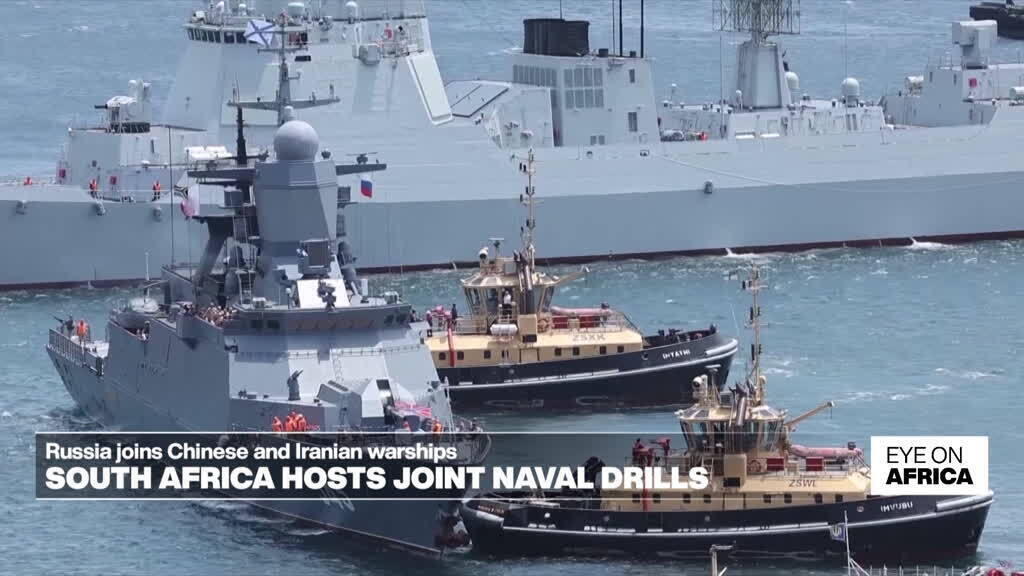
Cape Town, South Africa – China has taken the lead in joint naval exercises involving BRICS nations in South African waters, with Russian and Iranian warships docking at local ports for a week-long series of drills that commenced earlier this month. The multinational maneuvers, underway since January 3, 2026, underscore deepening defense ties among emerging powers and have drawn attention amid heightened global geopolitical tensions.
The exercises mark a notable step in military cooperation within the BRICS bloc—comprising Brazil, Russia, India, China, South Africa, Egypt, Ethiopia, Iran, and the United Arab Emirates following its 2024 expansion. According to reports, warships from China, Russia, and Iran have arrived at South African ports, setting the stage for coordinated operations at sea. These drills, led by the Chinese navy, focus on enhancing interoperability among the participating fleets, though specific details on the scope, such as simulated combat scenarios or anti-submarine warfare, have not been publicly disclosed.
France 24 reported on January 9, 2026, that the vessels' arrival signals the start of intensive naval activities off South Africa's coast. The week-long program is hosted by the South African Navy, which has hosted similar multinational exercises in the past, including the IBSAMAR series with India and Brazil. This iteration, however, expands participation to include Iran, highlighting the bloc's evolving strategic partnerships beyond traditional economic forums.
Growing BRICS Military Alignment
BRICS, originally formed in 2009 as an economic counterweight to Western-dominated institutions like the IMF and World Bank, has increasingly pivoted toward security and defense collaboration. South Africa, as a founding member and current chair of the bloc's rotating presidency through 2025 (with transitions ongoing into 2026), plays a pivotal role in facilitating such initiatives on the African continent. The naval drills align with broader BRICS efforts to promote "multipolarity," as articulated in summit declarations, including the 2024 Kazan Summit where leaders emphasized joint military exercises and technology sharing.
China's leadership in these drills reflects its expanding naval footprint in the Indian Ocean and South Atlantic. The People's Liberation Army Navy (PLAN) has rapidly modernized, deploying advanced destroyers and frigates capable of long-range operations. Russia's participation comes amid its ongoing commitments in other theaters, such as the Black Sea and Pacific, while Iran's navy contributes assets experienced in asymmetric warfare in the Persian Gulf. South Africa's Simon's Town Naval Base, near Cape Town, has served as a key docking point, with local media noting increased maritime traffic in recent days.
These developments occur against a backdrop of strained relations between BRICS nations and Western powers. The United States has expressed concerns over China's growing influence in Africa, viewing military engagements like these as potential challenges to the rules-based international order. Washington has bolstered its own partnerships through initiatives like the U.S. Navy's African Lion exercises and partnerships with NATO allies in the region. Analysts note that while the drills are framed as defensive and cooperative, their timing—amid U.S. election-year rhetoric and ongoing Ukraine and Middle East conflicts—could amplify perceptions of strategic encirclement.
South Africa's Strategic Balancing Act
South Africa maintains a policy of non-alignment, codified in its post-apartheid foreign policy, allowing it to engage with both Eastern and Western powers. President Cyril Ramaphosa's administration has deepened ties with BRICS partners, evidenced by high-level visits and trade agreements, while also participating in U.S.-led forums like the G20. The naval exercises build on prior collaborations, such as the 2023 Mavi Balina drills between Turkey and South Africa, but the inclusion of Russia and Iran adds a layer of geopolitical sensitivity.
Iran's involvement is particularly noteworthy, given its recent BRICS accession and naval capabilities honed through regional exercises with Russia and China, including the 2025 Maritime Security Belt drills in the Gulf of Oman. Russia's warships, likely including corvettes or frigates from its Southern Fleet, arrive as Moscow seeks to project power beyond Europe. No incidents or disruptions to commercial shipping have been reported, with South African authorities emphasizing the exercises' compliance with international maritime law under the UN Convention on the Law of the Sea (UNCLOS).
Regional and Global Implications
The drills conclude in the coming days, but their ripple effects may endure. For South Africa, they reinforce its stature as a BRICS hub and bolster naval readiness amid piracy threats in the Mozambique Channel and instability in the Sahel. Economically, enhanced defense ties could lead to arms deals and technology transfers, with China already a major supplier of South African military equipment.
Globally, the exercises highlight shifting alliances in a fragmented world order. While BRICS accounts for over 45% of the world's population and 35% of global GDP (PPP), its military dimension remains nascent compared to NATO or the Shanghai Cooperation Organisation. Observers in Pretoria and Beijing describe the event as routine cooperation, yet it underscores Washington's apprehensions about a potential "axis" challenging U.S. primacy in the Southern Hemisphere.
As the warships depart South African waters, the exercises serve as a reminder of BRICS' ambition to redefine global security dynamics, with Africa increasingly at the crossroads.
(Word count: 728)