
China Announces Completion of Military Maneuvers Near Taiwan, Signals Persistent Regional Tensions
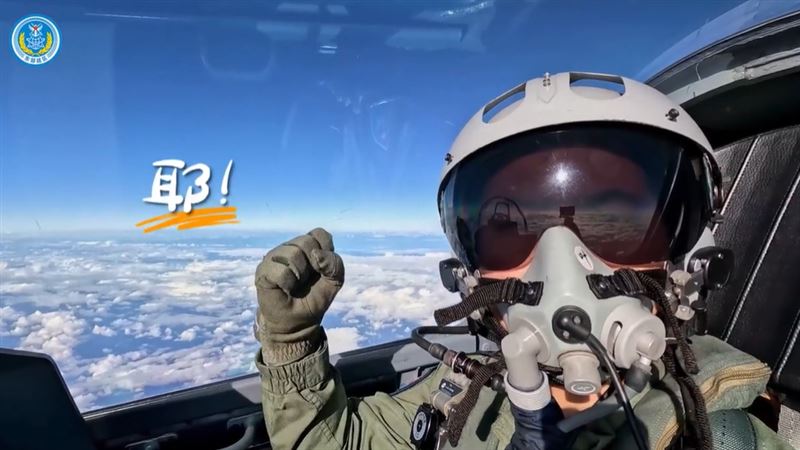
Beijing, January 6, 2026 – China has declared the successful conclusion of recent military maneuvers conducted near Taiwan, underscoring the fragile status quo across the Taiwan Strait amid escalating geopolitical frictions. The exercises, which commenced on December 31, 2025, represent the latest in a series of demonstrations of Beijing's military readiness, as tensions between the mainland and the self-governing island persist.
The People's Liberation Army (PLA) announced the wrap-up of the operations, describing them as a routine enhancement of combat preparedness in the region. While specific details on the scale, assets deployed, or precise locations remain limited in official statements, the maneuvers align with China's pattern of large-scale drills in response to perceived provocations, including high-level visits to Taiwan by foreign officials and statements from Taipei asserting its de facto independence. Taiwanese authorities and regional observers have monitored the activities closely, reporting increased PLA aircraft incursions into Taiwan's air defense identification zone (ADIZ) and naval passages through surrounding waters during this period.
This development occurs against a backdrop of intensified rhetoric from Beijing, which views Taiwan as an inseparable part of China and has not ruled out the use of force to achieve reunification. The timing of the exercises follows a year marked by frequent PLA activities, including joint air-sea patrols and amphibious assault simulations, often triggered by U.S. arms sales to Taiwan or diplomatic engagements.
US Think Tank Highlights Steep Costs of Potential Conflict
Adding to the discourse on cross-strait dynamics, a recent report from a U.S. think tank, as covered by Taiwan's SETN news outlet, warns of the extraordinarily high human and strategic toll China would face in any hypothetical invasion of Taiwan. The analysis projects up to 100,000 PLA casualties in the initial phases of such an operation, factoring in Taiwan's robust defenses, U.S. intervention, and the island's challenging geography. Beyond battlefield losses, the report posits severe international repercussions, including widespread recognition of Taiwan's independence by global powers.
The think tank's assessment emphasizes logistical hurdles for a cross-strait assault, such as the need to transport hundreds of thousands of troops across the 100-mile-wide strait under fire from anti-ship missiles and submarines. It also underscores economic fallout, with potential disruptions to global semiconductor supply chains—Taiwan produces over 90% of the world's advanced chips—leading to trillions in losses worldwide. "The price of aggression would be unprecedented," the report states, according to SETN's coverage published on January 6, 2026.
These warnings echo broader U.S. strategic messaging aimed at deterring Chinese adventurism. Pentagon officials have repeatedly affirmed commitments under the Taiwan Relations Act to provide defensive arms, while President Biden has voiced support for Taiwan's self-defense without explicitly committing U.S. troops.
Background on China-Taiwan Tensions
The Taiwan Strait has long been a flashpoint in East Asian security. Since the Chinese Civil War ended in 1949, the Republic of China (Taiwan) has governed the island separately from the People's Republic of China, fostering distinct political and economic paths. Beijing's "One China" principle insists on eventual reunification, a stance hardened under President Xi Jinping, who has prioritized military modernization to achieve this goal by mid-century.
Recent years have seen a sharp uptick in PLA activities. Following then-House Speaker Nancy Pelosi's visit to Taipei in August 2022, China launched its largest-ever drills encircling Taiwan. Similar exercises followed Taiwanese President Lai Ching-te's inauguration in May 2024 and his subsequent Pacific tour. U.S. freedom of navigation operations in the strait, alongside alliances like AUKUS and the Quad, have further irritated Beijing.
Taiwan, under Lai's Democratic Progressive Party, maintains it is already sovereign and seeks closer ties with democratic partners. Polls consistently show a majority of Taiwanese favoring the status quo over unification or formal independence, wary of China's human rights record in Hong Kong and Xinjiang.
Internationally, support for Taiwan has grown. The European Union, Japan, and others have increased economic and security cooperation, while the U.S. approved over $2 billion in arms sales in 2024 alone.
Outlook: Continued Vigilance Required
As China concludes these maneuvers, both sides appear entrenched. Taiwanese Defense Minister Wellington Koo stated that the island's forces maintained "full alertness" throughout, with no reported incidents. Beijing, meanwhile, framed the drills as a "stern warning" against separatism.
Analysts anticipate more such exercises in 2026, potentially coinciding with Taiwan's Han Kuang war games or U.S. elections. Diplomatic channels, including U.S.-China military hotlines restored in 2023, offer de-escalation avenues, but mutual distrust lingers.
The international community watches closely, balancing economic interdependence with China—its largest trading partner for many nations—against the risks of conflict. With the think tank report amplifying deterrence narratives, the focus remains on preserving peace across the strait, where miscalculation could reshape global order.
(Word count: 682)






