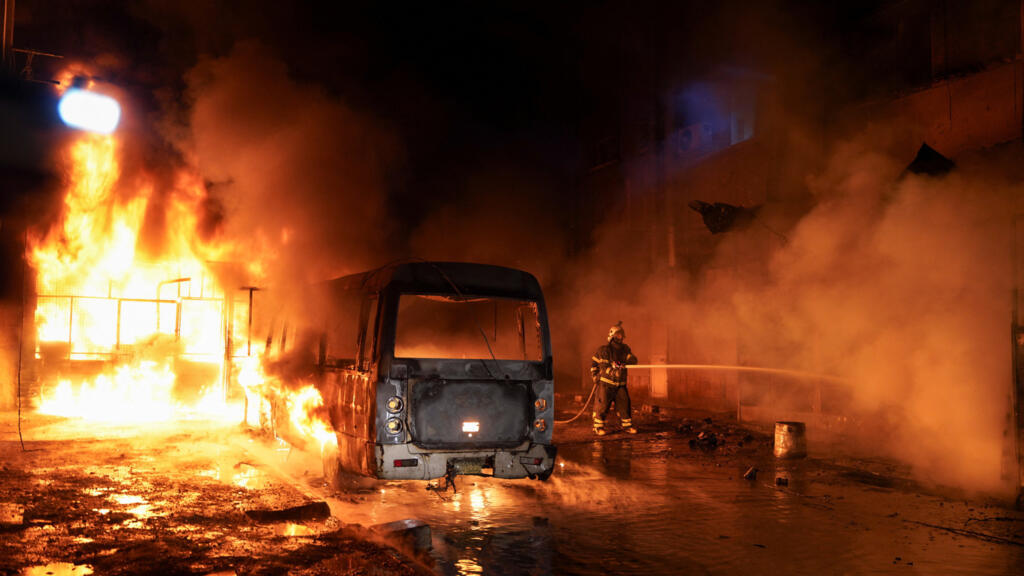

Ceasefire Brings Temporary Halt to Intense Clashes in Aleppo Between Syrian Forces and Kurdish SDF
Aleppo, Syria – A ceasefire was announced on Friday in key Aleppo neighborhoods following days of fierce clashes between Syrian government forces and the U.S.-backed Syrian Democratic Forces (SDF), which resulted in at least 21-22 deaths and the displacement of thousands of civilians. The violence, the most severe in the city since Islamist authorities assumed control of Syria last year, erupted earlier this week amid accusations of massacres and targeted military operations against SDF-held positions.
The Syrian Defense Ministry declared the ceasefire on January 9, 2026, giving armed groups – widely understood to refer to SDF fighters affiliated with Kurdish groups like the People's Protection Units (YPG), labeled as PKK extensions by Turkish media – until 9 a.m. local time Friday to withdraw from the affected areas. This followed intense fighting that began as early as Tuesday, January 6, and escalated on Wednesday, January 7, when the Syrian army designated SDF positions as legitimate military targets. Reports indicate the clashes centered on three Aleppo neighborhoods, prompting a large-scale displacement as families fled the crossfire.
According to France24, the confrontations pitted Syrian army units against Kurdish fighters, marking the worst violence in Aleppo since the takeover by Islamist-led authorities in 2025. The ministry's announcement aimed to de-escalate the "military situation," but underlying tensions persist, with Syrian forces framing the operations as efforts to clear out what Turkish outlet A Haber described as "PKK/YPG cleaning" in the city.
Casualty figures vary slightly across reports: France24 cited at least 21 people killed, while Al Jazeera reported a minimum of 22 fatalities since Tuesday. No breakdown by faction was provided, but the scale of the violence forced thousands to flee their homes, exacerbating humanitarian strains in a city long scarred by Syria's protracted civil war.
Escalation and Immediate Triggers
The clashes intensified on January 7, when the Syrian army publicly declared SDF-held positions in Aleppo as valid targets. This move came amid accusations of massacres attributed to SDF forces in the area, though specific details on these claims remain unverified in the available reports. Prior to the ceasefire, Syrian forces had been battling the SDF since Tuesday, with fighting concentrated in urban neighborhoods vulnerable to heavy artillery and small-arms fire.
The Anadolu Agency detailed the ministry's ultimatum, specifying that armed groups must vacate the neighborhoods to end hostilities. This temporary truce reflects a pattern of fragile pauses in Syria's fragmented conflict zones, where local ceasefires often serve as tactical resets rather than lasting resolutions.
Broader Context in Syria's Evolving Conflict Landscape
Aleppo, Syria's second-largest city, has been a focal point of the country's civil war since 2011, witnessing major battles including the government's 2016 recapture from rebels with Russian backing. The SDF, a multi-ethnic coalition dominated by Kurdish YPG fighters, emerged as a key U.S. ally in the fight against the Islamic State (ISIS), controlling much of northeastern Syria including oil-rich areas. However, relations with Damascus have remained tense, complicated by Turkish objections to the SDF's YPG component, which Ankara views as a terrorist extension of the Kurdistan Workers' Party (PKK).
The current dynamics shifted dramatically in 2025 when Islamist factions, likely led by Hayat Tahrir al-Sham (HTS) – formerly linked to al-Qaeda but rebranded – seized power from Bashar al-Assad's regime. This power transition, solidified last year, has seen HTS consolidate control over much of Syria, including Damascus and Aleppo, under a governance model blending Islamist rule with pragmatic administration. The Syrian army and Defense Ministry now operate under this new authority, prompting questions about continuity in military operations against remaining holdouts like the SDF.
U.S. support for the SDF, including around 900 troops in eastern Syria, adds an international layer, with Washington viewing the group as essential for containing ISIS remnants. Turkey, a key player backing anti-Assad forces and now indirectly aligned against HTS in some contexts, has conducted repeated operations against SDF positions in northern Syria, including Aleppo's outskirts.
This week's events underscore persistent fault lines: the Islamist-led government's drive to unify territory clashes with SDF autonomy aspirations and external patrons' interests. The ceasefire's focus on three specific neighborhoods suggests a localized effort to regain control without broader escalation, but displacement figures highlight the human cost in a war that has killed over 500,000 and displaced millions since 2011.
Outlook Amid Fragile Truce
As of Friday morning, the ceasefire holds in the designated Aleppo areas, but its longevity remains uncertain. The Syrian Defense Ministry's withdrawal demand places pressure on the SDF, which has not issued public statements in the sourced reports. International monitors, including the UN, have yet to comment extensively, though past appeals for de-escalation in Syria often go unheeded.
Humanitarian agencies warn of worsening conditions for the displaced, with Aleppo's infrastructure strained by prior conflicts. Broader talks mediated by regional powers like Turkey, Russia, or the U.S. could influence outcomes, but history suggests localized truces rarely resolve Syria's entrenched divisions. Observers will watch whether this pause prevents further bloodshed or merely delays renewed fighting in one of the world's most volatile conflict zones.
(Word count: 748)






