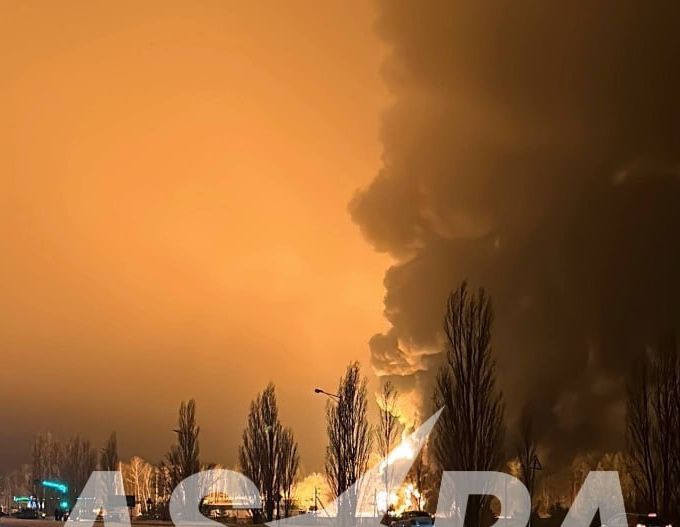

Blaze Engulfs Russian Oil Depot in Belgorod Oblast Following Alleged Ukrainian Drone Strike
Belgorod Oblast, Russia — A major fire broke out at a Russian oil depot in Belgorod Oblast on January 7, 2026, after what Russian officials described as a Ukrainian drone attack, marking another escalation in cross-border strikes amid the ongoing Russia-Ukraine war.
The incident, reported at approximately 11:39 GMT, prompted immediate emergency response efforts as flames consumed the facility. Russian authorities attributed the attack to Ukraine, though Kyiv has not yet issued a public confirmation or denial. The Kyiv Independent, citing Russian official claims, first reported the event, highlighting the depot's strategic location near the Ukrainian border.
Belgorod Oblast, which borders Ukraine's Kharkiv region, has been a frequent flashpoint since Moscow's full-scale invasion of Ukraine began in February 2022. The region has endured repeated drone incursions, artillery shelling, and even ground incursions by anti-Kremlin Russian militias allied with Ukraine. This latest strike on energy infrastructure underscores Ukraine's strategy of targeting Russian logistical and fuel supply nodes to disrupt military operations.
Details remain limited as of early reports, with Russian state media and local officials confirming the fire but providing sparse information on casualties, the extent of damage, or the number of drones involved. Videos circulating on Russian Telegram channels showed thick black smoke rising from the site, located in a rural area of Belgorod Oblast, approximately 40 kilometers from the international border. Emergency services were deployed swiftly, but no official estimates of fuel loss or operational impact have been released.
The targeted facility is described as an oil depot, critical for storing and distributing petroleum products to support Russia's war effort and civilian needs in the region. Such depots have become prime targets for Ukrainian unmanned aerial vehicles (UAVs), which have demonstrated increasing range and precision over the past two years. According to open-source intelligence tracking by groups like Oryx and the Institute for the Study of War (ISW), Ukraine has conducted dozens of drone strikes on Russian refineries and storage sites since early 2024, aiming to curtail Moscow's refined fuel production.
Context of Escalating Energy Strikes
This attack fits into a broader pattern of Ukrainian long-range drone operations deep into Russian territory. In 2024 alone, Kyiv claimed responsibility for strikes on at least 10 major refineries, including facilities in Ryazan, Volgograd, and Krasnodar regions, which collectively reduced Russia's refining capacity by an estimated 15-20% at peak disruption, per data from the Russian Ministry of Energy and independent analysts like BloombergNEF. These operations, often using domestically produced drones like the AQ-400 or modified commercial models, have forced Russia to reroute fuel supplies and invest in enhanced air defenses.
Belgorod's vulnerability stems from its proximity to the front lines. The oblast has seen heightened activity since Ukraine's incursion into Russia's Kursk region in August 2024, where Kyiv-held territories remain contested as of late 2025. Russian President Vladimir Putin has repeatedly vowed retaliation for such strikes, including recent escalations involving North Korean troops supporting Russian forces in Kursk. In response to prior Belgorod attacks, Moscow has intensified missile and drone barrages on Ukrainian energy infrastructure, leaving millions without power during the 2024-2025 winter.
Ukraine's military intelligence agency, the Main Directorate of Intelligence (GUR), has not commented on this specific incident, consistent with its policy of selective attribution to maintain operational security. However, GUR spokespeople have previously stated that strikes on "legitimate military targets" like fuel depots supporting the invasion will continue as long as Russian aggression persists.
Broader Implications for the Conflict
The fire at the Belgorod depot occurs against a backdrop of stalled frontline dynamics. Russian forces have made incremental gains in Donetsk Oblast, capturing key towns like Kurakhove in late 2025, while Ukraine defends Kharkiv and mounts counteroffensives in Kursk. Energy warfare has emerged as a pivotal domain, with both sides targeting power grids and fuel hubs to erode the opponent's sustainment capabilities.
Western analysts, including those from the ISW, note that disruptions to Russian oil infrastructure have ripple effects: reduced domestic fuel availability has led to price hikes and logistical strains for the military, though Moscow has mitigated some impacts through imports from India and China. For Ukraine, these strikes bolster morale and signal resilience despite ammunition shortages and delayed U.S. aid packages.
Russian officials have framed the attack as terrorism, with Belgorod Governor Vyacheslav Gladkov — who frequently reports on regional incidents via Telegram — likely to provide updates on firefighting progress and any evacuations. As of now, no injuries have been reported, but the incident could prompt heightened border security and air defense deployments.
Outlook Amid Winter Tensions
As winter deepens, both nations brace for intensified attritional warfare. The Belgorod strike highlights the evolving threat of low-cost drones, which have reshaped battlefield tactics since 2022. International observers, including the United Nations, continue to urge de-escalation, though diplomatic efforts like the suspended Minsk agreements remain dormant.
Further developments, including damage assessments and potential Russian reprisals, are expected in the coming hours. The World Now will monitor updates from verified sources.
(Word count: 712)






