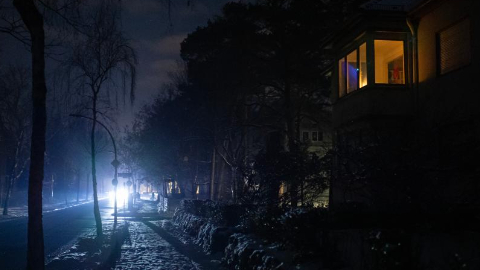

Berlin Power Grid Attack Leaves Thousands in Dark, Sparks Geopolitical Concerns in Germany
Berlin, January 7, 2026 – A targeted attack on Berlin's electricity grid has plunged thousands of residents into darkness, prompting an urgent investigation by German authorities amid rising geopolitical tensions in Europe.
The incident, which began early Wednesday, has disrupted power supply across multiple neighborhoods in the German capital. Officials confirmed that the disruption stems from what they are treating as a deliberate assault on critical infrastructure, with restoration efforts ongoing but thousands still affected hours later. Berlin authorities have launched a probe, highlighting the potential sabotage at a time when Europe's energy networks face heightened vulnerabilities.
Details remain limited as the investigation unfolds, but initial reports indicate the attack compromised key components of the local grid, leading to widespread outages. Emergency services have been mobilized to assist vulnerable populations, including hospitals and elderly care facilities, which are relying on backup generators. No immediate casualties have been reported, but the scale of the blackout has raised alarms about public safety and economic impact in one of Europe's busiest urban centers.
Berlin's utilities provider, Berliner Wasserbetriebe and associated grid operators, stated that teams are working around the clock to isolate the affected areas and restore service. "This is a serious incident under investigation as a possible attack," a spokesperson for the city's crisis management team said, according to local updates. Power is expected to return incrementally, with full restoration potentially taking days depending on the extent of the damage.
Broader Context: Energy Security in a Tense Geopolitical Landscape
The Berlin grid attack occurs against a backdrop of strained energy security in Germany, exacerbated by the ongoing Russia-Ukraine conflict and its ripple effects across Europe. Since Russia's full-scale invasion of Ukraine in February 2022, Germany has aggressively phased out Russian gas imports, leading to a pivot toward liquefied natural gas (LNG) terminals and renewable energy acceleration. This transition has left the country's grid more susceptible to disruptions, as highlighted in multiple government reports.
In recent years, Germany has grappled with a series of infrastructure incidents that have fueled suspicions of hybrid warfare. Notable events include the 2022 sabotage of the Nord Stream pipelines in the Baltic Sea, which remain unattributed but widely linked to state actors, and the severing of undersea data cables between Finland, Sweden, and Germany in late 2024. Those incidents prompted NATO to bolster critical infrastructure defenses, with exercises simulating grid attacks.
Germany's Federal Network Agency (Bundesnetzagentur) has repeatedly warned of cyber and physical threats to the power sector. A 2025 parliamentary report noted over 1,000 attempted cyber intrusions on energy firms annually, many traced to actors in Russia, China, and Iran. The Berlin event, classified as medium severity by monitoring agencies, echoes these vulnerabilities, particularly as winter demand peaks and Europe contends with hybrid threats from adversarial states.
Chancellor Olaf Scholz's government has prioritized resilience, investing €200 billion in grid modernization through 2030 under the Energiewende (energy transition) framework. However, critics argue that bureaucratic delays and over-reliance on intermittent renewables have created weak points. The incident coincides with heightened rhetoric from Moscow amid stalled Ukraine peace talks and NATO's eastward expansion debates.
Investigation and Response
Berlin police and federal cybersecurity units, including the Federal Office for Information Security (BSI), are leading the probe. Early assessments point to physical sabotage rather than a cyberattack, though digital forensics are ongoing. "We are treating this with the utmost seriousness and coordinating with national and EU partners," a BSI spokesperson noted in a preliminary statement.
The European Union has activated its rapid response mechanisms, with the European Critical Infrastructure Protection framework offering technical support. NATO's Cyber Defence Centre in Tallinn, Estonia, stands ready to assist if hybrid elements emerge. German Interior Minister Nancy Faeser emphasized national unity, stating on social media: "Attacks on our infrastructure will not deter us. We will uncover those responsible and ensure justice."
Public reaction in Berlin has been one of frustration mixed with resolve. Social media footage shows darkened streets and traffic chaos at intersections without signals, while residents stockpile essentials. Local businesses report losses in the millions of euros per hour of outage.
Outlook: Implications for European Stability
As the investigation progresses, the Berlin grid attack underscores the fragility of Europe's energy backbone amid geopolitical flux. With Germany as the continent's largest economy and a linchpin in NATO's eastern flank, any prolonged disruption could cascade regionally, affecting supply chains from automotive manufacturing to data centers.
Authorities anticipate sharing more details within 48 hours, including potential motives and perpetrators. In the interim, contingency plans are in place, including military support for grid repairs if needed. The event serves as a stark reminder that energy infrastructure has become a frontline in great-power competition, prompting calls for accelerated defenses across the EU.
This incident may catalyze further policy shifts, building on Germany's recent €100 billion defense spending hike and EU-wide sanctions on dual-use technologies. For now, Berliners endure the cold and dark, while the world watches for signs of escalation in an already volatile landscape.
(Word count: 748)






