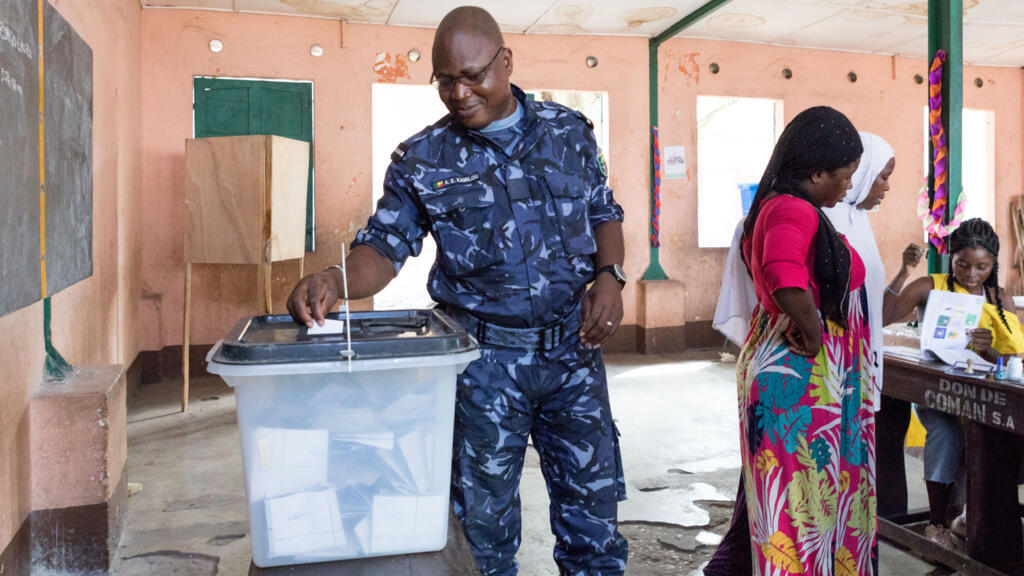

Benin Gears Up for Legislative and Local Elections in Wake of Failed Coup Attempt
Cotonou, Benin – Benin is set to hold legislative and local elections on Sunday, January 11, 2026, just over a month after a failed coup attempt rattled the commercial capital of Cotonou and reshaped the country's political dynamics. The polls, following an intense period of campaigning, come at a pivotal moment ahead of a presidential election scheduled for April.
The voting process unfolds against a backdrop of heightened security measures and public scrutiny, as the nation seeks to reaffirm stability in its democratic institutions. According to reports from Radio France Internationale (RFI), the attempted coup has significantly influenced the political landscape, injecting uncertainty into what was already a contentious electoral cycle. While details of the coup plot remain limited in public discourse, its occurrence in Cotonou—Benin's economic hub and largest city—has amplified concerns over governance and opposition participation.
Benin's elections are taking place in a context of weeks-long campaigning by various political factions. The legislative vote will determine the composition of the National Assembly, while local elections will shape municipal leadership across the country's 77 communes. Voter turnout and the conduct of polls will be closely watched by regional bodies such as the Economic Community of West African States (ECOWAS), which has historically monitored elections in the region to ensure transparency and peace.
Political Context and the Shadow of the Coup
Benin, a West African nation of approximately 13 million people, has long been regarded as one of the continent's more stable democracies since its transition from Marxist rule in the early 1990s. The country adopted a multiparty system following the National Conference of 1990, which paved the way for peaceful power transitions, including the historic defeat of incumbent president Mathieu Kérékou in 1991.
However, the political environment has evolved under President Patrice Talon, who assumed office in 2016 after winning a closely contested election. Talon, a cotton magnate-turned-politician, secured re-election in 2021 amid widespread controversy. Opposition parties boycotted the legislative elections that year, leading to a parliament dominated by Talon allies. Electoral reforms introduced by his administration, including requirements for prior parliamentary sponsorship for presidential candidates, drew criticism from human rights groups and the opposition for potentially sidelining rivals.
This latest electoral cycle occurs in the aftermath of the December 2025 coup attempt, which RFI describes as having "shaken" Cotonou. The incident underscores ongoing tensions in Beninese politics, where economic challenges—such as inflation, youth unemployment, and reliance on cotton exports—intersect with debates over term limits and democratic backsliding. The coup's failure appears to have bolstered government resolve, with authorities emphasizing national unity during the campaign period.
Security forces have been deployed across polling stations, particularly in urban areas like Cotonou and Porto-Novo, the political capital. International observers, including those from the African Union and ECOWAS, are expected to oversee the process to mitigate risks of unrest. Benin's Independent National Electoral Commission (CENI) has urged calm, stating that logistical preparations are complete despite the recent instability.
Broader Regional Implications
The elections hold significance beyond Benin's borders, as West Africa grapples with a wave of political instability. Neighboring countries like Niger, Mali, and Burkina Faso have experienced successful coups in recent years, leading to military juntas and ECOWAS sanctions. Benin's resilience in thwarting its coup attempt positions it as a potential bulwark against such trends, but the upcoming presidential vote in April will test this further. Talon's eligibility for a third term remains a flashpoint; constitutional changes in 2021 opened the door for him to run again, prompting protests and legal challenges.
Economically, Benin benefits from its strategic location along the Gulf of Guinea, serving as a trade gateway for landlocked neighbors like Niger. Stability is crucial for sustaining growth, which averaged around 6% annually pre-2025, driven by agriculture, ports, and emerging oil production. Any perception of electoral irregularities could deter foreign investment and strain relations with key partners like France, the European Union, and China.
Outlook for Stability and Democracy
As Beninese citizens head to the polls, the focus remains on peaceful participation and credible results. The legislative and local outcomes could influence the presidential race, potentially strengthening or challenging Talon-aligned parties. While the failed coup has heightened vigilance, it has not derailed the democratic timetable, signaling institutional robustness.
Analysts anticipate a competitive yet controlled environment, with pro-government forces holding an advantage due to prior electoral dominance. Voter education campaigns have emphasized the importance of these elections in shaping local governance and national policy. Should the polls proceed without major incidents, Benin could reinforce its reputation as a democratic outlier in a turbulent region.
In the lead-up to Sunday's voting, political leaders have called for restraint. The international community stands ready to support a smooth process, underscoring Benin's role in regional peace. As the dust settles post-election, attention will swiftly turn to April's presidential contest, where the stakes for Benin's democratic trajectory will be even higher.
(Word count: 712)






