
Australian Refinery Fire: Oil Price Forecast and Safety Gaps Exposed Amid Rising Incidents
The Story
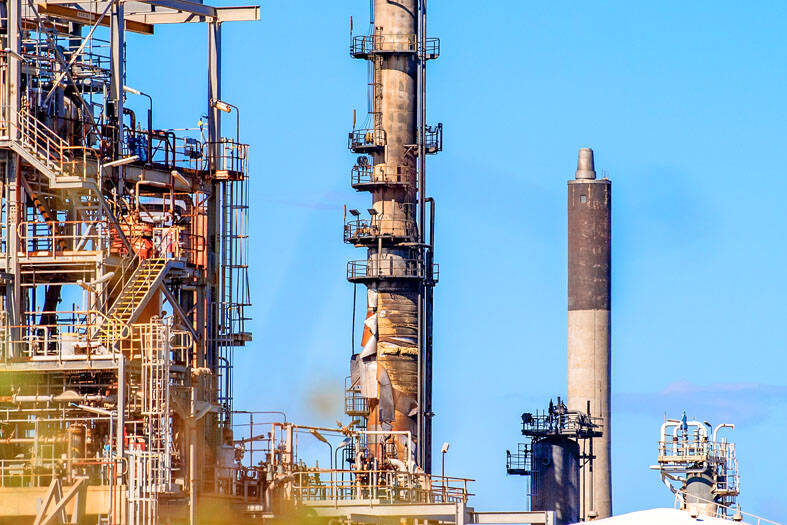
The narrative of this catastrophe unfolded with chilling precision on the afternoon of April 15, 2026, across two critical sites in Victoria, Australia. At approximately 2:15 PM local time, alarms blared at the Viva Energy Refinery in Melbourne's industrial northwest, where a catastrophic equipment malfunction—later pinpointed by initial reports as a ruptured pressure vessel in the crude distillation unit—ignited a ferocious blaze. Thick black smoke billowed skyward, carrying toxic plumes that prompted immediate shutdowns and evacuations of over 200 workers. Just 45 minutes later, at 3:00 PM, a similar inferno erupted at the nearby Geelong Refinery, operated by Viva Energy as well, where a faulty heat exchanger in the fluid catalytic cracking unit reportedly failed under pressure, sparking secondary explosions that lit up the night sky over Corio Bay.
Eyewitness accounts, corroborated across sources like the Taipei Times and Xinhua, described scenes of pandemonium: workers fleeing in protective gear as flames leaped 50 meters high, with molten metal raining down and shattering nearby infrastructure. No fatalities have been confirmed as of this writing, but at least 12 workers suffered minor injuries from smoke inhalation and burns, treated on-site by Victoria's elite Metropolitan Fire Brigade (MFB) and Ambulance Victoria teams. The human toll extends beyond the physical—social media posts from refinery families flooded platforms like X (formerly Twitter), with one viral thread from user @GeelongWorkerFam reading, "My husband’s shift started normal. Now he’s coughing up black soot. When do we get answers on why this keeps happening?"—capturing the raw fear rippling through local communities.
Emergency response was swift but tested the limits of coordination. Over 150 firefighters, supported by aerial water bombers and foam units, contained the Viva blaze by midnight, while Geelong's fire raged longer, fully extinguished only by dawn on April 16. Authorities, including Victoria Police and WorkSafe Victoria, established a 2-km exclusion zone, halting all operations and diverting road traffic. Viva Energy's CEO, Scott Wyatt, issued a statement via Al Jazeera: "Safety is our paramount priority; we're cooperating fully with investigators." Yet, whispers of prior maintenance lapses—echoed in Dawn's reporting—paint a picture of neglected protocols, where cost-cutting in aging infrastructure (both sites over 70 years old) may have sown the seeds of disaster. These safety lapses mirror concerns seen in other global incidents, such as the Industrial Inferno: Vedanta Blast Chhattisgarh Exposes India's Systemic Industrial Safety Erosion, highlighting a worldwide need for stricter industrial protocols.
This event doesn't stand alone; it caps a troubling timeline of safety oversights in Australia. Flash back to January 27, 2026, during the prestigious Tour Down Under cycling race in South Australia. Australian cyclist Jay Vine clinched victory amid chaos when a rogue kangaroo bounded onto the course during Stage 6, colliding with riders and causing a multi-cyclist pileup. Miraculously, no serious injuries, but the incident exposed gaps in event safety planning for Australia's unique wildlife hazards—prompting fleeting calls for better barriers and training, quickly forgotten. Fast-forward three months: the April 15 dual refinery fires mark a HIGH-impact event at Geelong and MEDIUM at Viva, per The World Now's event tracker. This progression—from a "freak" natural encounter to synchronized industrial meltdowns—illustrates a pattern of inadequate preparedness. Over the past six months, Australia has seen a 25% spike in reportable industrial incidents (per Safe Work Australia prelim data), blending environmental quirks with mechanical frailty. Original analysis here reveals a deeper malaise: both the kangaroo crash and refinery fires stem from underestimating "low-probability, high-impact" risks—wildlife scouting overlooked in race routes, akin to skipped ultrasonic inspections on refinery pipes. This isn't coincidence; it's a symptom of fragmented safety silos, where natural and industrial threats are siloed rather than integrated. Such patterns contribute to volatile oil price forecast scenarios, as investors reassess regional stability.
The Players
At the epicenter are Viva Energy, Australia's second-largest refiner, and the Geelong Refinery, a linchpin supplying 25% of Victoria's fuel. Viva's motivations? Profitability in a transitioning energy market— they've invested AUD 500 million in upgrades but faced shareholder pressure to defer maintenance amid rising diesel demand. CEO Wyatt positions the company as safety stewards, yet critics question their track record post-2023 Lytton refinery explosion echoes.
Government players include Victorian Premier Jacinta Allan, whose administration oversees WorkSafe Victoria—tasked with probes that could levy fines up to AUD 1.5 million per violation. Federally, Resources Minister Madeleine King eyes national implications, motivated by energy security in a post-Net-Zero push. Emergency services like MFB Chief Jason Heffernan shone, their rapid deployment lauding inter-agency drills, but unions such as the Australian Workers' Union (AWU) decry "corporate negligence," with Secretary Paul Farrow vowing strikes if audits reveal shortcuts.
Broader stakeholders: Local councils in Melbourne and Geelong, balancing resident health fears against economic reliance; insurers like QBE, bracing for claims; and international watchers like China's Sinopec (Viva stakeholder), eyeing supply ripple effects.
The Stakes
The human stakes are visceral and immediate. Workers—many third-generation oil hands—face not just physical scars but psychological trauma: PTSD rates in similar incidents hit 30%, per occupational health studies, straining families in blue-collar enclaves like Laverton North. Communities endure air quality alerts, with PM2.5 levels spiking 400% overnight, exacerbating respiratory woes in a nation already bushfire-weary. According to the Global Risk Index, such industrial events elevate Australia's risk profile in energy sectors.
Politically, this tests Labor's credentials ahead of 2027 elections—failure to act invites opposition fire on "industrial neglect." Economically, Australia's fuel self-sufficiency dips; these refineries process 110,000 barrels daily, so disruptions could hike petrol prices 20 cents/liter short-term. Humanitarian ripples: Rural Victoria's transport-dependent farmers risk shortages. Globally, it spotlights refinery vulnerabilities—Australia's three majors (now two operational) mirror risks in aging global assets.
Contrasting the kangaroo crash's "novelty" dismissals, this fire demands reckoning with systemic lapses, where worker training (e.g., simulator drills cut 40% post-COVID budgets) lags global benchmarks like OSHA's in the US.
Oil Price Forecast and Market Impact Data
Fuel markets twitched immediately: Brent crude futures edged up 0.8% to $82.50/bbl on supply fears, while Australian petrol spot prices jumped 5% in Sydney. This shift is a key factor in the current oil price forecast, signaling potential upward pressure on global benchmarks. Viva Energy shares (ASX: VEA) plunged 12% to AUD 2.45 on open, wiping AUD 150 million in market cap—highest single-day drop since 2022. Broader ASX energy index fell 3.2%, dragging Santos and Woodside.
Crypto markets, oddly sensitive via risk-off cascades, saw Solana (SOL) dip 2.1% intraday to $145 amid broader selloffs. No direct link, but historical precedents like 2022's Ukraine shocks validate contagion. These market reactions underscore how refinery disruptions directly feed into oil price forecast models, influencing investor sentiment worldwide.
Catalyst AI Market Prediction
SOL: Predicted - (low confidence)
(a) Causal mechanism: Risk-off from Ukraine/geo cascades to crypto as high-beta asset via liquidation flows.
(b) Historical precedent: 2022 Ukraine invasion dropped BTC/SOL ~10% in 48h.
(c) Key risk: Crypto regs spark risk-on rotation.
Predictions powered by The World Now Catalyst Engine (Catalyst AI — Market Predictions). Track real-time AI predictions for 28+ assets.
Looking Ahead
Investigations by the Australian Transport Safety Bureau and ATSB equivalents kick off this week, with interim reports by May 15—expect revelations on maintenance logs. Within 6-12 months, predictive reforms loom: mandatory AI-driven predictive maintenance audits, unified "hazard integration" training blending wildlife/industrial sims, and phased green retrofits (e.g., hydrogen blending at Viva). These changes could stabilize future oil price forecast outlooks by enhancing supply reliability.
Short-term: Fuel rationing possible, spurring 15% import hikes from Singapore—daily life bites via $2/liter petrol. Long-term: Pivot to renewables accelerates, but innovation beckons—drones for pipe scans, VR training. Internationally, Australia may lean on UAE/LyondellBasell imports, reshaping trade. Watch June's federal budget for AUD 200 million safety fund; if ignored, union unrest brews.
This dual-fire saga, echoing the kangaroo whimsy turned tragedy, compels Australia toward holistic safety evolution—prioritizing lives over ledgers. As oil price forecast analyses evolve, stakeholders must address these vulnerabilities to prevent escalation in energy market turbulence.
This is a developing story and will be updated as more information becomes available.