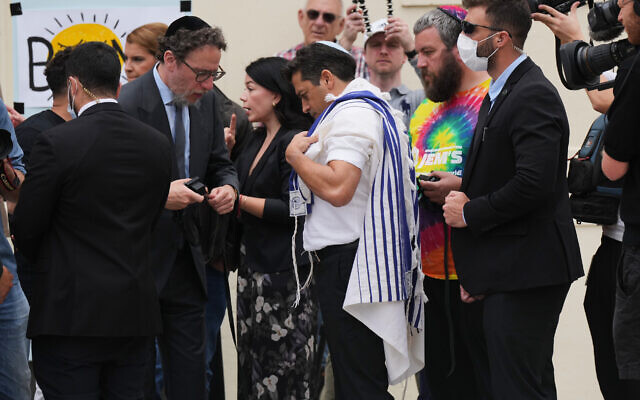

Australia Responds to Bondi Shooting with Calls for Counterterrorism Training and Heightened Security
In the aftermath of a tragic shooting in Bondi that left 15 people dead, Australian authorities are taking significant steps to bolster national security. Israeli official Eli Chikli has proposed offering counterterrorism training to Australia, highlighting the urgent need for enhanced measures against terrorism in the wake of this devastating incident.
The Bondi shooting, which occurred in mid-December 2025, has sent shockwaves through the nation, prompting immediate responses from both local and national authorities. In addition to the proposed training from Israel, New South Wales (NSW) police announced plans for an unprecedented increase in security presence during the New Year’s Eve celebrations in Sydney.
NSW Premier Chris Minns emphasized the necessity of these precautions, stating that there will be over 2,500 police officers deployed for high-visibility patrols, marking the largest police deployment for a New Year’s Eve celebration in the city’s history. "We want to ensure that everyone feels safe as they welcome the New Year," Minns said. The increased police visibility aims not only to deter potential threats but also to reassure the public in the aftermath of the Bondi tragedy.
Chikli's offer of Israeli counterterrorism training comes as part of broader discussions on international collaboration in security efforts. Israel has extensive experience in counterterrorism, having faced numerous terrorist threats over the years. "We are ready to assist Australia in enhancing its counterterrorism capabilities," Chikli stated, underlining the importance of sharing expertise and strategies to combat terrorism effectively.
The proposal has garnered mixed reactions from the public and security experts. While many acknowledge the need for improved counterterrorism measures, concerns have been raised regarding the implications of foreign influence on domestic security practices. Critics argue that training should focus on local context and community engagement rather than adopting international models without adaptation.
In the wake of the Bondi incident, public sentiment has shifted, with many Australians expressing heightened anxiety about safety in public spaces. The government's swift response is indicative of its commitment to addressing these concerns while ensuring that the rights and freedoms of citizens are preserved.
Background
The Bondi shooting is part of a troubling trend of rising violence and terrorism-related incidents globally. Australia has historically enjoyed relative stability compared to other nations, but the increasing frequency of such events has led to a re-evaluation of security protocols. The recent escalation of violence has prompted discussions on both domestic policy and international cooperation in combating terrorism.
As the country moves forward, the focus will likely remain on balancing the need for security with the preservation of civil liberties. The initiatives proposed by Chikli and the increased police presence are just the beginning of a broader conversation about how Australia can protect its citizens from the evolving threats of terrorism.
Conclusion
As Australia grapples with the aftermath of the Bondi shooting, the proposed Israeli counterterrorism training and increased police presence signal a significant shift in the nation’s approach to security. The coming weeks and months will be crucial for determining how effectively these measures are implemented and how they resonate with the public's desire for safety and security in an increasingly uncertain world.






