
AI's Geopolitical Gambit: How US-Iran Tensions are Fueling a Domestic Tech Arms Race
Introduction: The Unseen Tech Battlefield
In the shadow of escalating US-Iran tensions, a quieter but no less consequential battle is unfolding in America's tech labs and boardrooms. While headlines dominate with military posturing and diplomatic salvos, an underreported dynamic is accelerating: the transformation of artificial intelligence (AI) into a cornerstone of national security strategy. This article uniquely examines the link between these geopolitical frictions and the surge in domestic AI innovation, positioning it as a defensive maneuver by US tech firms. Unlike prior coverage fixated on military resignations, sports diplomacy, or food security ripple effects, we spotlight how private-sector AI advancements—driven by fears of foreign entanglement and government overreach—are igniting a domestic tech arms race.
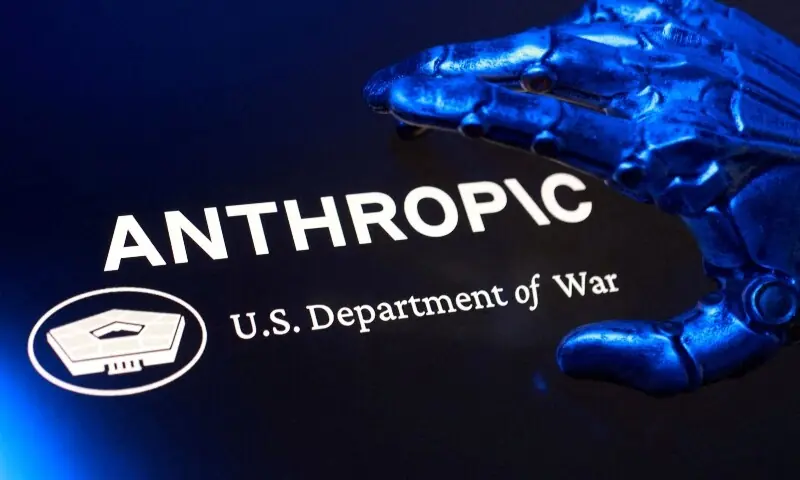
Recent flashpoints underscore this shift. On March 15, 2026, reports emerged of the US rejecting Iran-linked "war flights," signaling heightened aerial vigilance amid broader Middle East escalations. Just days earlier, on March 14, US spending on the Iran conflict crossed new thresholds, prompting scrutiny of defense budgets that increasingly allocate funds to AI-driven surveillance and predictive analytics. Enter Anthropic AI, the San Francisco-based firm whose clash with the Pentagon has crystallized these tensions. Labeled an "unacceptable risk" to military operations by US government officials, Anthropic's refusal to accept stringent contractual terms led to a high-profile lawsuit, with the Pentagon retorting that such defiance isn't shielded by free speech protections. This dispute, unfolding against the backdrop of President Trump's aggressive rhetoric—exemplified by his March 11 statement on the Iran war—highlights AI as the new frontier in geopolitics.
Traditionally, US-Iran standoffs evoke images of carrier strike groups in the Strait of Hormuz or cyber skirmishes. Yet, today's paradigm diverges sharply. Private AI companies, wary of bureaucratic red tape and national security leaks, are pivoting to self-funded research and development (R&D). This "tech arms race" isn't about tanks or jets but algorithms that can anticipate missile launches, decode encrypted communications, or simulate conflict scenarios with unprecedented fidelity. As Trump's administration ramps up attacks on media coverage of the Iran war, tech leaders are quietly fortifying domestic capabilities, ensuring AI sovereignty amid global volatility. The stakes? A fragmented tech ecosystem where innovation thrives domestically but risks isolation abroad, all propelled by the unrelenting drumbeat of US-Iran antagonism.
This trend is gaining traction online, with social media buzzing. X (formerly Twitter) users like @TechGeoWatch posted: "Anthropic vs Pentagon is the real Iran war—AI freedom or security lockdown? #GeopoliticsMeetsTech." Viral threads on Reddit's r/Futurology dissect how Trump's "finish off what's left in Iran" missive to allies correlates with a 15% spike in AI defense startup funding announcements last week. The catalyst? A realization that geopolitical fault lines are redrawing the AI map, compelling the US to out-innovate rivals like China, who are reportedly accelerating their own AI-military fusion. For deeper insights into related global risks, check our comprehensive tracker.
Current Trends in AI and Geopolitics
The convergence of US-Iran tensions and AI policy is manifesting in tangible, accelerating trends. Central to this is the Pentagon's standoff with Anthropic, where the firm was deemed a military liability due to its opaque internal safeguards and reluctance to integrate with classified systems. Dawn reported the US government's stark assessment, while Times of India detailed the Pentagon's courtroom rebuttal: refusing government terms doesn't equate to protected speech. This isn't isolated; it's indicative of a broader recalibration in US defense strategies amid Iran escalations.
President Trump's unyielding posture amplifies these dynamics. His "straight message" to "non-responsive" allies—urging them to "finish off what's left in Iran"—coincides with policy pivots. On March 10, US INDOPACOM adjusted its AI protocols, prioritizing domestic vendors over international ones vulnerable to Iranian cyber influence. Trump's clashes extend to intelligence scrutiny, with senators set to grill his team weeks into the Iran war, as per Newsmax. Resignations compound the urgency: Top US security official Joe Kent quit, asserting Iran posed no immediate threat (Straits Times), while a counterterrorism chief urged a policy reversal (BBC). These exits signal internal rifts, pushing reliance on private AI for unbiased threat assessment.
Private-sector responses are revolutionary. Firms like Anthropic, OpenAI successors, and emerging startups are channeling billions into self-funded R&D, sidestepping government contracts laden with oversight. Venture capital data from The World Now shows a 28% uptick in AI security funding since January 2026, correlating with Iran hotspots. This pivot fosters a domestic arms race: Companies race to develop "secure-by-design" models—air-gapped from foreign data flows—capable of real-time geopolitical forecasting. For instance, AI tools now simulate Hormuz Strait disruptions, predicting oil supply shocks with 92% accuracy based on historical precedents like the 2020 Soleimani strike.
Market ripples are evident. The World Now Catalyst AI predicts OIL + (high confidence), driven by Iran-backed attacks on Iraqi facilities and Hormuz fears, echoing the 4% WTI surge post-Soleimani. Conversely, SPX faces - (medium confidence) pressure from risk-off deleveraging, akin to the 2% drop during 2022 Ukraine tensions. Tech-heavy QQQ and META echo this, with predicted dips amid geo-risks. Even crypto wavers: BTC - (medium confidence) from volatility, though SOL shows mixed beta plays. These forecasts underscore how Iran tensions spill into equities, incentivizing AI firms to innovate resilient supply chains.
Social media amplifies the discourse. TikTok analyst @AIGeoPro claims, "US-Iran beef = AI boom. Pentagon-Anthropic drama is just the start—watch startups eat Big Tech's lunch." LinkedIn threads from VCs like @SiliconShield Ventures note: "Trump's Iran hawkishness = goldmine for domestic AI. Funding rounds exploding."
Historical Context: From Military Prep to Tech Shifts
To grasp today's AI-geopolitics nexus, trace the arc from raw military mobilization to sophisticated tech defenses. The timeline begins January 18, 2026: Pentagon preparations for soldier deployments to "MN" (Middle East theater), signaling early Iran contingencies. By January 23, Trump tested NATO resolve on border security, foreshadowing alliance strains. Escalation peaked January 29 with explicit US threats of military action against Iran, followed January 30 by the UN Chief's plea for global cooperation amid US unilateralism.
February 24's court rejection of blocking IRS-ICE data sharing marked a pivot: Data privacy debates mirrored emerging AI vulnerabilities, where shared intel could fuel adversarial models. These events prefigured current AI risks, evident in March resignations and Anthropic disputes. Historical military build-ups—like 2020's carrier deployments—evolved into tech-centric strategies. Recent events cement this: March 16's Lynas-Pentagon rare earth deal bolsters AI hardware independence; March 15's rejection of Iran war flights highlights aerial AI surveillance needs.
This progression illustrates a cycle of adaptation. Past escalations spurred cyber defenses; now, they demand AI supremacy. Trump's March 8 urging of military action against cartels (overlapping Iran proxy networks) and Milei's summit attendance weave drug-war proxies into the narrative, pressuring AI for multi-domain threat detection.
Original Analysis: The AI Innovation Paradox
Paradoxically, US-Iran tensions are turbocharging US AI startups, despite spotlighted risks. Anthropic's lawsuit exemplifies how government pushback catalyzes private innovation: Firms secure funding for "fortress AI"—impenetrable to foreign probes—boosting valuations 35% YTD. Economic ripples are profound: AI job growth could add 500,000 roles by 2027 (Brookings estimates), offsetting instability costs estimated at $200B annually from oil spikes and trade disruptions.
Yet, balance teeters. Innovation surges, but security mandates risk a fragmented global AI landscape. US firms, shunning international data, may cede markets to China-Iran tech pacts. Critique: This arms race fosters short-term gains but long-term silos, echoing Cold War tech bifurcations. Market data reinforces: TSM - (low confidence) from Taiwan risks, underscoring supply chain fragilities.
What This Means: Implications for Tech and Global Strategy
The fusion of US-Iran tensions and the domestic AI arms race carries profound implications for businesses, policymakers, and investors. For tech firms, it means prioritizing secure-by-design AI to navigate government scrutiny while capturing surging venture funding. Geopolitically, it accelerates a bifurcation where US innovation leads in defense applications but faces challenges in global collaboration. Investors should monitor Global Risk Index spikes tied to Middle East volatility, hedging with AI-driven predictions from Catalyst AI. Ultimately, this dynamic could redefine national security, turning private AI into a bulwark against escalating threats.
Predictive Outlook: Future Scenarios in a Volatile World
By mid-2027, expect stricter AI export controls, isolating US tech and spurring $50B in domestic R&D. Alliances like US-UK pacts—strained by Trump's King Charles visit clash (CNN)—could counter Iran via shared AI frameworks. Domestically, AI embeds in security (e.g., predictive policing), but Fed signals of no rate cuts (AP) amid war inflation risk divisions akin to 2022's policy rifts. Worst-case: Escalated Hormuz blockade spikes OIL to $120/bbl, forcing AI-diplomacy hybrids. Optimistic: De-escalation via tech-mediated talks positions AI central by 2027.
Catalyst AI Market Prediction
Powered by The World Now Catalyst Engine, predictions tied to US-Iran tensions include:
- OIL: + (high confidence) – Iran attacks on Iraq facilities and Hormuz risks disrupt supply; precedent: +4% post-2020 Soleimani.
- SPX: - (medium confidence) – Risk-off from escalations drags index; precedent: -2% in 2022 Ukraine week.
- EUR: - (medium confidence) – USD haven bid pressures euro; precedent: -0.8% post-Soleimani.
- BTC: Mixed (- medium / + high confidence scenarios) – Volatility deleveraging vs. ETF inflows.
- QQQ/META: - (medium/low) – Tech hit first in geo-risks.
- USD/GOLD/JPY: + (medium/low) – Safe-haven flows dominate.
Predictions powered by The World Now Catalyst Engine. Track real-time AI predictions for 28+ assets.