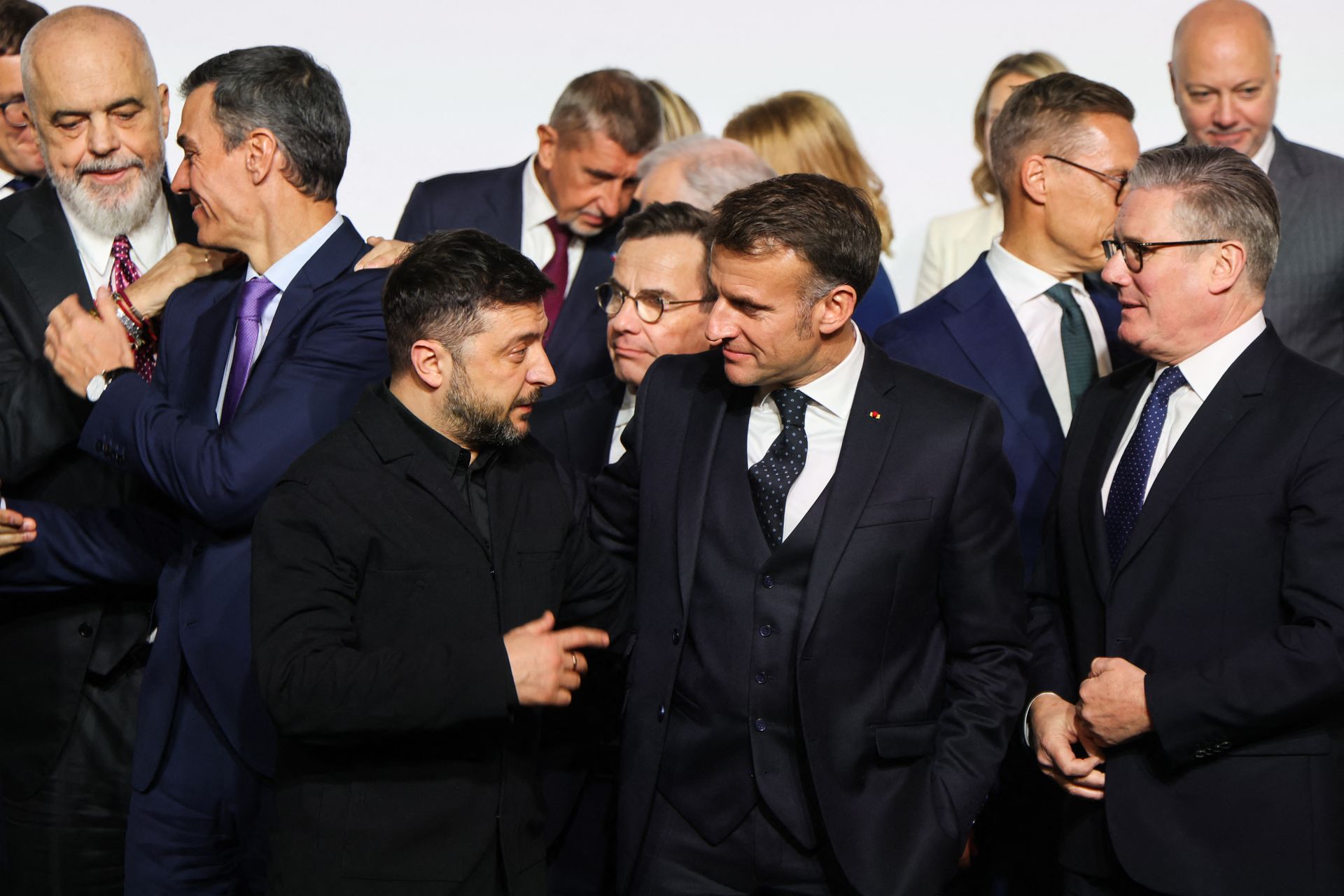

Zelensky, UK, and France Sign Declaration for Post-War Multinational Force as Ukraine Talks Show Progress
Kyiv, Ukraine – Ukrainian President Volodymyr Zelensky, alongside representatives from the United Kingdom and France, signed a declaration on January 6, 2026, outlining the deployment of a multinational force in Ukraine following a potential peace agreement with Russia. This development comes amid reports of significant advancements in ongoing negotiations, including security guarantees, as stated by U.S. envoy Steve Witkoff.
The declaration emphasizes the need for a sustained international military presence to bolster Ukraine's security in the post-war period. Zelensky had publicly called for British and French troops as part of any peace deal just two days earlier, on January 4, framing it as essential to deter future aggression. The signed document formalizes commitments from the three nations to contribute personnel and resources, marking a concrete step toward Western-backed security arrangements.
U.S. envoy Witkoff, speaking on the same day, highlighted "significant progress" achieved during talks on Tuesday, January 6. In comments reported by Newsmax, he noted advancements on "several critical issues facing Ukraine, including security guarantees and a 'prosperity plan.'" While specifics on the prosperity plan remain undisclosed, it appears tied to economic reconstruction and long-term stability efforts. Witkoff's update underscores growing multilateral coordination, with the U.S. playing a pivotal role despite its envoy's focus on diplomatic breakthroughs rather than direct military pledges.
The multinational force declaration was announced by the Kyiv Independent, detailing a joint statement from Zelensky, UK Prime Minister [name not specified in sources], and French President [name not specified in sources]. It envisions the force operating under a UN or NATO-aligned mandate, stationed in key regions to monitor ceasefires and prevent incursions. This aligns with Zelensky's earlier remarks, where he argued that "a peace deal must include British and French military presence in Ukraine to ensure security," reflecting Kyiv's insistence on robust deterrence given Russia's full-scale invasion that began in February 2022.
Diplomatic Momentum Builds
These announcements occur against the backdrop of intensified peace negotiations, which have gained urgency following battlefield stalemates and shifting geopolitical dynamics. Talks, involving Ukraine, Russia, the U.S., and European allies, have focused on territorial concessions, neutrality clauses, and security pacts since late 2025. The involvement of Witkoff, a Trump administration appointee tasked with Ukraine policy, signals a U.S. push for resolution, potentially linking aid packages to verifiable progress.
France and the UK, long-standing supporters of Ukraine, have ramped up military assistance since the war's outset. Both nations provided advanced weaponry, including Storm Shadow and SCALP missiles, and trained Ukrainian forces. Their commitment to a post-war presence echoes earlier proposals, such as France's 2024 "reassurance force" idea, which envisioned European troops replacing U.S. contingents under NATO frameworks.
Russia has yet to respond officially to the declaration, but Moscow has consistently rejected foreign military deployments on Ukrainian soil as "red lines." Kremlin spokespeople have demanded Ukraine's permanent neutrality and demilitarization in exchange for peace, complicating the path forward.
Historical Context and Security Challenges
The Russia-Ukraine conflict, now entering its fifth year, stems from Russia's annexation of Crimea in 2014 and escalated with the 2022 invasion. Previous accords like the Minsk Agreements failed to deliver lasting peace, leading to over 500,000 combined casualties and widespread destruction. Ukraine's NATO aspirations have been a flashpoint, with Kyiv viewing Western security guarantees as non-negotiable alternatives to full membership.
International efforts have included the U.S.-led Ukraine Defense Contact Group, supplying over $100 billion in aid, and EU sanctions crippling Russia's economy. Recent talks build on December 2025 Saudi-hosted discussions, where preliminary ceasefires were floated. Zelensky's push for UK and French forces addresses gaps in prior guarantees, such as the unfulfilled 1994 Budapest Memorandum, where Russia pledged to respect Ukraine's borders in exchange for nuclear disarmament.
Experts note that multinational deployments could mirror peacekeeping missions in the Balkans or Cyprus, providing verification mechanisms amid distrust. However, logistical hurdles—such as funding, command structures, and Russian vetoes at the UN Security Council—pose risks.
Outlook for Negotiations
As talks progress, the declaration and Witkoff's optimism suggest a narrowing gap on security pillars. Yet, core disputes over eastern territories and sanctions relief persist. Zelensky's government faces domestic pressure to secure ironclad protections, while allies balance support against escalation fears.
Further rounds are expected soon, potentially involving NATO leaders. If realized, the multinational force could stabilize Ukraine's frontiers, paving the way for reconstruction under the referenced prosperity plan. Observers will watch for Russian reactions and U.S. congressional approval of any linked initiatives.
This convergence of diplomatic signals offers cautious hope for de-escalation, though sustainable peace hinges on mutual concessions.
(Word count: 712)






