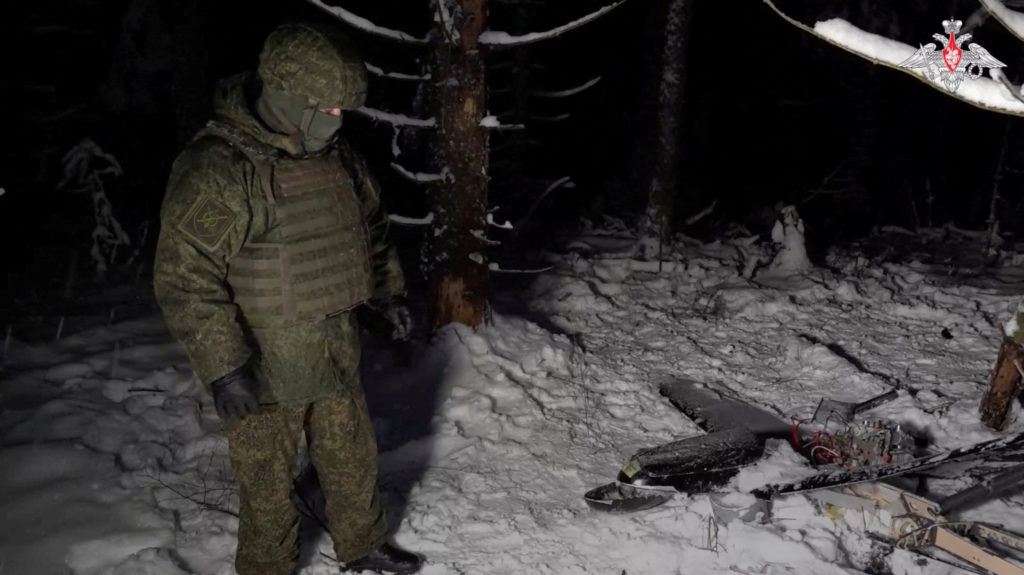

Zelensky Denies Ukrainian Drone Strike on Putin's Residence Amid Escalating Russian Allegations
Moscow/Kyiv/Washington — Ukrainian President Volodymyr Zelensky has categorically denied Russian claims of a Ukrainian drone attack targeting Russian President Vladimir Putin's official residence, amid heightened tensions in the ongoing Russia-Ukraine conflict. The denial comes as U.S. President-elect Donald Trump publicly rejected Moscow's assertions, casting doubt on the Kremlin's narrative. Russian officials described the alleged incident as a significant escalation, but both Kyiv and incoming U.S. leadership have dismissed the reports.
The purported drone strike was said to have occurred on December 31, 2025, near Putin's residence outside Moscow, marking a high-severity event in the protracted war. Zelensky's statement, issued shortly after the alleged incident at 09:12 GMT, emphasized that no such operation took place and hinted at ongoing preparations for defensive measures against potential new Russian strikes. This development underscores the persistent use of drones as a key weapon in the conflict, with both sides accusing each other of provocative actions deep into enemy territory.
Russian state media and defense officials quickly attributed the attack to Ukrainian forces, claiming air defenses intercepted drones aimed at Novo-Ogaryovo, Putin's heavily fortified residence west of Moscow. Kremlin spokesperson Dmitry Peskov labeled it an "assassination attempt," vowing retaliation. However, independent verification remains elusive, with no visual evidence or international confirmation released as of January 6, 2026.
Zelensky's rebuttal, delivered via official channels, stated: "There was no drone attack on Putin's residence by Ukraine. These are fabrications to justify further aggression. We are preparing for what Russia might do next." His comments align with a pattern of Ukrainian denials of strikes on high-value Russian targets, focusing instead on frontline defenses and infrastructure deep inside Russia.
Adding to the international dimension, Trump, speaking on the sidelines of a U.S. event, rejected the Russian claim outright. According to reports from PBS NewsHour, Trump described the allegations as "nonsense" and questioned their credibility, signaling potential U.S. skepticism toward Moscow's version of events. This stance from the incoming U.S. administration highlights shifting dynamics as Trump prepares to assume office, potentially influencing Western support for Ukraine.
Context of Drone Warfare in the Russia-Ukraine Conflict
The alleged incident fits into a broader escalation of long-range drone operations that have defined the war since Russia's full-scale invasion in February 2022. Ukraine has increasingly relied on domestically produced drones, such as the Baba Yaga and Lyutyi models, to strike Russian military assets, oil refineries, and airfields. Notable past operations include Ukrainian drone attacks on Moscow in May 2023 and repeated hits on Crimea bridges and Black Sea Fleet vessels.
Russia, in response, has deployed its own Shahed-style drones—often Iranian-designed—and hypersonic missiles against Ukrainian cities and energy infrastructure. The conflict has seen mutual accusations of targeting civilian and leadership sites. For instance, in August 2024, Ukraine conducted a major incursion into Russia's Kursk region, prompting Putin to accuse Kyiv of terrorism. Putin himself survived an earlier assassination claim in May 2024 when two bridges near his helicopter were reportedly rigged with explosives, though unverified.
Putin's Novo-Ogaryovo residence has been a focal point before. Located 50 kilometers from Moscow, it features advanced electronic warfare systems and S-400 air defenses. Russian claims of Ukrainian drones reaching such proximity echo incidents like the August 2023 attack on Moscow skyscrapers, where 11 drones were downed.
International observers, including the Institute for the Study of War (ISW), note that drone technology has democratized deep strikes, allowing Ukraine to project power asymmetrically despite Russia's numerical superiority. NATO allies have supplied components for Ukrainian drones, while Russia sources from allies like Iran and North Korea.
Diplomatic and Military Implications
Trump's rejection of the Russian narrative arrives at a critical juncture. As president-elect following his 2024 victory, Trump's comments suggest a continuation of his previous administration's transactional approach to Ukraine, prioritizing negotiations over unconditional aid. In December 2024, Trump floated ideas of freezing conflict lines and involving China in peace talks, drawing criticism from European leaders.
Kyiv views such rhetoric warily, with Zelensky urging sustained Western support amid winter stalemates on the Donbas front. Russian advances in Pokrovsk and Vuhledar continue, but Ukrainian drone exports to global markets signal economic adaptation.
The denial and counter-claims risk further escalation. Russia has intensified strikes on Ukrainian cities, including a December 29, 2025, barrage killing 20 in Kharkiv. Analysts warn that unverified leadership targeting could harden positions, complicating ceasefire efforts.
As investigations proceed, the international community monitors for de-escalation signals. The UN Security Council scheduled an emergency session for January 7, 2026, to address the claims. With no independent access to the site, the truth remains contested, perpetuating the fog of war.
In summary, Zelensky's denial and Trump's dismissal challenge Russia's portrayal of the event, reinforcing divisions in the global response to the conflict now entering its fourth year. Both sides prepare for potential reprisals, with drones likely to remain central to the battlefield.
(Word count: 712)






