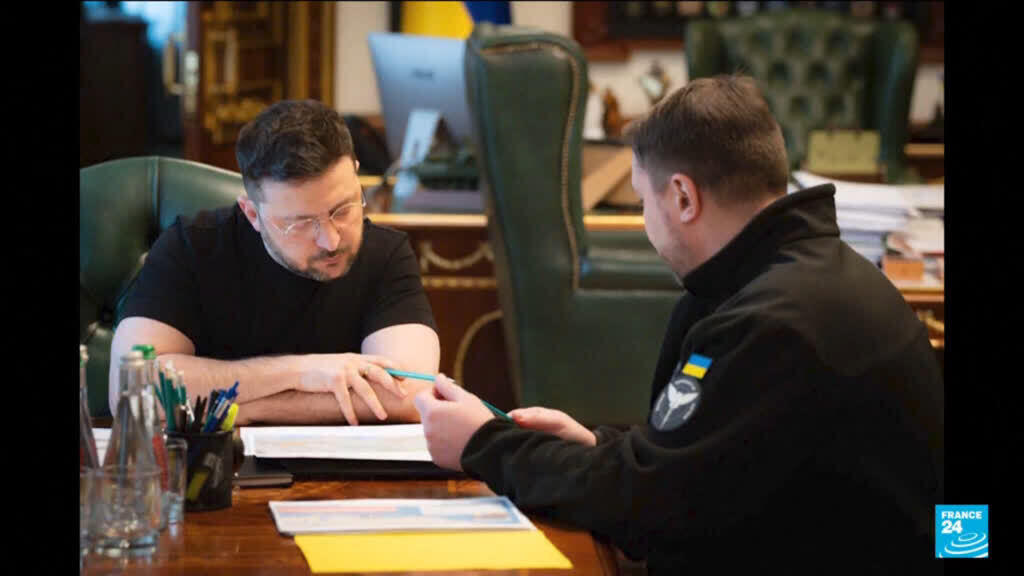

Zelensky Announces Defense Minister Appointment, Emphasizing Tech in Warfare
In a significant move reflecting the ongoing evolution of Ukraine's military strategy, President Volodymyr Zelensky has proposed the appointment of Mykhailo Fedorov as the new Minister of Defense. This decision, announced on January 3, 2026, marks a strategic pivot towards integrating advanced technology into Ukraine's defense operations amid the continuing conflict with Russia.
Zelensky's announcement comes as Ukraine faces nearly four years of warfare, which has necessitated adaptive strategies to maintain resilience against Russian aggression. The proposed appointment of Fedorov, currently serving as Ukraine's Minister of Digital Transformation, underscores the increasing importance of technological advancement in warfare, particularly in the utilization of drones and cyber capabilities.
"Mykhailo Fedorov is a young and dynamic leader who has already made significant strides in the digital landscape of Ukraine," Zelensky stated during his announcement. He did not elaborate on the reasons for the shakeup but emphasized the need for a defense strategy that aligns with modern warfare demands. Analysts suggest that Fedorov's background in technology could help Ukraine leverage its capabilities in the ongoing conflict and enhance its defense infrastructure.
Fedorov, at just 34 years old, is relatively unknown to the wider public but has gained recognition for his role in transforming Ukraine's digital landscape. His appointment as defense minister is seen as a bold step, as it signals a departure from traditional military leadership towards a more innovation-driven approach that prioritizes high-tech solutions to combat challenges.
This shift aligns with broader trends observed in modern warfare, where technological advancements—such as unmanned aerial vehicles (UAVs), surveillance systems, and cyber warfare tactics—have become crucial in battlefield dynamics. Ukraine's military has already employed drones extensively, both for reconnaissance and combat missions, which have proven effective in countering Russian forces.
The change in leadership within the defense ministry also comes at a critical juncture for Ukraine as it continues to navigate the complexities of the Russia-Ukraine war. With ongoing military support from Western allies, there is a pressing need for Ukraine to optimize its defense strategies to ensure effective use of resources and technology.
In the context of this proposed appointment, experts have noted that while Fedorov may lack military experience, his expertise in digital transformation could offer a fresh perspective that aligns with the evolving nature of warfare. The integration of digital innovations into military strategy could potentially enhance operational efficiency and responsiveness.
As Zelensky drives this transformation within the defense sector, it remains to be seen how Fedorov will adapt to the demands of his new role and implement strategies that address both immediate defense needs and long-term military goals. The Ukrainian government’s commitment to modernization and technology will likely continue to play a pivotal role in its fight for sovereignty and territorial integrity.
In conclusion, the proposed appointment of Mykhailo Fedorov as Ukraine's defense minister represents a strategic shift toward embracing technology in military operations. As the conflict with Russia persists, Ukraine's ability to adapt and innovate may prove critical in shaping the outcome of this protracted war.






