
Yemeni Government Forces Retake Strategic Hadramout Province Amid Saudi-UAE Tensions
Sanaa, Yemen — Yemeni government forces, supported by Saudi Arabia, announced the recapture of the oil-rich Hadramout province from southern separatists, marking a significant escalation in the kingdom's military campaign against rebel factions. The development comes as Saudi Arabia discloses details of its intensified bombing operations in Yemen, coinciding with the United Arab Emirates' planned withdrawal of forces and mutual accusations of backing separatist groups. On the sidelines, hundreds of tourists remain stranded on a remote Yemeni island, highlighting the spillover effects of mainland hostilities.
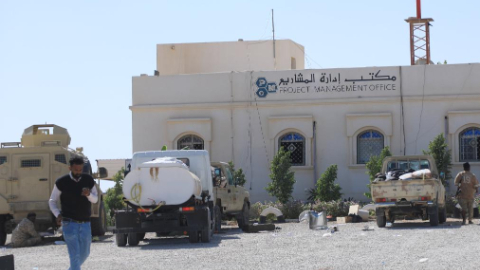
The retaking of Hadramout, a vast eastern province critical for its oil fields and strategic ports, was confirmed by Yemen's internationally recognized government on January 5, 2026. According to Xinhua, government-aligned forces successfully ousted separatist militants, restoring control over key infrastructure. Hadramout Governor Mabkhout bin Madhi stated that ports and airports in the province would resume operations "soon," signaling efforts to stabilize the area and revive economic activity. The province, which produces a significant portion of Yemen's oil output, has long been a flashpoint in the country's multifaceted civil war.
This military success follows a sharp escalation in Saudi-Yemen operations that began on December 31, 2025. Saudi Arabia has publicly detailed its bombing campaign targeting Houthi positions and affiliated groups, while navigating frictions with the UAE. Riyadh accuses Abu Dhabi of bolstering the Southern Transitional Council (STC), a separatist entity seeking independence for southern Yemen, which has clashed with government forces. In response, the UAE has signaled its withdrawal of troops from Yemen, a move that could reshape coalition dynamics in the Saudi-led intervention launched in 2015.
Al Jazeera reported that the Hadramout operation involved Saudi-backed forces driving out rebels from southern areas, underscoring the proxy nature of the conflict. The governor's optimism about reopening transport hubs contrasts with broader instability, as separatist holdouts and Houthi advances elsewhere threaten fragile ceasefires. The report also spotlighted the humanitarian ripple effects: hundreds of tourists are trapped on Socotra, Yemen's remote Indian Ocean archipelago, due to flight suspensions amid simmering mainland tensions. Socotra, a UNESCO World Heritage site known for its unique biodiversity, has seen growing UAE influence, complicating evacuation efforts.
Background on Yemen's Fractured Conflict
Yemen's war, now in its 11th year, pits the Iran-backed Houthi rebels—who control the capital Sanaa and much of the north—against a Saudi-led coalition supporting President Rashad al-Alimi's government. The coalition intervened in March 2015 to restore the government after Houthi forces ousted it from Sanaa. However, divergences emerged between Saudi Arabia, focused on countering Houthis, and the UAE, which prioritized combating Islamist extremists and fostering southern autonomy through the STC.
Tensions between the allies peaked in 2019 when UAE forces partially withdrew, leaving behind proxy militias. Recent accusations have reignited strains: Saudi Arabia claims UAE support enables STC expansion into resource-rich areas like Hadramout, while UAE officials have criticized Saudi airstrikes for indiscriminate impacts. A UN-brokered truce in April 2022 halted major fighting but expired without renewal, allowing low-level clashes to persist. The Hadramout operation reflects Saudi efforts to consolidate government control ahead of potential UAE pullback, amid Houthi drone attacks on Saudi oil facilities and Red Sea shipping disruptions.
International observers note the strategic stakes. Hadramout's oil fields, operated by firms like TotalEnergies under government oversight, contribute to Yemen's export revenues, which fund salaries and reconstruction. Losing them to separatists could exacerbate economic collapse, with Yemen already facing famine risks for 19 million people, per UN estimates.
Outlook and Implications
The recapture bolsters the Yemeni government's position but risks provoking STC retaliation and further straining the Saudi-UAE partnership. Riyadh's bombing disclosures—detailing strikes on separatist and Houthi targets—signal a more assertive posture, potentially drawing in regional powers. For stranded tourists on Socotra, relief hinges on swift port reopenings, though security concerns linger.
As the UAE withdrawal looms, analysts anticipate power vacuums that could empower extremists like al-Qaeda in the Arabian Peninsula, long entrenched in Hadramout. Diplomatic pushes by the US, UK, and Oman for renewed talks offer faint hope, but without unified coalition strategy, Yemen's conflict shows no signs of abating. The events underscore the high severity of this escalation, with risks to global energy markets and humanitarian crises mounting.
(Word count: 682)






